
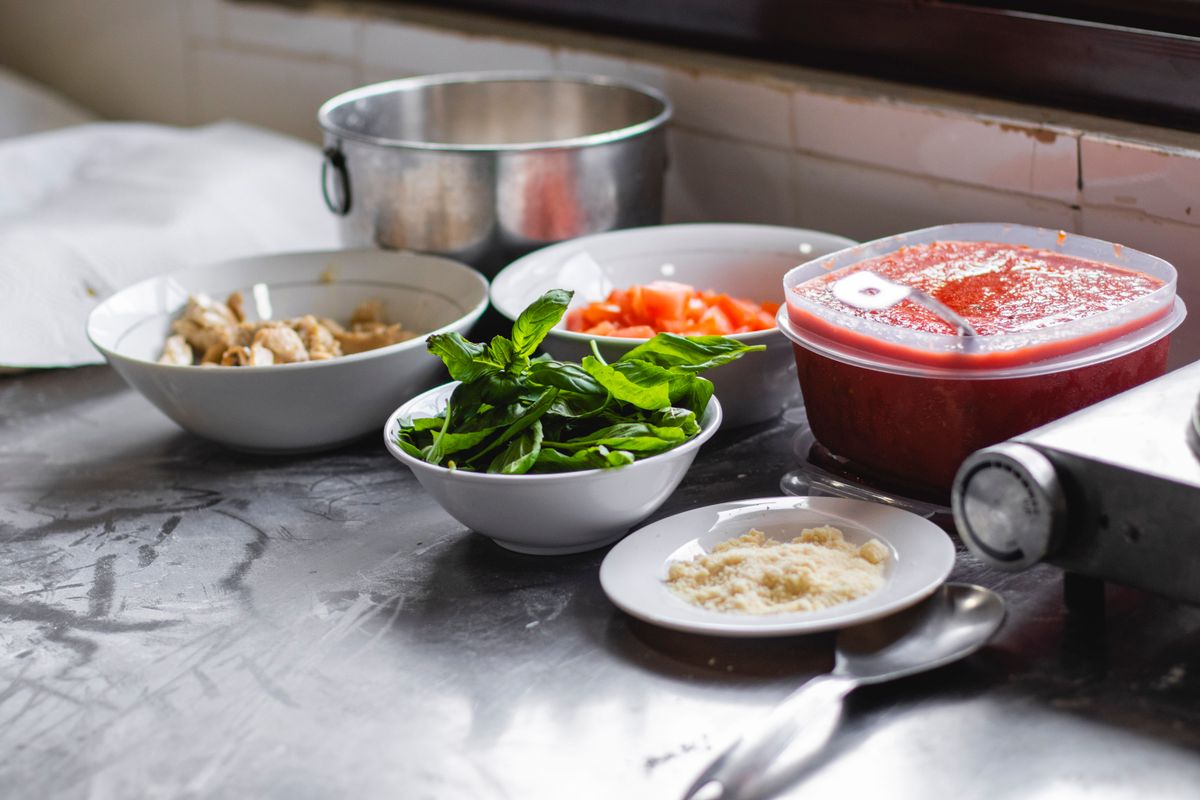
The Christmas this page was built from is the one where I did everything on the day. Turkey brined at dawn, potatoes peeled at 11, gravy made from a roasting pan I was also trying to deglaze, and by 3 p.m. I was chopping green beans at a counter buried in every other dish’s wreckage while three people asked where the serving spoons were. Dinner was late. The kitchen looked like a delivery truck had crashed into it. The next year I planned the same menu backwards from 4 p.m. and discovered something that changed every holiday since: of the eleven dishes on my menu, nine of them — potatoes included — can be fully or substantially finished days before, and Christmas Day is really a 90-minute oven choreography plus a turkey. The work did not shrink. It moved to days when the kitchen was calm and the wine was not open yet.
Below is the full make-ahead arithmetic for a Christmas dinner of eight to twelve: which dishes genuinely improve with a night in the fridge and which degrade, the exact prep deadlines from four days out to one hour out, the potato-prep methods that prevent browning (peel-and-soak, parboil, and full-make-and-reheat, with the trade-offs of each), which casseroles can be assembled uncooked and baked straight from the fridge, the gravy-base method that removes the day’s hardest multitask, dessert timelines, herb and garnish storage, the turkey prep you can legally do early, small-fridge space math, the day-of oven schedule that runs everything at once in a single oven, and the short list of dishes that should never be prepped. Every deadline here has been run in a real kitchen with a real twelve-guest menu; the day-of roasting math it feeds comes from the turkey roast-time calculator, and the same backwards-planning method works for ham using the ham roast-time chart.
The short version
Table of contents
- 1. What can actually be made ahead of Christmas dinner?
- 2. How far ahead can you prep each dish?
- 3. When should you shop for Christmas dinner?
- 4. Can you prep potatoes ahead without them browning?
- 5. Which casseroles can be assembled uncooked the night before?
- 6. How far ahead can you make the gravy?
- 7. What desserts hold best when baked early?
- 8. How do you prep herbs and garnishes ahead?
- 9. What turkey prep can be done days early?
- 10. How do you fit prepped food in a small fridge?
- 11. What does the day-of oven schedule look like?
- 12. Which dishes should never be made ahead?
1. What can actually be made ahead of Christmas dinner?
Nearly everything except the roast itself: the honest split is nine dishes that finish (or almost finish) ahead, and two or three that must be day-of. The organizing principle is simple — any dish whose final step is “bake until hot” or “simmer until thick” tolerates being staged earlier, because reheating is the same physics as the first cook. Dishes whose final step is texture (crisp, fresh, crunchy) do not. The master list below is the audit I run every December 22 with the actual menu on a notepad; the “day-of step” column is the entire reason Christmas Day stays calm, because every entry is 15 minutes or less:
| Dish | How far ahead | Storage | Day-of step |
|---|---|---|---|
| Gravy base (broth + roux, no drippings) | 3-4 days or frozen 1 month | Fridge or freezer | Reheat, whisk in pan drippings — 10 min |
| Pies and tarts | Baked 1-2 days ahead | Loosely covered, cool room or fridge | None — serve or warm 10 min |
| Rolls and bread | Baked 1-2 days ahead; dough frozen 2 weeks | Airtight room; dough in freezer | Refresh 350°F for 8 min |
| Casseroles (green bean, scalloped potatoes, mac) | Assembled uncooked 1-2 days ahead | Fridge, covered | Bake from fridge, +15-20 min — 60-75 min |
| Mashed potatoes | Peel/submerge 1 day; parboil 1 day; or full-make 2 days | Water bath or fridge | Finish or reheat per idea 4 — 20-40 min |
| Stuffing | Assembled uncooked 1 day ahead | Fridge, covered (bake stuffing, not in bird) | Bake 45-60 min |
| Vegetables for sides | Chopped 1 day ahead | Jugged containers or zip bags | Cook per recipe |
| Cranberry sauce | 3-4 days ahead (improves) | Fridge jar | None — serve cold or room temp |
| Dessert sauces and custards | 2-3 days ahead | Fridge jars | Warm gently |
| Salads (dressed) | Never ahead | — | Assemble 15 min before serving |
| Roasted vegetables | Never fully ahead | — | Roast fresh 35-45 min (or par-roast 80%, re-crisp) |
Notice what the table does to the day’s workload: the turkey plus four 60-minute bakes is an oven problem, and oven problems are scheduling problems, not cooking problems. The emotional shift matters more than the hours saved — on prep-ahead years, Christmas morning has exactly one cooking task running at any time, which means the cook is a host. That outcome is what the rest of this page purchases.
2. How far ahead can you prep each dish?
Plan backwards from dinner at four deadlines — four days, two days, one day, and the morning — and assign every menu item to exactly one deadline. The failure mode of make-ahead cooking is not doing tasks too early; it is doing them in the wrong order so the fridge overflows and the quality peaks before the guests arrive. The countdown below assumes a 4 p.m. dinner and a twelve-guest menu; shift the clock, not the structure, for other service times. The deadline structure is deliberately front-loaded: desserts and the gravy base move earliest because they hold longest, and the fragile prep (potatoes, herbs) lands the day before, when the fridge has been emptied of dessert:
| Deadline | Tasks | Active time | Fridge load |
|---|---|---|---|
| 4 days out (Dec 21-22) | Final menu + guest count; shop for shelf-stable; make gravy base; make cranberry sauce; bake cookies/stollen | 3-4 hours | Light — jars and tins only |
| 3 days out | Shop for produce and dairy; bake pies; hard-boil eggs; make dessert sauces | 2-3 hours | Light |
| 2 days out (Dec 24) | Assemble casseroles uncooked; bake rolls; toast stuffing bread; make stock for gravy top-up; start turkey dry-brine | 3 hours | Peak — casserole dishes take shelf space |
| 1 day out (Dec 25) | Chop all vegetables and herbs; peel or parboil potatoes; assemble stuffing; set the table; chill drinks; make labels | 2-3 hours | High but short containers only |
| Morning of | Turkey in by its calculator time; casseroles to oven 90 min before service; gravy reheat + drippings; last salads | 1-2 hours, mostly waiting | Emptying all day |
As an Amazon Associate I earn from qualifying purchases.

- Write dish plus date on every prepped container; they dissolve completely in the dishwasher, 4.8 stars from more than 3,000 buyers
- The labels carry the discard dates from this page’s clocks, which is how a four-day prep plan stays honest instead of vague
- Withstands -40°F to 150°F — they survive the freezer, the fridge, and a 350°F warm-up on the counter
Price at publish; check the listing. Budget $8-12 — the cheapest item on this page and the one that prevents the classic December 27 mystery-container moment.
3. When should you shop for Christmas dinner?
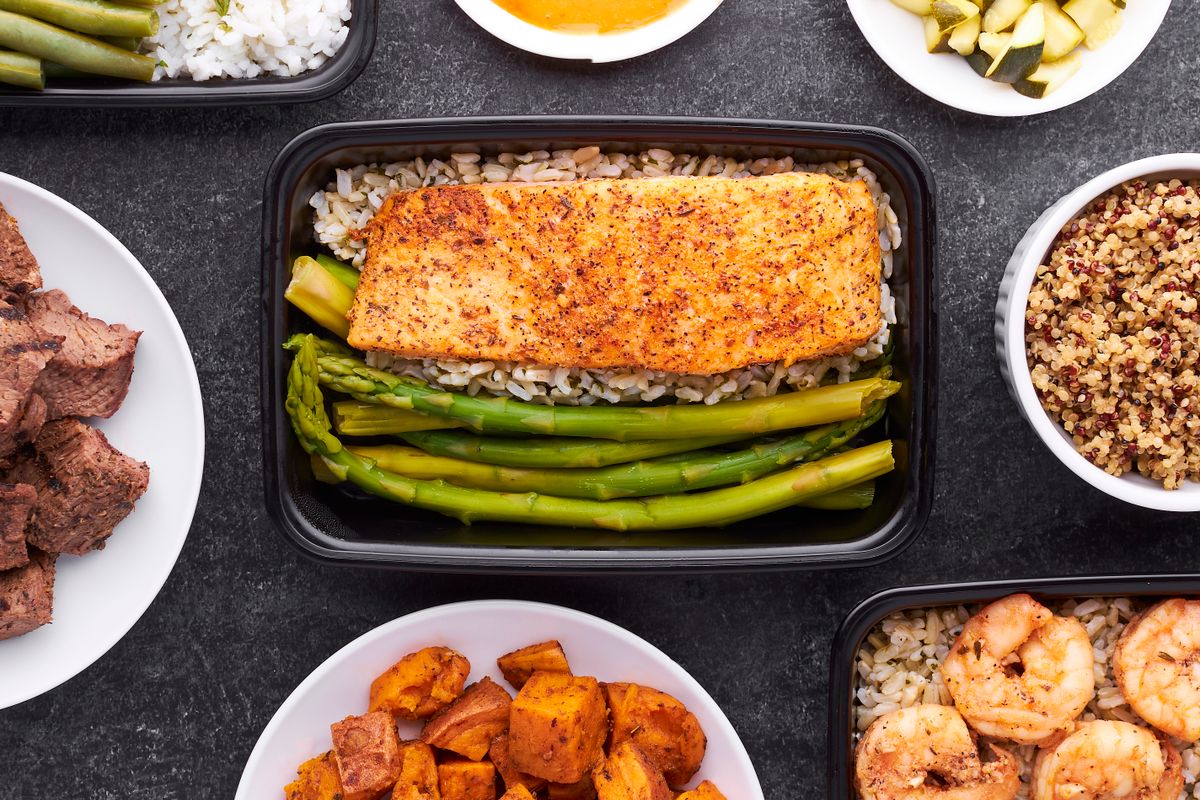
Two shopping passes: a shelf-stable pass 4-5 days out (stock, flour, butter, cranberries, pantry, wine) and a fresh pass 3 days out (produce, dairy, the bird) — with the turkey bought or reserved as early as the stores allow. The single biggest make-ahead failure is a fresh pass done too early: three-day-old green beans are fine, but seven-day-old green beans are a compromise every side dish inherits. The second biggest is buying the turkey late — the thaw math alone (a 16-pound bird needs 4 days in the fridge) means the turkey purchase date is determined by the thaw calculator, not by convenience. The schedule below assumes a December 25 dinner; for a Christmas Eve dinner, everything shifts one day earlier:
| Shopping pass | When | Buy | Storage until use |
|---|---|---|---|
| Reserve/buy turkey | 1-3 weeks out | The bird, sized at 1-1.25 lb per guest | Fridge from its thaw-start date; see thaw calculator |
| Pantry pass | 5-4 days out | Stock, flour, sugar, butter, cream, cranberries, wine, candles, foil | Cupboard; butter and cream to fridge |
| Fresh pass | 3 days out | Hardy produce (potatoes, carrots, onions, celery, squash), eggs, dairy | Crisper; potatoes in a dark bag not the fridge |
| Delicate pass | 1-2 days out | Leafy greens, soft herbs, green beans, mushrooms, fresh bread if not baking | Per idea 8’s storage rules |
| Top-up pass | Day before or morning of | Only what ran out — expect one item | — |
Why two fresh passes instead of one mega-shop: the fragile pass costs 20 minutes and buys a week of shelf-life for exactly the ingredients that fail first. Households that do one giant shop five days out end up trimming wilted herbs and reviving limp beans on December 25 — the hour the plan was supposed to have saved. The drinks quantities for the same evening come from the holiday drinks calculator, and that list belongs on the pantry pass because wine and mixers are shelf-stable and heavy.
4. Can you prep potatoes ahead without them browning?
Yes, three ways, in ascending order of commitment: peel-and-submerge (1 day ahead), parboil-and-oil (1 day ahead, roast-ready), and full make-and-reheat (2 days ahead) — and the browning you are fighting is enzymatic oxidation, stopped by keeping cut potato away from air. Raw potato turns gray-brown within 30-60 minutes of peeling because exposed enzymes oxidize; underwater, there is no oxygen and no browning, which is why the simplest method is also the most reliable. All three methods are ranked below with their honest trade-offs — the choice depends on whether your day-of oven has room for a roast (parboil) or whether the mash should simply be reheated:
| Method | Prep time ahead | Storage | Day-of work | Quality result |
|---|---|---|---|---|
| Peel and submerge | 1 day ahead, 20 min | Fully underwater in a pot or bowl, fridge, water changed if 24h+ | Drain, cook fresh — 25 min | Identical to same-day peeling |
| Parboil and dress | 1 day ahead, 30 min | Drained, tossed with fat, on the roasting pan, fridge uncovered 1 hour then covered | Roast 425°F for 45-50 min | Better than same-day — dried surface crisps harder |
| Parboil for mash | 1 day ahead, 30 min | Drained, back in the covered pot, fridge | Finish 10 min simmer, mash with warm dairy | Near-identical; saves the peel-and-chop hour |
| Full make-and-reheat | 2 days ahead | Shallow containers per the sit-out math’s storage method | Reheat with milk and butter — 25-30 min oven or stovetop | 90% of fresh; slightly denser, revived by the dairy ratios |
The parboil-and-dress method deserves its reputation as the roast-potato cheat code: a potato that dries overnight in the fridge roasts into a harder crust than a same-day potato ever gets, which is why restaurant kitchens intentionally day-old their roasties. The full make-and-reheat route trades a little texture for the entire potato workload leaving Christmas Day — for a large party where the stovetop will be crowded, it is the right trade. Whichever method, the one rule that never changes: cut potatoes never sit in air, and cooked potatoes never sit out at room temperature — the two-hour clock from the mashed-potato safety math governs every bowl on the day.
5. Which casseroles can be assembled uncooked the night before?
Most of them: green bean casserole, scalloped potatoes, mac and cheese, corn pudding, and stuffing all assemble raw, refrigerate covered for 24-48 hours, and bake straight from the fridge with 15-20 extra minutes. The make-ahead exception is anything with a fragile fresh topping — fried onions, crumb tops, marshmallows — which go on at bake time, not assembly time, or they steam soggy under the lid for a day. Assembly-order rule for dairy sauces: sauce slightly thicker than the recipe, because pasta and potatoes absorb liquid overnight and a day-one sauce that is “just right” bakes into a day-two bake that is loose. The bake-from-fridge table below covers the standard Christmas casseroles; every bake time is from 375°F unless noted:
| Casserole | Assemble ahead | Fridge life raw | Topping added | Bake from fridge |
|---|---|---|---|---|
| Green bean casserole | 24-48 h | 2 days max (sauce base) | Fried onions at minute 35 | 50-55 min, foil off at 35 |
| Scalloped potatoes | 24 h (raw slices brown otherwise) | 1 day | Cheese at minute 40 | 75-90 min, covered first 45 |
| Mac and cheese | 24-48 h | 2 days | Crumb top at bake time | 40-45 min |
| Corn pudding | 24 h | 1 day (egg base) | None | 50-55 min |
| Stuffing (baked, not in bird) | 24 h | 1 day (egg and broth bind) | Butter dots at bake time | 45-60 min, uncovered for crust |
| Sweet potato casserole | 24-48 h | 2 days | Marshmallows last 10 min | 50 min total |
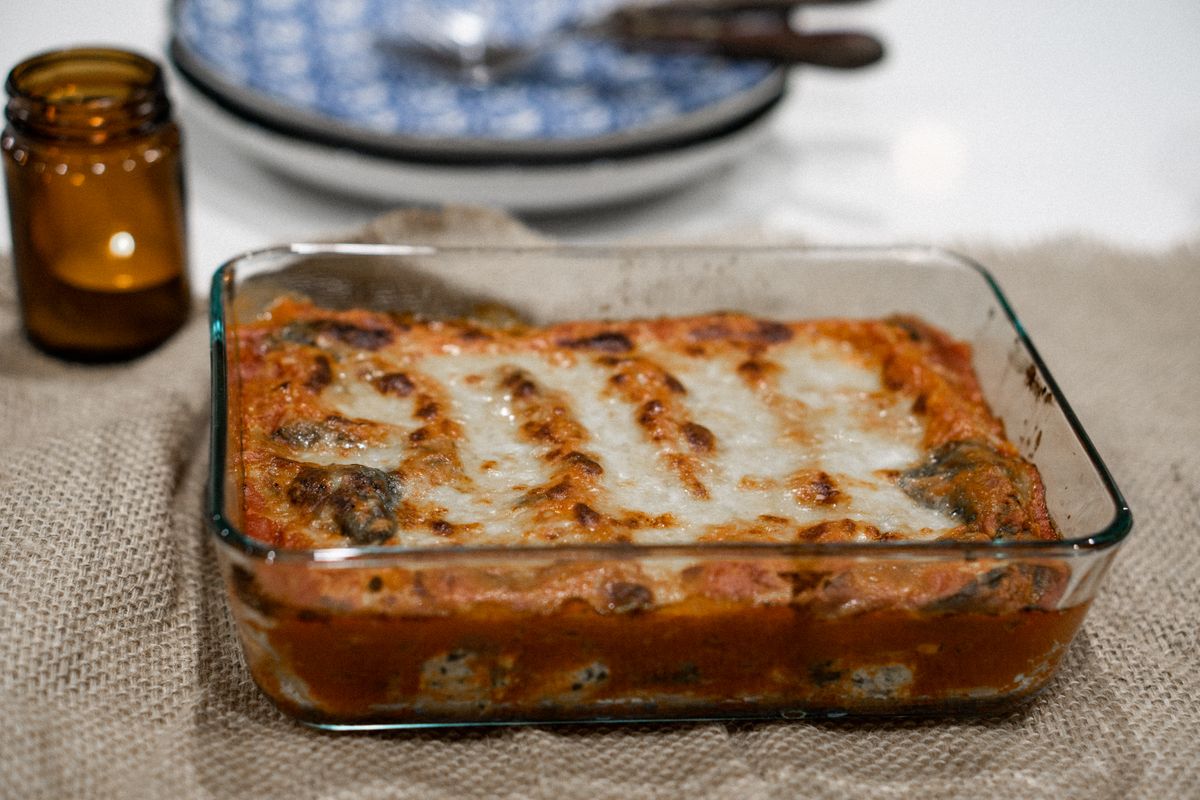
The deep-dish equipment decision lives here too: a 9-by-13 with a locking lid is the make-ahead workhorse because the same dish travels fridge-to-oven, and glass tolerates the fridge-to-hot-oven move better than most people expect — cold glass into a cold oven that heats together is the safe pattern (preheated-oven-onto-cold-glass is the shattering risk). Pyrex states its glass is safe into a preheated oven; the conservative kitchen habit is oven-and-dish-heating-together for straight-from-fridge bakes, and the practical difference to the food is zero because the extra 5 minutes of heat-up is inside the +15-20 minute buffer already.
As an Amazon Associate I earn from qualifying purchases.

- The make-ahead workhorse: assemble, lid, stack in the fridge, then oven — 4.7 stars from more than 1,700 buyers
- BPA-free lid for the fridge leg, glass handles oven, freezer, microwave, and dishwasher legs without a transfer
- One 9×13 covers the standard casserole batch for 10-12 guests; two covers a green-bean-plus-scalloped double line
Price at publish; check the listing. Budget $25-45 per dish — buy two if the menu runs the classic double-casserole line, because the night-before fridge is the whole plan’s bottleneck (idea 10).
6. How far ahead can you make the gravy?
Make the entire gravy base 3-4 days ahead — broth, roux, aromatics, seasoning — and on the day, whisk in only the roasting-drippings for the flavor that says “fresh.” This is the single highest-leverage make-ahead move on the page because gravy is the day’s worst multitask: it demands constant whisking during exactly the window when the turkey needs carving attention and every other dish needs an oven. The base method: simmer 4-6 cups of good stock with the turkey wings or necks (bought with the bird), a halved onion, carrot, and celery, 30-45 minutes; strain; then build a roux with 4 tablespoons butter and 5 tablespoons flour per 4 cups and cook it until nut-brown; combine and reduce to slightly thicker than serving texture. Refrigerate up to 4 days or freeze a month. Day-of: reheat to a bare simmer, whisk in the degreased pan drippings, adjust salt — ten minutes, and nobody can taste which part was pre-made.
| Gravy stage | When | What happens | Time on the day |
|---|---|---|---|
| Base broth + roux | 3-4 days ahead | The entire body and thickness, built calm | Zero |
| Reheat base | Day-of, 30 min before carving | Bare simmer, whisked smooth | 5 min |
| Pan drippings in | While turkey rests | Skim fat, deglaze pan, whisk liquid into base | 8-10 min |
| Season and hold | Last 20 min | Salt, pepper, a splash of cream if wanted; thermos or small crock holds it | 3 min |
| Backup thickener | Standing by | 1 tbsp cornstarch + 1 tbsp cold water for a loose gravy rescue | 1 min if needed |
Two failure notes from experience: degrease the drippings properly (a fat separator or a 5-minute rest with a spoon is enough — greasy gravy is the one flaw guests notice instantly), and never boil the assembled gravy hard, because a roux-thickened gravy breaks into graininess at a rolling boil and only a whisk-and-patience rescue fixes it. Gravy made this way also obeys the same fridge and reheating clocks as everything else on the table; the safety side of that math lives in the mashed-potato safety page’s storage section, and it applies to every jug and boat on the day.
7. What desserts hold best when baked early?
Pies and tarts: baked 1-2 days ahead and stored loosely covered, they are equal or better than day-of — pumpkin and pecan actually set firmer overnight. The dessert course is the friendliest make-ahead territory on the whole menu, and it should be scheduled first (it was, in idea 2’s countdown) because dessert failures are recoverable and side failures are not. The honest ranking of Christmas desserts by make-ahead tolerance:
| Dessert | Bake/make ahead | Storage | Day-of step |
|---|---|---|---|
| Pumpkin pie | 1-2 days | Fridge once fully cool (egg custard) | None — serve cold or 10-min warm |
| Pecan pie | 1-2 days | Room, loosely covered | None; warm optional |
| Apple/cranberry tart | 1 day | Room, loose cover | Re-crisp base 10 min optional |
| Cookies and stollen | 3-7 days | Airtight tin | None |
| Trifle | Assemble day before | Fridge — improves overnight | Whip cream topping at service |
| Cheesecake | 2-3 days | Fridge, uncut | None; slice cold, sauce at table |
| Meringue-topped desserts | Never ahead | — | Day-of only — weeps within hours |
| Choux/pastry cream items | Components ahead | Cream 2 days, shells 1 day | Fill at the last hour |
Cookie trays belong here too, and their quantities live in the cookie-exchange calculator — baked cookies are the one course that improves with three days of rest in a tin. The pumpkin-pie refrigeration note is the same food-safety logic from the sides table: egg-and-dairy desserts inherit the two-hour sit-out rule once served, which is why the dessert shelf plan includes “fridge after the buffet closes” as its final step rather than an optional one.
8. How do you prep herbs and garnishes ahead?
Hardy herbs (rosemary, thyme, sage) chop and store 2 days ahead in a damp-paper-towel pouch; soft herbs (parsley, chives, basil) hold 1 day in a damp towel or a jar of water; onions, celery, and carrots chop 2 days ahead in sealed containers. Herb failure is moisture failure — washed-but-wet herbs rot, bone-dry herbs dessicate, and the damp-towel middle is the method that works for both camps. The full storage matrix for the make-ahead prep pass:
| Item | Prep ahead | Method | Holds |
|---|---|---|---|
| Rosemary, thyme, sage | Chop 2 days | Damp towel, sealed container | 3-4 days |
| Parsley, cilantro | Chop 1 day | Damp towel, sealed; or stems in a water jar, leaf bag on top | 2-3 days |
| Chives, basil | Chop day-of | Basil blacks when chilled-chopped — day-of only | — |
| Onions, garlic | Chop 2 days | Sealed container; the smell migrates, so double-lid | 4-5 days |
| Celery, carrots | Chop 3 days | Sealed container with a damp towel under | 5-7 days |
| Green beans, trimmed | Trim 2 days | Sealed bag with paper towel to catch moisture | 4-5 days |
| Mushrooms | Slice day-of | They brown and weep when pre-sliced | — |
| Citrus zest and juice | 2 days | Zest in a sealed tub; juice in a jar | 3 days juice, 4 zest |
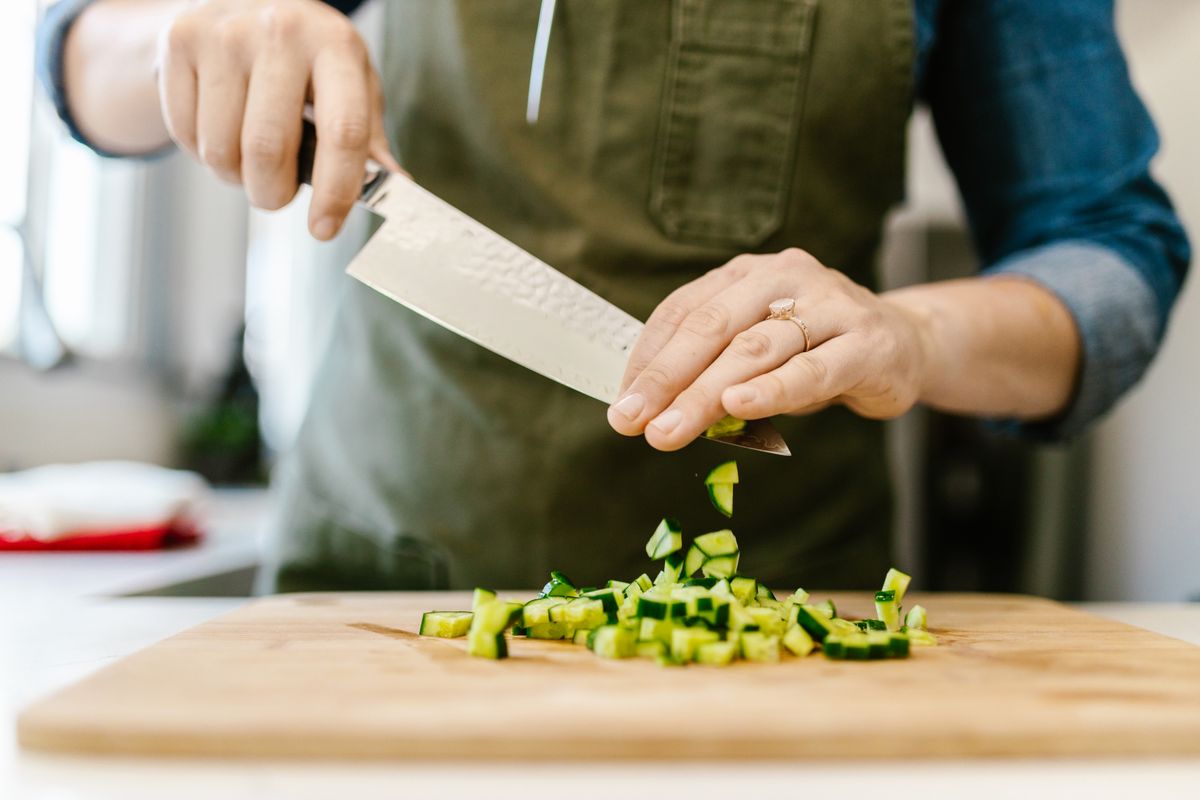
The chop session is the best-abbreviated hour in the whole plan: one board, one rhythm, jugged containers lined up with labels already written. Forty-five minutes of December 24 chopping erases every knife task from the day-of menu, and it is the single task most often underestimated by hosts who plan everything else — the “chop everything fresh” habit is what actually creates the 3 p.m. counter-chaos this page exists to end.
9. What turkey prep can be done days early?
Thawing (determined by the calculator, days ahead), dry-brining (up to 2 days ahead), and trussing-and-pan-staging (the night before) — but nothing wet-brines longer than its recipe says, and the bird never sits loose uncovered in the fridge above ready-to-eat food. The turkey’s make-ahead contribution is mostly subtraction: every prep move done early shortens the morning’s critical path to the roast-time calculator’s clock. The sequencing that works in a real fridge:
| Turkey step | When | Method | Why it moves the day |
|---|---|---|---|
| Thaw | Per weight, up to 5-6 days out for a 20-lb bird | Fridge, tray on the bottom shelf, 24 h per 4-5 lb | The only step with a hard deadline — a frozen bird on Christmas morning is the year’s worst surprise |
| Dry-brine | 1-2 days out | Kosher salt over skin and under, uncovered on a rack, bottom shelf | Deeper seasoning and crisper skin; the uncovered rest dries the surface |
| Aromatics stuffed in cavity | Night before | Onion, lemon, herbs into the cavity (not the neck stuffing) | Zero morning handling of the raw bird |
| Truss and stage in roasting pan | Night before | Trussed, on the rack, in the pan, wrapped, bottom shelf | Morning is lift-and-season, not wrestling |
| Butter under skin | Night before or morning | Herb butter under the breast skin | Either works; doing it night-before saves 10 cold-hand minutes |
| Stuffing | Night before, bird stays unstuffed | Stuffing bakes as its own casserole (idea 5) | Safer, faster, and the bird roasts 30-45 min quicker unstuffed |
The thaw date is the one number that cannot be improvised: run the turkey thaw calculator before the shopping pass in idea 3, because it sets the bird’s purchase or pull-from-freezer date, and the fridge shelf it occupies for five days is part of idea 10’s space math. A dry-brined bird also releases no liquid into the pan — the skin dries instead of sweating — which is why the same-night stage-and-wrap works without the skin turning slimy.
10. How do you fit prepped food in a small fridge?
Shelf allocation by deadline: casseroles take the main shelves (they are rigid and stackable), jugged prep fills the door, the turkey owns the bottom shelf, and desserts live outside the fridge in a cool room until service. A standard 18-cubic-foot fridge with a twelve-guest make-ahead load is genuinely solvable, but only with a plan — the Tetris failure mode is casseroles arriving at the 2-days deadline with no shelf cleared. The allocation that works:
| Fridge zone | Assigned to | Why | Space trick |
|---|---|---|---|
| Bottom shelf | The thawing/brined turkey, on a tray | Raw poultry drips — nothing above it, ever | Remove the crisper drawer if the bird is tall |
| Main shelf 1 | Assembled casseroles, stacked | Rigid 9×13 dishes stack two-high | Lid-locking dishes stack without the jenga |
| Main shelf 2 | Gravy base jars, dessert sauces, dairy | Heavy, wet, needs containment | Uniform jars square-stack; round wastes 30% |
| Door | Jugged chopped veg, herbs, drinks | Door is warmest — only for safe items | Quart jugs fit door bins exactly |
| Outside the fridge | Pies, cookies, bread, wine | None need refrigeration until served | Cool room + tins frees 3+ shelf-equivalents |
The two container-system decisions that make small-fridge Tetris work: stackable square containers over round (round wastes roughly a third of shelf width), and quart deli containers for everything jug-shaped — stock, gravy base, chopped veg, dessert sauces all travel in the same uniform size. The standing fleet for a twelve-guest menu is small, standardized, and reusable every holiday — the sizing below is what the whole plan runs on, and every container in it gets a dissolvable label the moment it is filled:
| Container | Size | Qty | Carries |
|---|---|---|---|
| Glass 9×13 dish with lid | About 4 qt | 2-3 | Casseroles, stuffing, the roast-potato pan |
| Deli container, quart | 32 oz | 10-14 | Gravy base, chopped veg, dessert sauces, stock |
| Deli container, pint | 16 oz | 6-8 | Herbs, garnishes, cranberry sauce, small sauces |
| Gallon zip bags | 1 gal | 8-10 | Turkey parts for stock, trimmed beans, flattened flat-freeze items |
| Pint jars | 16 oz glass | 4-6 | Salad dressing, custards, anything transferring to the table |
| Loaf pan or flat tub | 1.5-2 in deep | 2 | Mash shallow-cooling (the two-inch rule from the safety math) |
As an Amazon Associate I earn from qualifying purchases.

- The uniform-square jug fleet this page’s fridge plan runs on — 4.7 stars across more than 14,000 buyers, leakproof and freezer-safe
- Gravy base, chopped veg, dessert sauces, and stock all travel the same container shape, so the shelves stack instead of negotiating
- Microwave and dishwasher safe, so the day-after leftover round-trips cost zero dishes
Price at publish; check the listing. Budget $25-40 for the 24-pack — buy before the holiday, because the two-days-out fridge deadline is exactly the wrong moment to discover the container fleet is six tubs short.
11. What does the day-of oven schedule look like?
With everything prepped, a single oven runs a 4-hour schedule: turkey first (its calculator clock), casseroles staggered around the rest window, potatoes roast or mash finishes last, and everything lands hot at service — no dish waits twice. This is the payoff table for the whole page: the same single oven that panicked through five dishes in 2022 now moves eight through a fixed queue. The schedule assumes 4 p.m. service and a 14-pound turkey (about 3 hours at 325°F); scale the turkey block from the roast-time chart for your bird:
| Time | Oven | Action | Stovetop / counter parallel |
|---|---|---|---|
| 12:30 | 325°F | Turkey in, on its calculated clock, timer set | Table set; drinks chilled; last salad components separate |
| 2:30 | 325°F, turkey out onto rest | Turkey rests 30-45 min — the oven is now free | Gravy base reheating; drippings skimmed |
| 2:45 | 375°F | First casseroles in (the 75-90 min ones: scalloped potatoes) | Drippings whisked into gravy; thermos filled |
| 3:00 | 375°F, rack swap | Second wave in (green bean, stuffing, corn pudding) | Mash finish or roast-potatoes parboiled batch into oven at 3:10 |
| 3:30 | 375°F | Toppings on (onions, crumbs, marshmallows); foil off for color | Sweet potatoes glaze; plates warming |
| 3:50 | Warm hold or off | Casseroles out, tented with foil | Carving begins; gravy into boats; rolls refresh 8 min if oven free |
| 4:00 | — | — | Service; the buffet opens with everything hot and the kitchen clean |
The rest-window trick is what makes the single oven sufficient: turkey out at 2:30, and the 30-45 minute rest is simultaneously the oven’s free window to change temperature and take the first casserole wave. Every dish that “needs the oven at 3:45” is actually a reheating task from idea 5’s assembled-raw state, and reheating tasks stack — two racks, staggered starts, foil tents — in a way that five simultaneous fresh-cook tasks never do. If a second oven or a counter oven exists, the rolls and the dessert warm-up move there and the schedule gains slack; if not, the schedule above already fits.
12. Which dishes should never be made ahead?
Four categories fail make-ahead physics: dressed salads, fried foods, roasted vegetables, and anything whose whole point is a temperature or texture contrast at the moment of service. Knowing the exclusion list is as valuable as the prep list — these are the dishes that absorb the day-of labor budget, and they are chosen precisely because everything else moved out. The table of honest failures:
| Dish | Why ahead fails | Closest workaround |
|---|---|---|
| Dressed green salad | Dressing wilts leaves within 30 minutes | Components prepped (idea 8), dressing jarred, assemble at service — 5 min |
| Fried anything | Steam-softens within 15 minutes; reheating never restores the crust | Fry at 3:40 in a Dutch oven while the turkey rests — the one day-of fry window |
| Roasted vegetables | Refrigerated roast veg goes limp; reheat steams rather than crisps | Par-roast 80% ahead, re-crisp at 425°F for 8-10 min day-of |
| Meringue toppings | Weeps and shrinks within hours | Assemble meringue at the last hour or serve a different dessert |
| Pan sauces from scratch | The “from drippings now” flavor is the point | Gravy-base method (idea 6) — drippings still go in fresh |
| Carbonara-style or cream-emulsion dishes | Emulsions break on chill and only partially re-form | Not on Christmas menus for a reason |
The exclusion list is also the day-of labor budget: dressing two salads, one fry batch, and one sheet-pan re-crisp is 40 minutes of active work spread across a schedule that is otherwise timers — which is exactly the workload a host can absorb while greeting guests. The leftover week that follows dinner runs on its own clocks, tracked in the turkey leftovers calculator, and the youngest guests’ table runs its own logistics per the kids-table guide — both inherit this page’s container fleet and its label discipline without a single extra purchase.
Frequently asked questions
Related holiday kitchen guides
These are the guides built alongside this one — each covers a different corner of the same December week:
- Turkey Roast Time Calculator — the day-of clock this whole plan schedules backwards from.
- Turkey Thaw Calculator — the thaw date that sets the shopping calendar.
- Ham Roast Time Calculator — the same backwards-planning method for the second protein.
- Turkey Leftovers Calculator — the week-after clocks for everything the plan stores.
- Holiday Party Drinks Calculator — the beverage list that rides the pantry shopping pass.
- Cookie Exchange Calculator — the one course that bakes a week early and improves.
Last updated on November 25, 2026 by Emily Harper — every deadline run against a real twelve-guest menu; bake times verified in a single oven.