
The short version
Cooked turkey keeps 3 to 4 days in the fridge at 40°F or below, and about 4 months in the freezer at 0°F for best quality. Carve it within two hours of the bird coming out of the oven, get it into shallow containers, and use the calculator below to turn your cook date into an exact eat-by date — then freeze whatever you will not finish by day 3.
What’s in this guide
- 1. The 2-hour rule: why the clock starts at carving
- 2. Why cooked turkey only lasts 3-4 days in the fridge
- 3. Reheating leftovers to a safe 165°F without drying them out
- 4. Freezer math: what to freeze tonight and what never survives
- 5. The carcass is the best part: broth timeline
- 6. The smell test: signs your leftovers are done
1. The 2-hour rule: why the clock starts at carving
Food safety math is not about the turkey being “bad” the moment dinner ends — it is about how long bacteria get a comfortable temperature to multiply in. The USDA draws the danger zone between 40°F and 140°F, and in that band the bacteria that cause food poisoning can double in number roughly every 20 minutes. A whole turkey sitting on the counter through a long, chatty evening sits squarely inside that zone.
That is where the 2-hour rule comes from: perishable food needs to be back in the fridge within 2 hours of coming off the heat. If your kitchen or dining room is warmer than 90°F — a packed kitchen with the oven running all day qualifies — the window shrinks to 1 hour. The clock does not reset for seconds or thirds. The time the platter spent on the table counts against the total.
| Situation | Safe window | What to do at the limit |
|---|---|---|
| Carved and refrigerated within 2 hours of roasting | 3-4 days of fridge life | Freeze the rest on day 3 or 4 |
| Sat out 2-3 hours at room temperature | Fridge life shrinks, quality drops first | Eat within 2 days, or freeze |
| Sat out more than 4 hours (or 1 hour above 90°F) | None — the danger zone already won | Toss it; reheating does not reverse toxin buildup |
| Still on the bone at bedtime | The bone insulates and keeps meat warm longer | Carve now, not tomorrow morning |
One practical note: carve the bird before guests leave, not the next morning. A whole carcass acts like an insulated dome — the meat near the frame can hold 90-100°F for hours, which is exactly the incubation range you do not want. If the bird is still mostly intact right now, put the carving knife down after reading this and go slice it.
Your fridge itself matters as much as the turkey. The USDA target for refrigerated storage is 40°F or colder, and a surprising number of home fridges run 42-45°F on the door shelves. A $9 dial thermometer settled on the middle shelf tells you the truth in one glance, and it is the single cheapest upgrade your Thanksgiving leftovers will ever get.

As an Amazon Associate, Herpickery earns from qualifying purchases.
2. Why cooked turkey only lasts 3-4 days in the fridge
The 3-4 day number is not folklore; it is the USDA’s storage limit for cooked poultry, and it comes from how fast Listeria monocytogenes and other spoilage organisms grow even at proper fridge temperatures. Cold slows bacteria down — it does not stop them. At 40°F, the populations that would double every 20 minutes at room temperature now double roughly every one to two days, which is why the safe window is counted in days rather than weeks.
The arithmetic of a typical Thanksgiving bird makes the timeline worth respecting. Plan on 1.25 pounds of bone-in turkey per person, which yields roughly half a pound of cooked meat per guest. Feed six people and you are putting away about 2 pounds of sliced meat, plus a 10-12 pound carcass, plus whatever sides survived. That is a lot of food to cycle through 3 days of meals — which is why the freezer section below matters more than willpower.
Date discipline beats memory. A clear container of pale sliced turkey looks identical on day 2 and day 5, and “we cooked it sometime Thursday” is not a date. Write the cook date on masking tape or set the calculator above before you close the fridge door, and the timeline stays honest without anyone keeping a spreadsheet.
Where you store it inside the fridge changes the math too. The door is the warmest zone in the box — every opening swings it 5°F or more — so turkey stored in a door shelf ages faster than turkey on the back of the middle shelf. Shallow, airtight containers in the coldest zone buy you the full 3-4 days; a covered platter wedged in the door does not.
3. Reheating leftovers to a safe 165°F without drying them out
The safe reheat target is 165°F at the center, measured with a thermometer, regardless of the method. That number kills the bacteria that grew during storage in seconds. The catch is that turkey dries out long before it hits 165°F if you just blast it, so every good reheat method has two tricks in common: add moisture, and use gentle heat.
| Method | Setup | Time for 6-8 oz of sliced turkey | Why it works |
|---|---|---|---|
| Oven (best for batches) | 300°F, slices in a dish with 2-3 tbsp broth, covered with foil | 15-20 minutes to 165°F | Gentle heat plus steam keeps the meat from tightening up |
| Microwave (best for single plates) | Slices layered with a splash of broth, covered with a damp paper towel, 70% power | 2-3 minutes, stir or flip halfway | Lower power plus moisture mimics the oven result in a third of the time |
| Stovetop (best for gravy-based dishes) | Simmer slices in gravy or broth over medium-low | 5-8 minutes | The liquid carries heat in gently and doubles as sauce |
| Soup or casseroles | Cut meat into chunks and simmer in the pot | 10-15 minutes once the pot is bubbling | Shredded meat reheats evenly and hides any dryness |
Two reheating mistakes cause most of the dry-turkey complaints. The first is reheating the same container repeatedly — every trip through heat pushes the meat past 165°F again and squeezes out more moisture, so reheat only the portion you are about to eat and keep the rest cold. The second is skipping the thermometer and going by clock time alone; an oven at 300°F needs 20 minutes for a dense pile of slices but only 10 for a thin layer, and only a probe knows which one you made.
Gravy is the exception to the dryness problem and the reason you should freeze any extra separately. Reheated turkey folded into hot gravy tastes close to fresh because the fat and stock re-coat the fibers — so if you expect a fridge full of white meat, freeze two cups of gravy on purpose and you have turned day-4 turkey into hot turkey sandwiches worth eating.
4. Freezer math: what to freeze tonight and what never survives
The freezer extends your turkey budget from 4 days to about 4 months of best quality — safety-wise, food held solidly at 0°F stays safe indefinitely, but fat slowly oxidizes and the meat picks up freezer flavor, so 4 months is the window where leftovers still taste like Thursday’s bird. Portioning is the whole game: freeze in meal-size bags laid flat, because a flat bag thaws overnight in the fridge while a frozen brick of sliced turkey thaws over two days.
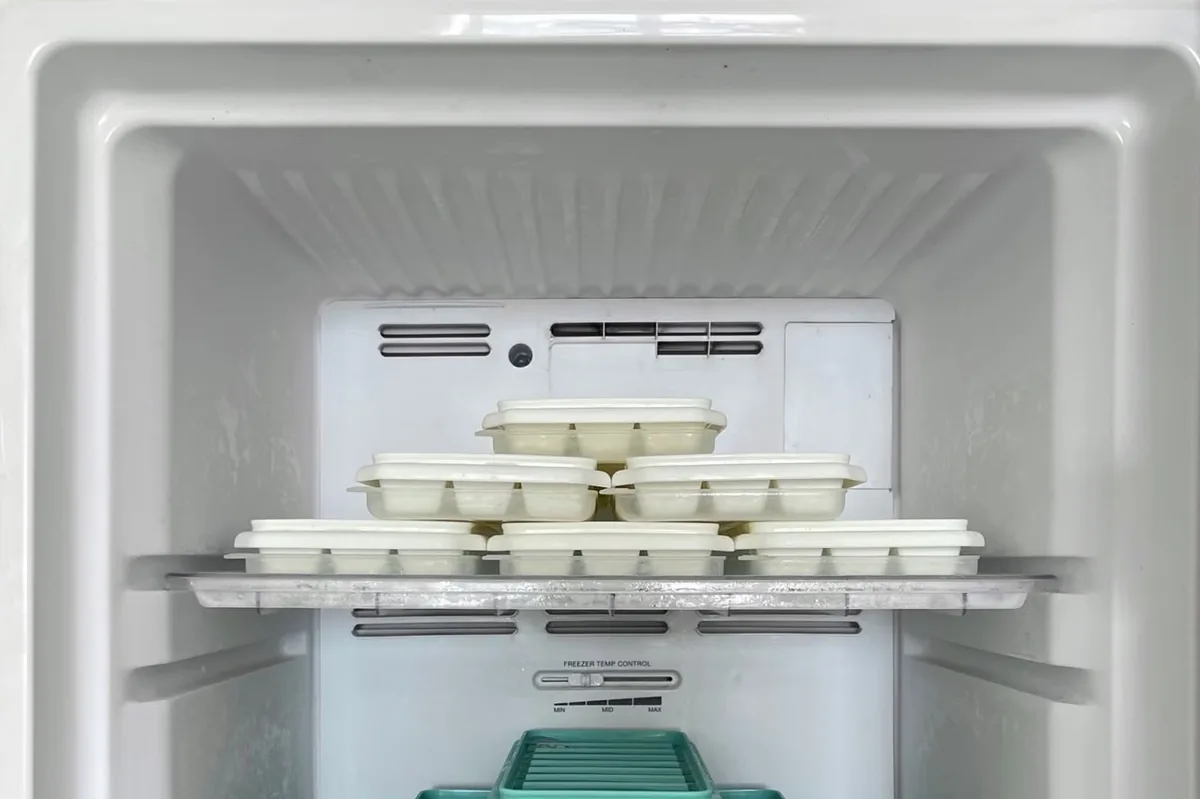
Label every bag with the contents and the freeze date — freezer tape plus a marker takes 30 seconds and settles every “is this the November turkey or last year’s” debate in February. Squeeze the air out of bags before sealing; air is where freezer burn lives.
| Leftover | Freezes well? | Best quality | Thaw and use |
|---|---|---|---|
| Sliced turkey breast and thighs | Yes — the star | 4 months | Overnight in the fridge; reheat with broth |
| Turkey broth or stock | Yes, freeze in 2-cup portions | 6 months | Straight from frozen into the pot |
| Gravy | Yes, whisk while reheating | 3 months | Low heat, whisk to bring it back together |
| Pumpkin or pecan pie | Yes, wrap well | 1-2 months | Thaw in the fridge, 30 min in a 300°F oven to refresh |
| Mashed potatoes | Acceptable, grainy after thaw | 2 months | Whisk hot milk back in while reheating |
| Green bean casserole | No — the topping turns to mush | — | Eat in fridge window or compost |
| Cranberry sauce | Yes, almost absurdly well | 2 months | Thaws in the fridge overnight |
| Green salads and fresh relish trays | No | — | Not freezer candidates at all |
The strategy that works for most households: keep enough turkey for two fridge meals, freeze the rest in dinner-size portions tonight, and keep the carcass separate for the broth project below. That turns a 4-day countdown into a month of planned leftovers without anyone eating tired turkey on day 5.
5. The carcass is the best part: broth timeline
Half the value of a 12-pound bird is locked in the frame. Simmering the carcass with an onion, a carrot, a few celery ends and water to cover for 3-4 hours turns the bones, skin and gelatin into 8-12 cups of stock that makes every January soup better — and the broth has its own storage math to respect.

Fresh broth keeps 3-4 days in the fridge — the same window as the meat, because it came from the same bird — and about 6 months in the freezer, longer than the meat since there is no fat to oxidize. Freeze it in 2-cup portions or in a muffin tin for stock cubes, and pop the frozen discs straight into future pots. If you skim the fat after chilling, the defatted broth freezes cleaner and pours into recipes measured exactly.
Timing the broth project matters because the carcass spoils on the same clock as the slices. Make the stock on day 2 or day 3 at the latest, while the frame is still fresh — a carcass that sat in the fridge for 5 days before simmering produces broth with a sour edge that no amount of seasoning hides. Strip the remaining meat while you are at it; the bits that come off after simmering are perfect for soup and they count against the same 3-4 day window.
6. The smell test: signs your leftovers are done
The dates in this guide are the planning tool, but every container still gets a sensory check before it is reheated, because storage temperature varies from fridge to fridge. When a leftover fails any of these, the timeline is over regardless of what the calculator said.
- Off smell: cooked poultry turns sour or sulfurous as it spoils — if the container smells like anything other than turkey, it is finished.
- Slime or film: any slippery or tacky film on sliced meat is bacterial growth you can see, which means growth you cannot see is well underway.
- Color shift: grayish or greenish tints on previously golden meat, or dull, darkened gravy, mark the end of the line.
- Fizz: bubbles in gravy or broth without cooking mean fermentation has started. Discard immediately.
- Mold anywhere: mold on one slice means the whole container goes — spores travel through moisture and air inside a sealed box.
One myth worth retiring while you are at it: reheating does not make old leftovers safe. Heat kills live bacteria, but some toxins the bacteria produced while sitting in the danger zone survive boiling. That is why the 2-hour rule on day one is the real insurance and the smell test is only the final gate — neither rescues food that already spent too long warm.
When in doubt, the USDA’s own line applies: when in doubt, throw it out. A portion of turkey costs a couple of dollars; a bout of food poisoning costs the rest of your holiday weekend.
FAQs
How long does cooked turkey last in the fridge?
Cooked turkey keeps 3 to 4 days in a fridge at 40°F or below. Use it by day 3 for best quality and treat day 4 as the hard stop — freeze anything you will not reheat by then.
Can you freeze cooked turkey after Thanksgiving?
Yes, and it is the smartest move with a big bird. Freeze sliced turkey in flat, labeled meal-size bags; it holds best quality about 4 months at 0°F and stays safe indefinitely while frozen solid. Thaw overnight in the fridge and reheat with a splash of broth.
How do you reheat leftover turkey without drying it out?
Reheat to 165°F with gentle heat and added moisture: oven at 300°F with a couple of tablespoons of broth and foil for 15-20 minutes, or the microwave at 70% power with a damp paper towel for 2-3 minutes. Only reheat the portion you are serving and keep the rest refrigerated.
Is turkey left out overnight still safe?
No. Cooked poultry left out more than 2 hours (or 1 hour above 90°F) has spent too long in the 40-140°F danger zone, and reheating does not destroy the toxins some bacteria leave behind. Discard it.
How long does turkey broth last in the fridge?
Homemade turkey broth keeps 3-4 days refrigerated and about 6 months frozen. Make the stock by day 2 or 3 while the carcass is still fresh, and freeze it in 2-cup portions for easy soup math.
Related guides
[…] plan: ham and turkey run the same fridge clock — 3 to 4 days. The turkey leftovers calculator gives you the exact eat-by math plus what freezes […]
[…] in an airtight tin at room temperature, two to three weeks frozen, and the freezer branch of the turkey leftovers calculator uses the same 0°F quality math for anything baked you want to hold past the weekend. Sort the […]