
This post contains affiliate links. If you buy through them, Herpickery earns a small commission at no extra cost to you.
The short version
Set the kids’ table in five minutes: kraft paper down the center as the runner and the activity, one place setting per kid with two crayons each, snacks on the table before the adults sit, and one craft station per two kids. Plan 2 feet of table edge per child, keep everything washable, and budget a 10-minute cleanup — the paper rolls up with the mess inside.
Table of contents
- What should you put on a Thanksgiving kids’ table?
- How do you set up a kids’ table in five minutes?
- How much table space does each kid need?
- Kraft paper or cloth runner for the kids’ table?
- What crafts keep kids busy during Thanksgiving dinner?
- What decorations are safe for a kids’ table?
- What food do kids actually eat at Thanksgiving?
- How do you prevent spills at the kids’ table?
- Where should the kids’ table go?
- How do you handle different ages at one kids’ table?
- How do you make the kids’ table feel special, not exiled?
- What is the fastest way to clean up the kids’ table?
1. The supply list
What should you put on a Thanksgiving kids’ table?
The kids’ table runs on five categories, and the whole list fits in one shopping bag: a paper runner, crayons, a low-activity per kid, snacks that hold, and cups with lids. Everything else — place cards, confetti, favors — is garnish, and garnish is what turns a reasonable plan into a cluttered table nobody can color on. The five-category list costs $15 to $30 total if the paper and crayons are new and the rest comes from the pantry.
My rule after a decade of hosting: nothing on the kids’ table that you would not hand a toddler with gravy on his hands. That one sentenceeliminates half the Pinterest ideas and all of the glitter. The supply table below is the whole budget — and the paper runner in row one is doing three jobs at once, which is why it earns its own section below.
| Category | The pick | Why | Cost band |
|---|---|---|---|
| Runner + activity | Kraft paper roll down the center | Surface, activity and cleanup in one | $8–15 |
| Coloring | Two crayons per kid (not packs) | Two is enough; packs become floor debris | $3–6 |
| Activity | One low-mess craft per two kids | Stations share, solo kits duplicate | $5–10 |
| Snacks | Something on the table before dinner | Hungry kids fidget; fed kids sit | $2–5 |
| Drinks | Lidded cups + one pitcher | The single highest-ROI $6 in the plan | $4–8 |
2. The five-minute setup
How do you set up a kids’ table in five minutes?
The setup is a timeline, not a list, because order is what makes it five minutes instead of twenty-five: paper first, crayons second, snacks third, crafts last. Paper down the center before anything else lands, because every later step happens on top of it. The whole sequence is one person, five minutes, no trimming — the roll gets torn, not cut, and the torn edge reads handmade.
Do it while the turkey rests, not the night before — the night-before version gets re-done anyway once you see the table with chairs around it. The last step is always the pitcher on a saucer at the “adult end” of the kids’ table: refills happen from one spot instead of a lap around six chairs.
| Minute | Task | Detail |
|---|---|---|
| 0–1 | Roll the kraft paper down the center | Tear the ends; tuck 6 inches over each edge |
| 1–2 | Two crayons at each seat | Plus 3–4 spares on the table, not in a box |
| 2–3 | Name cards become coloring prompts | Write each kid’s name large on their paper spot |
| 3–4 | Snack plate on the table | Crackers, fruit, one thing green for the parents’ conscience |
| 4–5 | Craft stations + pitcher | One station per two kids; pitcher at the refill end |
3. The seating math
How much table space does each kid need?
Kids need less width than adults but more chaos radius: plan 2 feet of table edge per child (adults get 2.5), 15 inches of depth for the place setting, and a 3-foot standing buffer behind each chair — that buffer is where the dropped-crayon retrieval happens without anyone leaving their seat mid-dinner. A standard 6-foot folding table seats six kids at 2 feet each, which is exactly why it is the default kids’ table furniture of the western world.
The mistake is rounding up: eight kids at a six-foot table means 18 inches each, and 18 inches is two elbow swings from a plate collision. If the count exceeds the table, add a card table for the 4-and-under set rather than compressing the big table — toddlers need the tray-style edge anyway. Keep the activity end (see the craft math in idea 5) at the end of the table farthest from the food pass, or every arm crossing equals every sleeve in the gravy.
| Kids | Table that fits | Edge per child |
|---|---|---|
| 4 | 4-ft table or two card tables pushed together | 2 ft |
| 6 | 6-ft folding table | 2 ft |
| 8 | 6-ft table + 3-ft card table | 2 ft each, never 18 in |
| 10+ | Two 6-ft tables (big kids / little kids) | 2 ft, split by age band |
As an Amazon Associate, we earn from qualifying purchases.

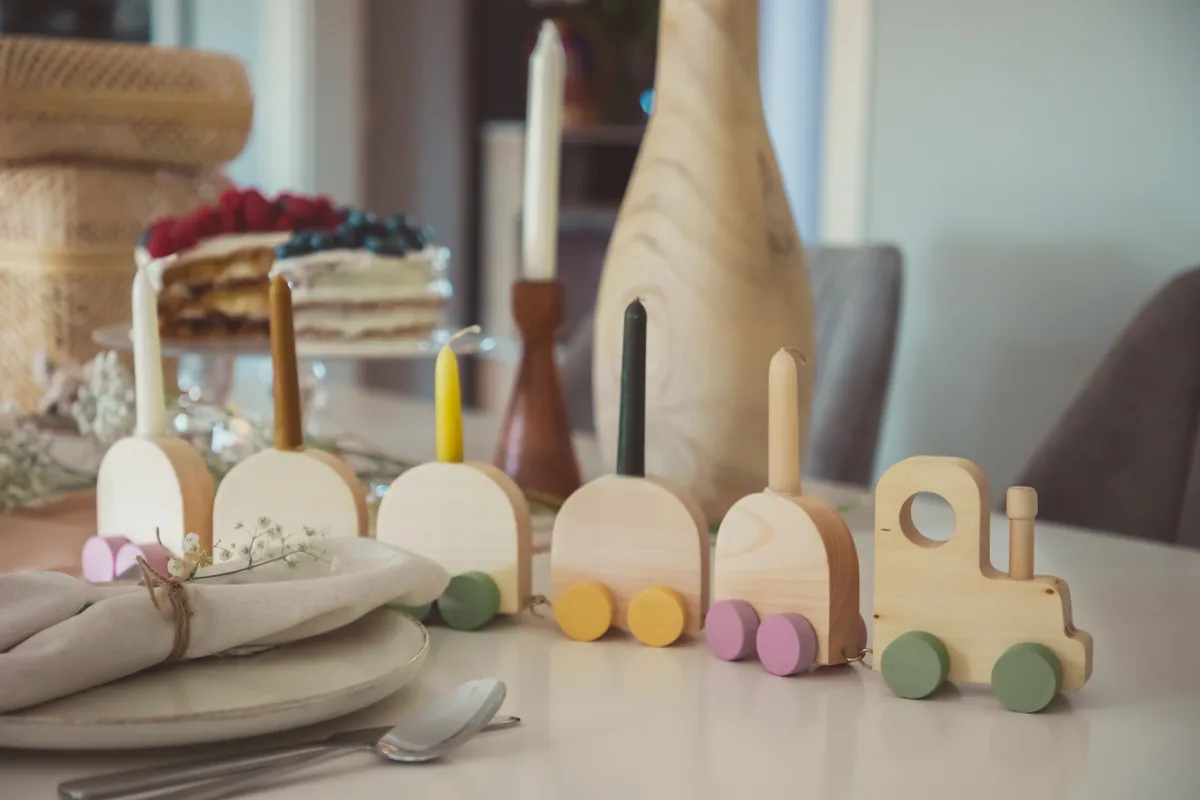
- 72 x 30 inches of fold-in-half plastic — the exact table the seating math above assumes
- Six kids at a comfortable 18 inches each, or eight if two sit on the chair sides
- Wipes clean of glue and marker, folds flat, lives in the closet until next November
Listed price varies; check the current price on Amazon.
4. Paper vs. cloth
Kraft paper or cloth runner for the kids’ table?
Kraft paper wins the kids’ table the way the cloth runner wins the adult one — different job, different tool: a 30-inch-wide kraft roll costs $8 to $15, covers the whole center, absorbs every crayon, marker and juice ring, and rolls the entire mess into the compost in one move. The cloth runner that looks lovely on the adult table becomes a stain catalog at the kids’ end, and you will spend more time washing it than the $12 paper ever cost.
The paper is also the activity, which is the part people miss: name-writing at each seat, tic-tac-toe mid-table, a big collaborative turkey trace at the center. Thirty inches wide fits three crayon hands per side; wider rolls invite full-arm scribble wars across the gravy zone. If the table will be re-used for dessert, tear off the top layer and — yes — there is a second sheet underneath, because you bought the roll.
| Factor | Kraft roll | Cloth runner |
|---|---|---|
| Setup | Tear and go, 30 seconds | Press or iron the fold lines first |
| Activity surface | The runner IS the craft paper | None — needs separate paper on top |
| Spill behavior | Absorbs, darkens, keeps going | Stains, then rides in the wash pile |
| Cleanup | Roll up with the crumbs inside | Laundry load + stain treatment |
| Look | Warm, crafty, intentional | Polished — but this is the kids’ table |
5. The craft kit
What crafts keep kids busy during Thanksgiving dinner?
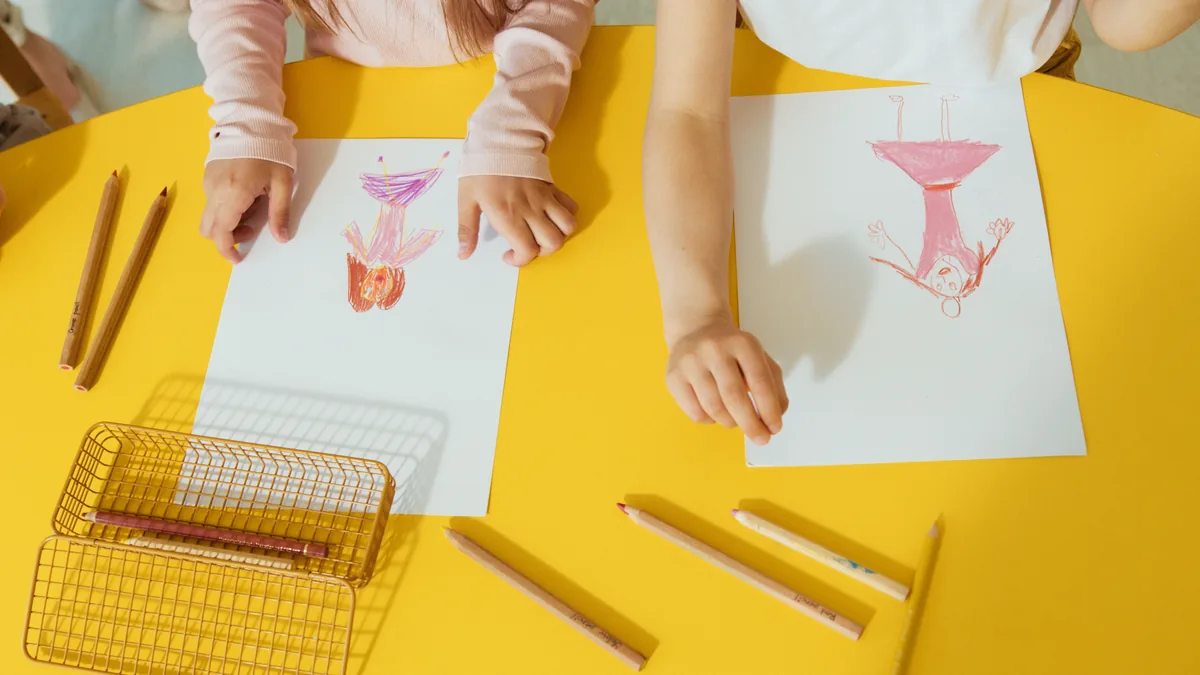
The craft kit is five stations, not five projects: sticker scenes, turkey-hand tracing, fold-a-place-card, pipe-cleaner sculptures, and a collaborative paper-chain garland — each one holds a different age band for 10 to 15 minutes, and five rotations is about 40 minutes of dinner, which is the entire realistic attention budget. Every station uses the same three supplies: crayons, glue sticks, and whatever is in the paper drawer.
The rotation is the trick: kids wander station to station along the table instead of escalating at one seat, and the collaborative paper chain runs the length of the kraft runner so four kids work one project without negotiating. Skip anything with paint (dinner is coming), anything with glitter (you know why), and anything a 3-year-old could swallow — the choking-size rule from the American Academy of Pediatrics applies to craft supplies as much as to snacks.
As an Amazon Associate, we earn from qualifying purchases.

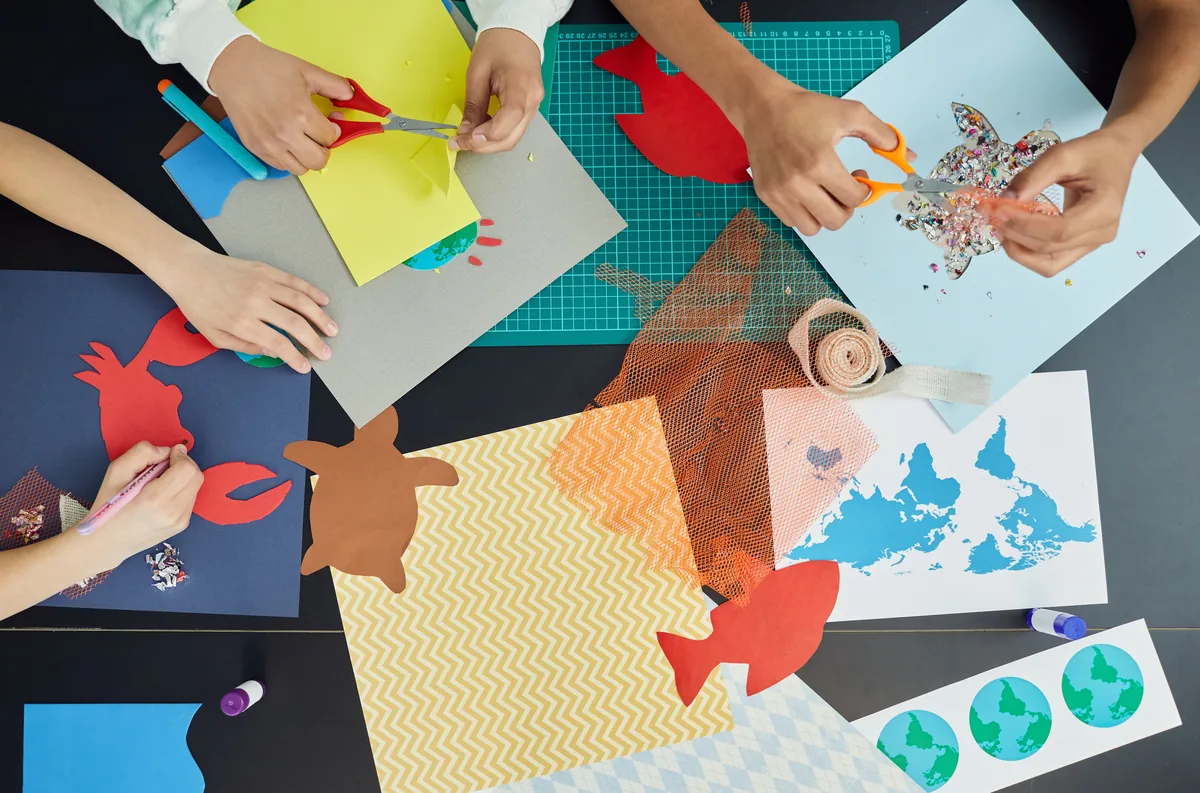
- 24 foam owls with googly eyes, pompoms and leaf stickers — one per kid with a dozen spares
- Self-adhesive pieces, so no glue guns anywhere near a table full of sugar
- Runs the craft station in the rotation and doubles as the keepsake each kid carries home
Listed price varies; check the current price on Amazon.
| Station | Holds attention | Ages | Supplies |
|---|---|---|---|
| Turkey-hand tracing | 10 min | 3–6 | Crayons, the kraft paper under them |
| Sticker scenes | 15 min | 3–8 | Two sticker sheets per kid |
| Fold-a-place-card | 10 min | 5–10 | Cards + names to copy |
| Pipe-cleaner sculptures | 15 min | 6–10 | 10 pipes per two kids |
| Paper-chain garland | 15+ min | 5–12 | Strips, glue stick, tape |
6. Safe decorations
What decorations are safe for a kids’ table?
The kids’ centerpiece follows one rule: soft, washable, and below eye level — a mini painted-pumpkin cluster on a wood tray sits at the center (out of crayon range), and everything else that would survive a dinner party belongs on the adult table. Candles, ceramic turkeys, glass hurricanes and trailing greenery all fail the “toddler with gravy hands” test from idea 1, and a garland runner snags craft elbows all dinner long.
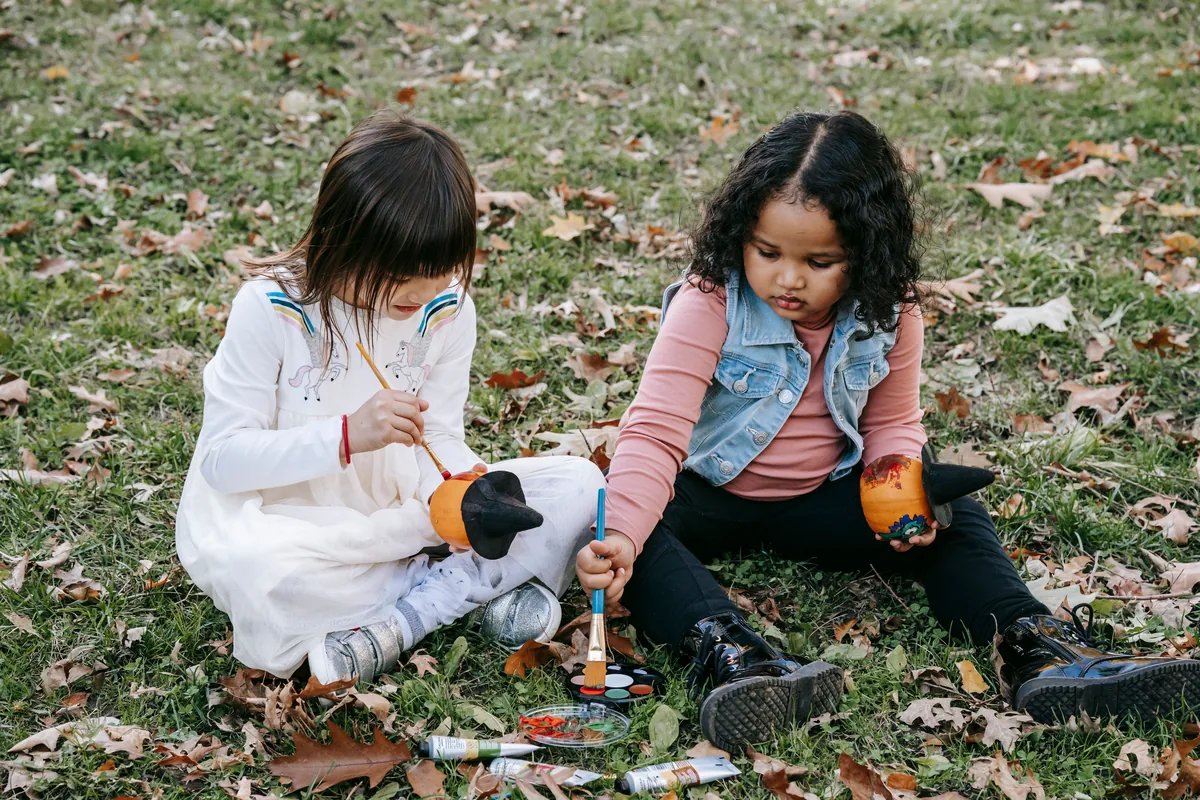
The best decoration is the one the kids made: the pre-dinner pumpkin-painting session (outdoors, weather permitting) produces a table’s worth of kid-made centerpieces that cost one bag of mini pumpkins. Blown-dry leaf drawings taped to chair backs, the paper chain from idea 5, and name cards the kids folded themselves finish the look — the table gets decorated by the kids, which is both the budget move and the point.
| Instead of… | Use | Why it fails / works |
|---|---|---|
| Candles | Fairy lights in a jar (battery) | Open flame plus leaning arms is a countdown |
| Ceramic figurines | Painted mini pumpkins on a wood tray | Survives a knock; doubles as the craft output |
| Glass hurricanes | Paper-bag luminarias, no flame | Nothing to shatter at crayon height |
| Loose confetti | Sticker sheets | Confetti migrates; stickers stay put |
| Fabric garland runner | Collaborative paper chain | Fabric snags elbows; paper is the activity |
7. The kids’ menu
What food do kids actually eat at Thanksgiving?
The kids’ table eats a translation of the adult menu, served family-style in small bowls: plain rolls, cheese cubes, fruit, buttered noodles or mac and cheese as the safe carbohydrate, turkey cut into strips, and corn or carrot sticks — five items covers every picky eater at the table, and each one appears in miniature on the adult table too, so no kid feels served a different dinner. Choking-size discipline still applies for the under-4s: grapes quartered, carrots cooked, no whole nuts (same AAP guidance as the craft supplies above).
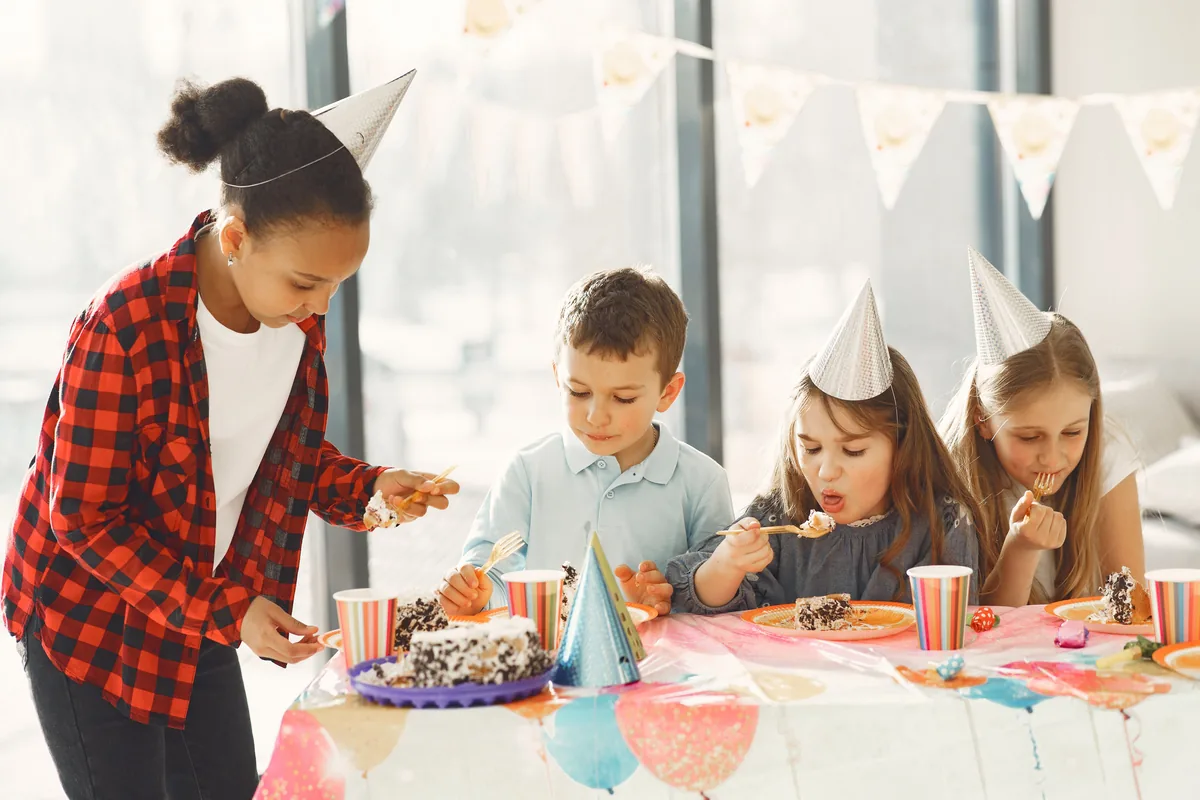
Serve the snack plate before the adults sit down — this is the single behavior-changing move of the whole page: hungry kids raid, fidget and escalate; fed kids color. The dinner bowls then refill at a civilized pace, and the adults’ side dishes stop being raided mid-toast. Dessert stays at the adult pace: the kids’ table gets its pie after the children’s plates clear, not as a negotiating chip during dinner.
| Adult dish | Kids’-table form | Serving note |
|---|---|---|
| Roast turkey | Strips, skin off | Small bowl, fork-friendly |
| Mashed potatoes & gravy | Potatoes, gravy on the side | Gravy is a 50/50 kid outcome — let them opt in |
| Green bean casserole | Steamed carrot sticks | One vegetable that survives the picky filter |
| Cranberry sauce | Skip it | Nobody under 10 has ever wanted it |
| Pie | Same pie, after plates clear | Dessert follows dinner, not dinner fights |
| — | Rolls + cheese + fruit plate | The three-item bridge until dinner lands |
8. The spill system
How do you prevent spills at the kids’ table?
Spills are a system failure, not a kid failure, and the system has four parts: lidded cups (sip-top or flip-top), one pitcher at one end for refills, plates with rims, and nothing filled higher than half — run this system and the kids’ table averages one wipe-down per dinner instead of five. The open-cup experiment is a nice idea for a five-year-old at breakfast; at a Thanksgiving table with eleven people and one cloth sofa nearby, it is a scheduling decision, not a skill milestone.
The refill pitcher does double duty as the pace-setter: kids learn that drinks come from the pitcher end, so nobody crosses the craft zone carrying an open cup. Keep a roll of paper towels under the table at the pitcher end — visible enough that the kids handle their own small spills, contained enough that it never becomes a toy. Cranberry sauce is the only stain worth respecting: it goes on the kids’ plates, never on the kraft paper’s edges where sleeves travel.
| Spill risk | The fix | Cost |
|---|---|---|
| Open cups | Lidded sip cups, labeled with names | $4–8 for six |
| Refill crossings | One pitcher, one refill spot | $0 — any pitcher works |
| Plate slides | Rimmed plates on the kraft paper | $0 — paper grips better than cloth |
| Cranberry territory | Sauce stays center-table, off the paper edges | $0 |
| The wipe-down | Paper towel roll under the table | $2 |
9. Placement
Where should the kids’ table go?
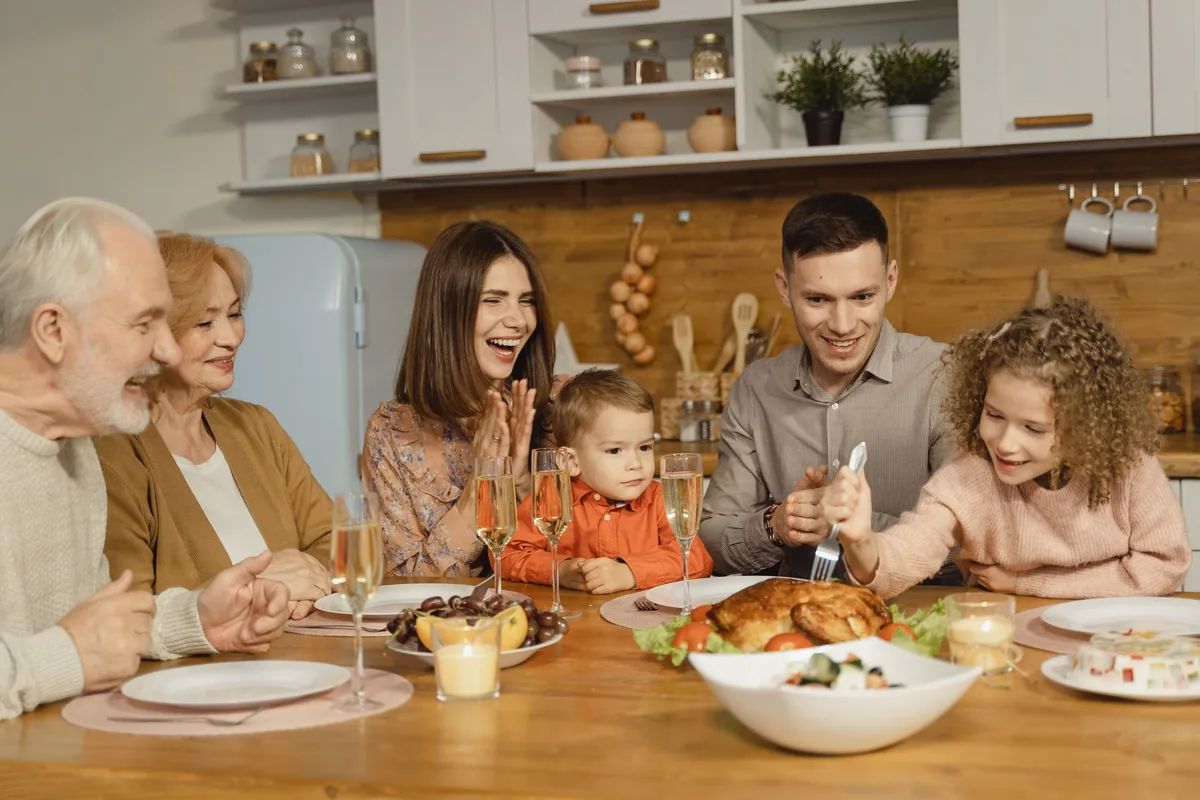
Placement decides whether the kids’ table is a party or exile: the right spot is inside the room, in sight of the adult table, near the food pass but out of the server’s path — a three-way sightline test. Kids banished to the basement eat fast and vanish; kids in the doorway draft get cold and cranky. Our rule after years of trial: the kids’ table sits at the far end of the same room, close enough to hear the toasts, far enough that the craft noise never lands on the adult conversation.
Check three things before committing the table to a corner: the floor underneath (kraft paper protects, but carpet plus juice is a different conversation), the wall behind (crayon altitude is roughly knee height for an 8-year-old), and the traffic lane between the two tables — that lane is where every platter and every toddler travels, so keep it wide and clear of chair backs.
| Spot | Verdict | Watch for |
|---|---|---|
| Same room, far end | Best | Keep the food-pass lane wide |
| Adjacent doorway | OK | Door drafts; toast audibility |
| Kitchen island next to adults | Good for under-5s | Hot dishes passing overhead |
| Basement / playroom | Skip | Out of sight becomes out of control |
| On carpet, no protector | Skip | Juice plus kraft paper equals seep-through |
10. The age bands
How do you handle different ages at one kids’ table?
One table, three age bands, and the bands want different things: 3-to-5-year-olds need a sitter-adjacent seat and sticker-level activities, 6-to-9s run the craft stations, and 10-to-12s want to be junior hosts — give them the pitcher, the refills, and the paper-chain crew chief role. The failure mode is treating the table as one flat group, where the 4-year-old cries because the 9-year-old’s project is impossible and the 11-year-old dies inside next to the crayons.
If your count allows two tables, split by band instead of by family — cousins who play together weekly survive the split, and each table gets activities aimed at exactly one attention span. On a single table, seat the bands at the ends with the middle reserved for the collaborative garland: the natural overlap zone is the project, not the personality.
| Age band | Seat them | Activity level | The trap |
|---|---|---|---|
| 3–5 | End nearest an adult chair | Stickers, hand-tracing | Small parts from older kids’ kits |
| 6–9 | Middle, craft-station side | Full five-station rotation | Boredom if only coloring exists |
| 10–12 | Pitcher / refill end | Junior host roles | Being “babied” with toddler crafts |
| Mixed, one table | Bands at the ends | Collaborative garland bridges them | One flat activity for all |
11. The dignity upgrades
How do you make the kids’ table feel special, not exiled?
The line between “the fun table” and “the kid jail” is about four small signals: real name cards, a centerpiece the kids made, their own candles-that-are-not-candles, and one adult who sits with them for the first course. None costs more than a few dollars; all four communicate that this table is a destination, not a holding pen. Kids who feel hosted behave like guests; kids who feel parked behave like cargo.
The rotation trick from our own family: each adult takes a 15-minute shift at the kids’ table between courses — the visit is short enough to be fun for the adult and frequent enough that the table never feels dropped. The kids’ table also gets its own toast, usually around minute twenty, which is the single cheapest dignity upgrade we have found: a room of adults raising glasses at a table of crayons buys a full hour of good behavior.
| Upgrade | Cost | Effect |
|---|---|---|
| Name cards the kids fold themselves | $0–3 | The table reads intentional, not improvised |
| Kid-made pumpkin centerpiece | $4–8 | Ownership — they defend the table they decorated |
| Battery candles at each setting | $6–10 | The “grown-up dinner” glow, zero flame |
| 15-minute adult shifts | $0 | Nobody feels parked; adults rotate through |
| A kids-only toast | $0 | The dignity moment the whole table remembers |
12. The cleanup math
What is the fastest way to clean up the kids’ table?
The cleanup is a 10-minute, three-step sequence, and it works because every decision upstream made it possible: roll the kraft paper (with the crumbs, crayon shards and glue sticks inside) into the compost, bin the crafts per kid in labeled bags, and wipe the table once — the folding table goes back in the closet before dessert is served. Two adults, ten minutes, done; the year we used a cloth runner it was forty minutes and a stain-treatment evening.
Give the cleanup a crew chief from the 10-to-12 band (see idea 10) — kids this age are genuinely useful, the labeled craft bags become keepsake envelopes for the parents’ fridge art, and the paper roll-up is the satisfying finale kids volunteer for. The two-minute rule applies to the glue sticks and crayons only: anything not in a labeled bag by minute two gets binned, because keepsakes are a choice, not an obligation.
As an Amazon Associate, we earn from qualifying purchases.

- A 36-inch-wide sheet covers the whole kids’ table in one unbroken run — no seams, no gaps
- Doubles as the activity: crayons and markers draw straight on the paper between courses
- Roll the whole mess up at cleanup; 200 feet is several years of Thanksgivings
Listed price varies; check the current price on Amazon.
| Step | Time | Who |
|---|---|---|
| Roll up the kraft paper, compost it | 2 min | Two kids, one adult |
| Bin crafts into labeled bags | 3 min | Crew chief (10–12 band) + kids |
| Cup and plate round-up | 2 min | One adult |
| Wipe table, fold, store | 3 min | Two adults |
| Total | 10 min | Before dessert lands |
Thanksgiving hosting tool: turkey thaw planner
The kids’ table is the easy half of the day — the bird is the deadline. If you are still planning the thaw, this calculator does the math:
🦃 When should you start thawing your turkey?
Free tool from our Thanksgiving hosting guide — enter your bird’s weight and dinner date:
Thawing time needed:
Latest safe start:
Recommended start:
Full thaw-time chart and method guide: Turkey Thaw Calculator
Full thaw-time chart and method guide: Turkey Thaw Calculator
The Kids’-Table Checklist
- ☐ Kraft roll torn down the center, 6 inches over each edge
- ☐ 2 feet of table edge per kid; card table added if the count overflows
- ☐ Two crayons per seat plus 3–4 table spares — no marker pens
- ☐ Names written large at each seat; place-card folding for the 5–10s
- ☐ Five craft stations, one per two kids; nothing swallow-sized for under-4s
- ☐ Snack plate on the table before the adults sit down
- ☐ Lidded cups labeled with names; pitcher at one end only
- ☐ Battery candles + kid-made centerpiece; zero real flames
- ☐ Sightline check: kids can see the adult table from every seat
Frequently asked questions
What age is a coloring activity table good for?
Roughly ages 3 to 10. Toddlers color the pictures; older kids work the games like tic-tac-toe and word finds, which hold up to about age ten. Past that, put the 10-to-12s on host duties — pitcher, refills, garland crew chief — instead of more coloring.
Will markers bleed through onto the table?
Not through the kraft roll — two layers of butcher paper absorb water-based markers completely, and the paper is there to take the damage. Permanent markers bleed on anything, so keep them out of the caddy entirely; crayons do the same job with zero risk.
What do you put on a kids’ Thanksgiving table besides crafts?
Five things: the kraft-paper runner, two crayons per kid, one snack plate for the table, lidded cups with names, and one craft station per two kids. Everything else is garnish — and garnish is what turns a five-minute setup into a cluttered table nobody can color on.
How much space does each kid need at the table?
Two feet of table edge per child, 15 inches of depth for the setting, and a 3-foot standing buffer behind each chair. A 6-foot folding table seats six; if you have eight kids, add a card table for the under-5s rather than squeezing everyone to 18 inches.
Should the kids’ table be in a separate room?
No — same room, far end, in sight of the adult table. Kids banished to another room eat fast and vanish, and the adult table loses the toasts the kids repeat all year. Keep one food-pass lane clear between the two tables and the whole house works.
How do you clean up the kids’ table fast?
Ten minutes, three moves: roll the kraft paper into the compost with the mess inside, bin the crafts into labeled bags (a 10-year-old crew chief does this well), and wipe the folding table once before dessert. The cloth-runner version of the same cleanup runs forty minutes.
Related reading
- Thanksgiving Table Setting in a Small Dining Room: the adult end of the same room
- Turkey Thaw Calculator: the deadline behind the whole day
- Cozy Fall Living Room Ideas: the room both tables sit in
- Fall Table Runner Ideas: the cloth version for the adult table
- How High to Hang Curtains: the sightline math from the walls up
Written by Emily, who hosted eleven kids at one six-foot table in 2019 and has been rolling kraft paper every November since. Last updated: November 2026.
Thanksgiving hosting tool: turkey roast time planner
🦃 When does the turkey go in the oven?
Free tool — enter your bird’s weight, stuffed or not, and dinner time:
Roasting time:
Put turkey in oven at:
Take it out (165°F thigh):
Full roast-time chart, temperature rules and FAQs: Turkey Roast Time Calculator
[…] peaceful: the kids. We’ve covered both ends of that day — the adult table styling and the kids’ table setup that keeps them busy for hours — so the whole house is covered before the doorbell […]
[…] Thanksgiving kids’ table ideas — three budget setups that survive crayons […]
[…] We keep a whole tested setup — three budget tiers, cleanup plan included — in our Thanksgiving kids’ table ideas […]
[…] and put the plates on placemats, so nothing balances on an edge — the same logic as the kids’ table, where plates and crafts share thirty inches of […]