
The short version
Hang the curtain rod 4–6 inches above the window frame and extend it 6 inches beyond the frame on each side. End floor-length panels half an inch above the floor (floating), or kiss the floor for a tailored look. For fullness, fabric width should be 2× the rod length, and rod length = window width + 12 inches. On 8-foot ceilings, 84-inch panels hit floating length from a rod 5 inches above the frame.
My first apartment had windows so small the landlord’s blinds looked like postage stamps. I bought gorgeous 96-inch linen panels, hung the rod exactly where the old blinds were — flush with the window frame — and the whole room read like a doctor’s waiting room. It took me three years and one very honest friend (“why do your curtains start where the glass starts?”) to learn the single rule that changed every room I’ve decorated since: the rod goes above and wider than the window, always.
What nobody tells you is that “how high to hang curtains” is not one question, it is four: a height question (how far above the frame the rod goes, and when it goes all the way to the ceiling), a width question (how far past the frame the rod extends, which is the measurement that actually makes windows look bigger), a length question (floating, kissing, or puddling — and what the panels must measure to get there), and a hardware question (what the rod hangs from at each width, and what to do in a rental where drilling is off the table). This page is the arithmetic for all four: the exact numbers by ceiling height, the sizing math with a working calculator, the mistakes that shrink a room, and the rental-friendly alternatives. If the same weekend includes painting, the one-weekend plan in how to paint a room on a budget
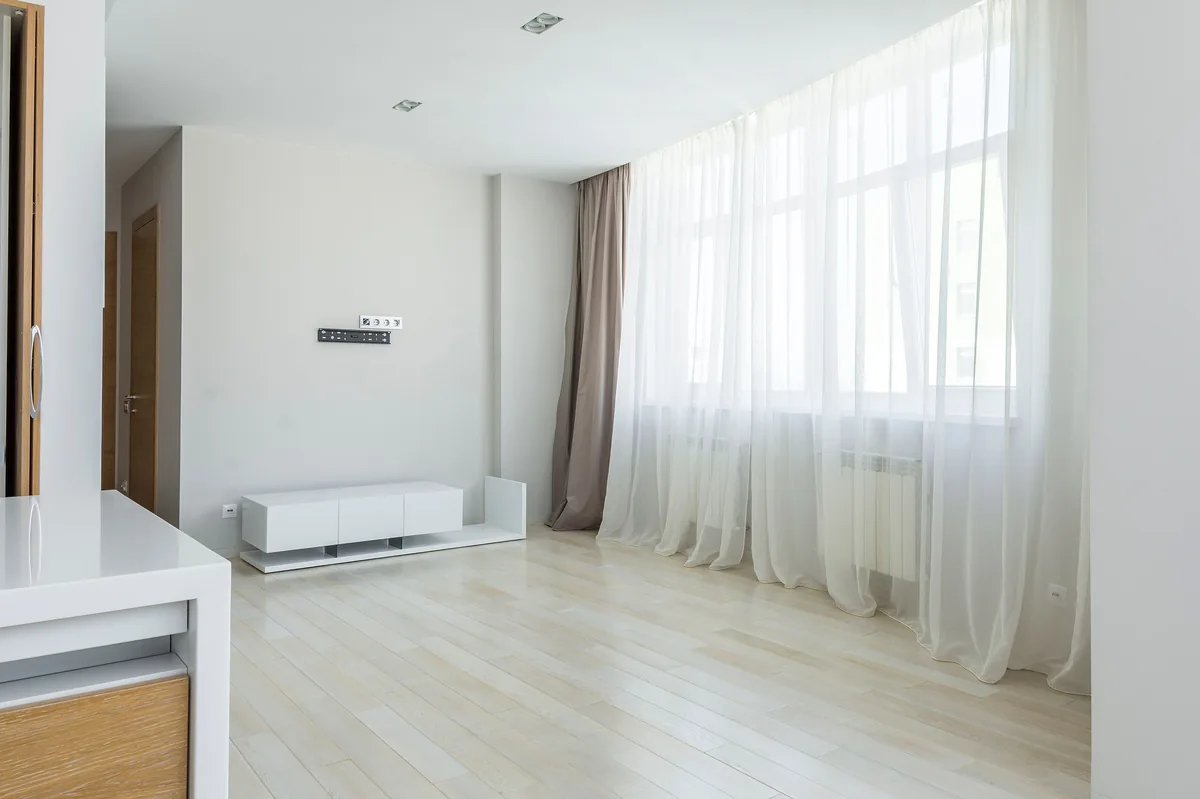
Table of contents
1. The height rule
How high should curtains hang above a window?
The sweet spot is 4 to 6 inches above the window frame — roughly the width of two fingers stacked. Go closer than 3 inches and the panels crowd the glass; go beyond 8 inches on a standard 8-foot ceiling and you are in floating-rod territory that looks accidental rather than intentional. The exception is mounting near crown molding: leave at least 2 inches of clearance below the molding so the rod reads as a deliberate line. One trick from my trial-and-error era: mark both heights with painter’s tape, step back to the doorway, and choose from there — the taller one almost always wins.
| Ceiling height | Rod height above frame | Why |
|---|---|---|
| 8 ft (standard) | 4–6 in | Maximum height without looking detached |
| 8 ft, low windows | 6–8 in | Reclaims apparent window height |
| 9–10 ft | 8–12 in or ceiling line | Tall walls tolerate and reward higher rods |
| Under crown molding | 2 in below the molding | Deliberate line, not a collision |
| Any ceiling, decorative era | 1–2 in below ceiling | The ceiling-height treatment (idea 4) |

2. The width rule
How far should a curtain rod extend past the window?
Extend the rod 6 inches past the window frame on each side — 12 inches total. This is the measurement that actually makes a window look bigger, because the glass visually expands to fill the space between the panels. If you open your curtains daily, add another 6 inches per side so the stacked fabric clears the window completely instead of blocking light at the edges. For narrow windows flanked by walls, extend as far as the wall allows up to 12 inches; even 3 inches of breathing room beats a flush mount.
| Window width | Rod length | Panels (2× fullness, 54-in) |
|---|---|---|
| 36 in | 48–60 in | 2 |
| 48 in | 60–72 in | 3 |
| 60 in | 72–96 in | 3 |
| 72 in | 84–108 in | 4 |
| Window + door pair | Cover both + 6 in each end | 5–6 |
As an Amazon Associate, we earn from qualifying purchases.

- The splicing sections tune the rod anywhere from 48 to 84 inches — the exact range the table above assigns to 36-to-60-inch windows under the 6-inch extend rule
- Decorative ball finials and a white finish read custom over bedroom and living-room windows; the 5/8-inch diameter carries every standard curtain top
- Wall-mounting hardware included, and a 180-day satisfaction guarantee covers the single checkout this high-and-wide trick needs
Listed price varies; check the current price on Amazon.
3. The length rule
How long should curtains be?
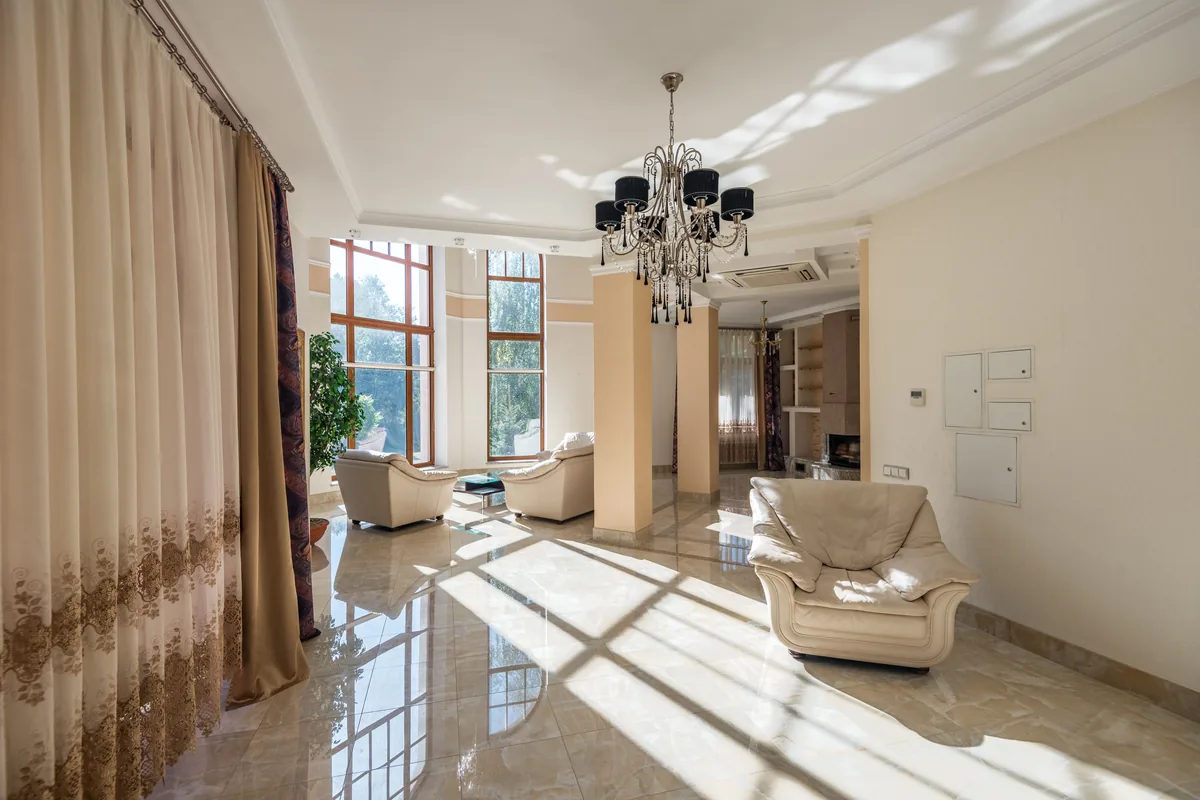
Three lengths work, in order of preference: floating (half an inch off the floor — the clean, tailored default), kissing (barely grazing the floor — gorgeous but only if you never open them), and puddling (2–4 inches pooling on the floor — romantic, collects dust, and confused my vacuum enormously). Sill-length curtains belong in kitchens and bathrooms only, and they should end 1 inch below the sill, never halfway down the glass. For a standard 8-foot ceiling with the rod 5 inches above the frame, most rooms need 84-inch panels.
| Length style | Panel hem position | Best for |
|---|---|---|
| Floating | ½ in above floor | The default; rooms you clean weekly |
| Kissing | Just grazing the floor | Formal rooms with stationary panels |
| Puddling | 2–4 in pooling | Bedrooms where the vacuum rarely argues |
| Sill length | 1 in below sill | Kitchens, bathrooms, cafe style |
| Apron length | 4–6 in below sill | Casual breakfast nooks |
4. Ceiling height
When should curtains hang from the ceiling?
Mounting the rod 1–2 inches below the ceiling line is the single most powerful trick for small rooms, low ceilings, and rental apartments with oddly proportioned windows. It adds apparent height the same way vertical stripes add apparent length. Use it when your curtains are purely decorative (sheers over blinds), when windows sit unusually low in the wall, or in any room under 8 feet tall. The trade-off: you need longer panels (96-inch for standard ceilings) and the rods need sturdy anchors, because ceiling-adjacent mounting carries more fabric weight.
| Signal | Go ceiling-height? | Panel length |
|---|---|---|
| Ceiling 8 ft or under | Yes, usually | 96 in |
| Windows low in the wall | Yes | 96 in (or 108 for deep sills) |
| Sheers over blinds | Yes — the classic case | 96 in |
| Crown molding in the way | No — mount below molding | 84 in |
| 9–10 ft ceilings | Optional — 8–12 in above frame reads similar | 108 in |

5. The mistakes
What rod placement mistakes shrink a room?
Five mistakes do most of the damage, and every one of them is free to fix once you can name it. The pattern behind them: curtains are measured against the window frame by instinct, and the frame is exactly the wrong reference — the room is the reference. Flush mounting chops the window visually in half; mid-sill panels are the mistake rooms notice first; and a sagging middle on an under-bracketed rod defeats every other rule on this page.
| Mistake | What the room reads | The fix |
|---|---|---|
| Rod flush with the frame | Doctor’s waiting room | 4–6 in above, 6 in wider each side |
| Panels stopping mid-sill | Rental emergency | 84-in panels at floating length |
| Rod narrower than stacked curtains | Light blocked at the edges | +6 in per side for daily-open panels |
| Hardware too flimsy for the span | A sagging middle | Center support bracket past 60 in |
| No steaming before guests | “Old” louder than any measurement | Five minutes with a steamer |
6. The sizing math
What is the 60-second curtain sizing math?
Rod length = window width + 12 inches. Fabric width = rod length × 2 (fullness — 1.5× is casual, 2× is standard, 2.5× is luxe). Panels = fabric width ÷ 54, rounded up. Don’t want to do math with a tape measure in one hand? Use the calculator — it is embedded below and takes ten seconds.
| Window width | Rod length | 84-in panels (2×) | 96-in panels (2×) |
|---|---|---|---|
| 36 in | 48 in | 2 | 2 (ceiling mount) |
| 48 in | 60 in | 3 | 3 |
| 60 in | 72 in | 3 | 3 |
| 72 in | 84 in | 4 | 4 |
Curtain size calculator
Curtain rod length:
Total fabric width needed:
Standard 54-in panels:
Need the full sizing chart with centimeters and every window width? That lives on the Curtain Size Calculator.

7. The hardware map
What rod hardware does each window width need?
Hardware is where budget rods quietly fail: a rod spanning more than 60 inches needs a center support bracket, or the middle sags into a valley that no steamer can argue with. Weight matters as much as span — blackout-lined panels weigh roughly twice what sheer panels do, and the bracket rating should say the number out loud. Drywall anchors are not optional past a few pounds; a plastic anchor rated 10 lb holds a rod rated 30 lb only until the first hard curtain yank.
| Rod span | Brackets | Anchor type |
|---|---|---|
| Under 48 in, sheers | 2 | Screw into stud, or drywall anchor |
| 48–60 in, medium fabric | 2–3 | Drywall anchors rated 10+ lb |
| 60–96 in, any fabric | 3 (center support required) | Anchors at all three points |
| Blackout-lined, any span | 3 | Anchors rated 15+ lb; stud preferred |
| Ceiling mount | 2–3 ceiling brackets | Screw into joist or toggle bolts |

8. Rental solutions
How do you hang curtains without drilling in a rental?
Three no-drill routes work, and the right one depends on how permanent the panels need to look. Tension rods live inside the frame and handle cafe-style panels up to about 15 lb — honest but visually casual. Peel-and-stick rod brackets rated 10+ lb hold lightweight panels above the frame and survive a lease inspection. The sleeper option is command-hook rod systems: two heavy-duty hooks plus a slim rod read nearly real from across the room. What never works: pushing a regular bracket into drywall with a plastic anchor and hoping the deposit survives.
| Method | Weight limit | Looks |
|---|---|---|
| Tension rod inside frame | ≈15 lb | Casual; cafe and kitchen panels |
| Peel-and-stick brackets above frame | 10–15 lb | Surprisingly real with light panels |
| Command hooks + slim rod | ≈10 lb total | Nearly real from across the room |
| Twist-and-fit no-tool rod | ≈20 lb | Real rod look, inside-frame placement |
| Ask the landlord for holes | — | The zero-risk option; many say yes to patchable holes |
As an Amazon Associate, we earn from qualifying purchases.

- The tension route from the rental table, upgraded: a stainless steel tube and calibrated spring hold regular panels up to 15 lb — the honest weight limit, respected
- Twists into the frame with zero tools and zero holes, so the deposit survives the lease inspection and the rod moves to the next apartment with you
- Extends 28–49 inches for bathroom, kitchen and bedroom frames; it skips 37–39 inches by design — the overlap is exactly what keeps it from sagging
Listed price varies; check the current price on Amazon.

9. Room by room
What curtain length works in each room?
The length rules bend by room because each room’s floor has different traffic. Living and dining rooms take the tailored treatments — floating or kissing — because they are on display. Bedrooms can puddle, since the puddle reads romantic behind a bed and the vacuum path is predictable. Kitchens and bathrooms stay at sill or apron length for the practical reason that full-length fabric next to a sink or a shower is a laundry schedule you did not agree to.
| Room | Length | Fabric weight |
|---|---|---|
| Living room | Floating or kissing | Medium — linen, cotton blends |
| Dining room | Kissing | Medium-heavy; framing the table |
| Bedroom | Floating or puddling | Heavy or blackout-lined |
| Kitchen | Sill or apron | Light cotton, washable |
| Bathroom | Sill | Light, mildew-resistant |
| Home office | Floating | Light to medium; glare control first |

10. The expensive look
How do you make cheap curtains look expensive?
Price is the least important variable. The three things that separate custom-looking panels from dorm-room ones are fullness (2× minimum — flat panels hang flat), pressing (a steamer for five minutes before guests beats any hem), and hem height (half an inch off the floor reads tailored; two inches off reads like a sizing mistake). A fourth trick costs nothing: hang panels so they just touch the rod’s bottom line, not the top of the window — height does the flattering for free.
| Upgrade | Cost | Effect |
|---|---|---|
| 2× fullness instead of 1× | +1 panel | Folds read custom; the biggest single lever |
| Steam before hanging | $0–$35 once | Kills the pack-fold creases from the package |
| Floating hem at ½ in | $0–$10 (hem tape) | The tailored line |
| Mount high and wide | Same rod budget | Window doubles in apparent size |
| Blackout liner behind decorative panel | $15–$30 | Drape weight plus real darkness |
As an Amazon Associate, we earn from qualifying purchases.

- The “steam for five minutes before guests” upgrade, bought once: 30-second heat-up kills the pack-fold creases from the box before the first hang
- Leak-proof tank steams panels vertically on the rod, so the folds relax while the curtain is already hanging at its flattering height
- The 8.79-ounce tank runs 15 minutes of continuous steam — a full window’s worth of panels — and the fabric brush knocks lint and dust off in the same pass
Listed price varies; check the current price on Amazon.
11. The fabric map
Which curtain fabric suits which room?
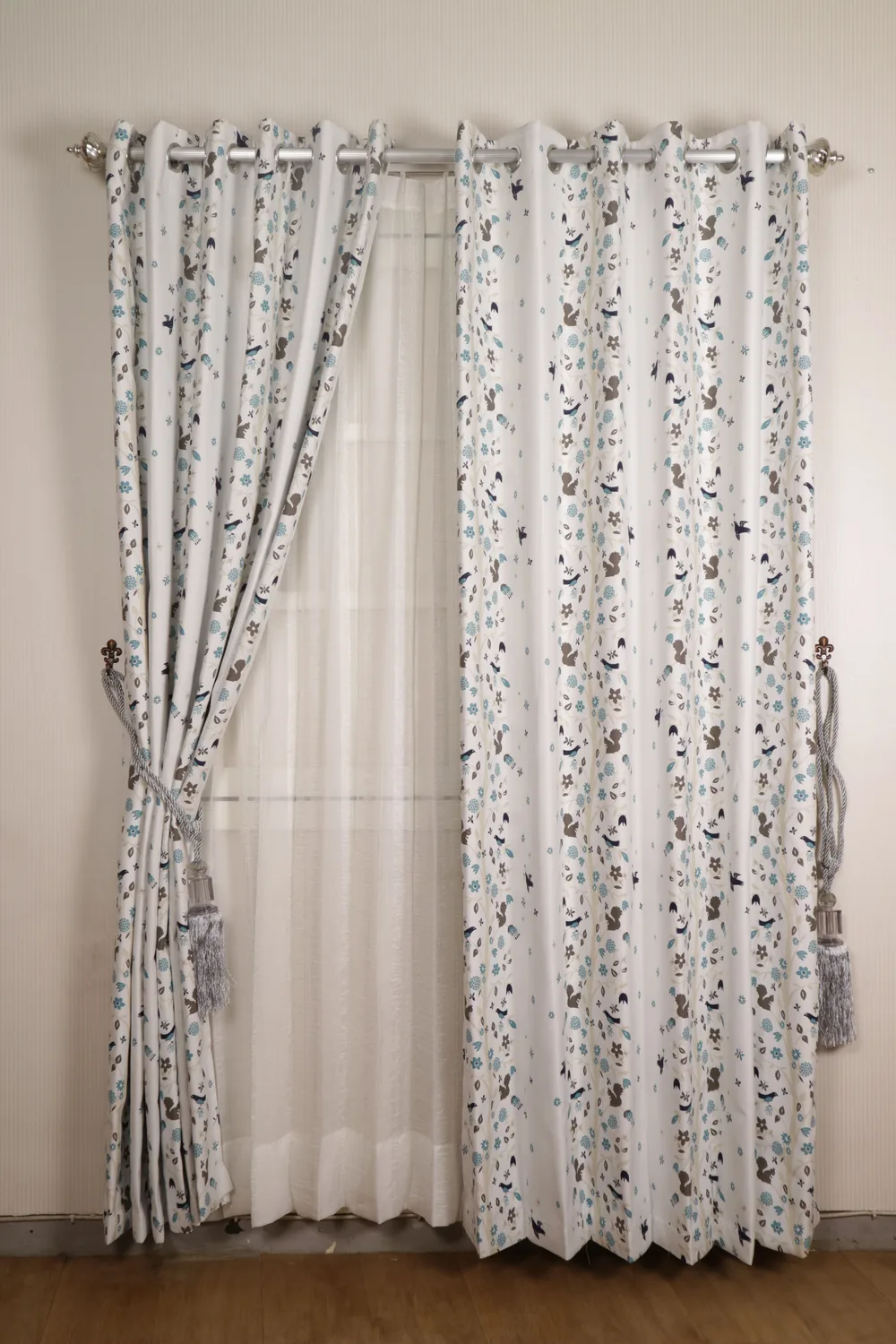
Fabric choice is a light-and-laundry decision dressed up as a style one. Linen reads expensive and filters light beautifully but wrinkles if you look at it wrong — it wants the steamer life. Cotton blends are the practical default and the easiest to wash. Velvet is a winter room’s best friend and a small room’s worst enemy (it eats light). Blackout-lined anything is a bedroom’s sleeping gear; sheer is a living room’s daylight filter that pairs with blinds doing the privacy work.
| Fabric | Light | Best room | The catch |
|---|---|---|---|
| Linen / faux linen | Filtered | Living room | Wrinkles; steam before guests |
| Cotton blend | Light-filtering | Kitchen, office | The washable default |
| Velvet | Blocking | Bedroom, den | Heavy; needs sturdy brackets |
| Blackout-lined panel | Nearly none | Bedroom, nursery | Doubles the weight budget |
| Sheer voile | Softened | Living room over blinds | Zero privacy alone |

12. The care schedule
How do you keep curtains looking new?
Curtains are the only soft furnishing that never gets made or sat on, so they collect dust quietly for months while looking fine. The low-effort schedule: a monthly pass with the vacuum’s brush attachment, a steamer twice a year or before anything formal, and an actual wash once a year for washable fabrics — cotton and most blends on gentle cold, line dry to skip the shrink. Velvet and anything blackout-lined usually want spot cleaning only; the washing machine is where their coatings go to die.
| Task | Frequency | Method |
|---|---|---|
| Vacuum with brush attachment | Monthly | Top to bottom, both sides of open panels |
| Steam | 2× a year | Hanging, 6 in from fabric |
| Wash (cotton, blends) | Yearly | Gentle cold, line dry, iron the hems |
| Spot clean (velvet, blackout) | As needed | Damp cloth, blot, never rub the coating |
| Re-check rod brackets | Yearly | Tighten screws; drywall anchors creep |
The rod-installation checklist
- ☐ Height marked: 4–6 in above the frame, checked from the doorway
- ☐ Width marked: 6 in beyond the frame each side (+6 more if panels open daily)
- ☐ Panel length chosen: floating, kissing, or puddling — never mid-sill
- ☐ Fullness at 2×: fabric width = rod length × 2, panels rounded up
- ☐ Span over 60 in: center support bracket added
- ☐ Anchors rated for the real panel weight (blackout doubles it)
- ☐ Rental: tension rod, peel-and-stick brackets, or landlord’s yes
- ☐ Panels steamed before the furniture goes back
- ☐ Brackets re-tightened on the yearly care pass
Written by Emily, whose first apartment curtains stayed flush-mounted for three years and whose friend has never let her forget it. Last updated: November 2026.
Related reading
- Curtain Size Calculator: centimeters and every window width
- How to Paint a Room on a Budget: the same weekend’s other job
- Paint Coverage Calculator: gallons by room size
- Cozy Fall Living Room Ideas: styling around the new panels
- Small Christmas Tree Ideas for Apartments: small-space math again
- Thanksgiving Table Setting in a Small Dining Room: small-space rules that repeat
[…] How High to Hang Curtains: the sightline math from the walls up […]