
The short version
Plan 2 drinks per guest in the first hour, then 1 drink per hour after — a 4-hour party with 20 guests runs about 100 drinks. Buy ice at 1 lb per guest per 2 hours, add 15% spare cups, and always stock a non-alcoholic backstop (about 2 glasses per guest in water and soda). Enter your headcount below and the calculator splits the total into beer cases, wine bottles, spirits, or punch gallons.
What’s in this guide
- 1. How many drinks should you plan per guest at a holiday party?
- 2. The beer and wine math: cases and bottles by headcount
- 3. Full bar math: spirits bottles, mixers, and the two-bottle rule
- 4. Ice, cups and the non-alcoholic backstop
- 5. Punch bowl math for New Year’s Eve
- 6. The mocktail corner and the lost-drink fix
1. How many drinks should you plan per guest at a holiday party?
The catering industry’s working rule is simple: two drinks in the first hour while everyone arrives and toasts, then one drink per hour after that. A 4-hour party works out to 5 drinks per guest, a 3-hour cocktail evening to 4, and a short 2-hour open house to 3. Guests do not actually drink on that exact schedule — the front-loading is real, the tail fades — but the rule lands within a glass or two of what gets consumed at almost any holiday gathering.
| Party length | Drinks per guest | 20 guests | 40 guests |
|---|---|---|---|
| 2 hours (open house) | 3 | 60 drinks | 120 drinks |
| 3 hours (cocktail evening) | 4 | 80 drinks | 160 drinks |
| 4 hours (dinner party) | 5 | 100 drinks | 200 drinks |
| 5 hours (New Year’s Eve) | 6 | 120 drinks | 240 drinks |
Three adjustments move the number in practice. A crowd that drinks wine with dinner drinks less than a cocktail-party crowd, because food slows everyone down. A party that ends with a champagne toast at midnight adds roughly one glass per guest on top of the table. And a guest list that leans “stay all night” — the friends-who-won’t-leave crowd every host knows — earns the 5-hour row of the table even if the invitation says 4.
Count the people who will actually drink, not the headcount. Two kids, a pregnant guest, and three designated drivers quietly move 20 guests down to 14 drinking adults, which is a full case of beer you do not need to buy. The calculator’s total assumes drinkers; the non-alcoholic backstop in section 4 covers everyone else.

As an Amazon Associate, Herpickery earns from qualifying purchases.
2. The beer and wine math: cases and bottles by headcount
For a beer-and-wine party, the standard split is 60% beer, 40% wine — beer owns the casual first hour, wine takes over once dinner lands. Beer comes in cases of 24 cans and a 750 ml bottle of wine pours exactly 5 five-ounce glasses, which makes the shopping list pure arithmetic once the drink total is known.
| Guests | 3-hr party | Beer (24-packs) | Wine bottles | 4-hr party | Beer (24-packs) | Wine bottles |
|---|---|---|---|---|---|---|
| 10 | 40 drinks | 1 | 4 | 50 drinks | 2 | 4 |
| 15 | 60 drinks | 2 | 5 | 75 drinks | 2 | 6 |
| 20 | 80 drinks | 2 | 7 | 100 drinks | 3 | 8 |
| 30 | 120 drinks | 3 | 10 | 150 drinks | 4 | 12 |
| 40 | 160 drinks | 4 | 13 | 200 drinks | 5 | 16 |
Buy two or three beer styles rather than one: a domestic lager everyone recognizes, one amber or IPA for the beer people, and a non-alcoholic option in the fridge. For wine, two bottles of red for every one white is the December default — holiday food runs rich — but a crowd that skews toward roast chicken or a seafood starter flips that ratio. One case of mixed bottles covers a 20-guest evening with a bottle or two left over, and unopened bottles are tomorrow’s dinner wine, not waste.
Champagne obeys its own rule: one bottle per 8 guests for a toast, since a flute holds about 4 ounces and a 750 ml bottle pours six. For the midnight toast at a 20-person party, three bottles plus one spare covers everyone with a refill for the bravest toasters.

As an Amazon Associate, Herpickery earns from qualifying purchases.
3. Full bar math: spirits bottles, mixers, and the two-bottle rule
A full bar splits the same drink total into 40% spirits, 35% beer, 25% wine, and the spirits math runs on pours: a 750 ml bottle yields about 16 one-and-a-half-ounce pours. Forty mixed-drink guests at a 4-hour party produce 80 spirit pours, which is five bottles — but do not buy five different bottles. The two-bottle rule (one vodka, one whiskey or rum) covers 80% of holiday crowds, because mixed drinks cluster around two or three signature cocktails rather than a full menu.
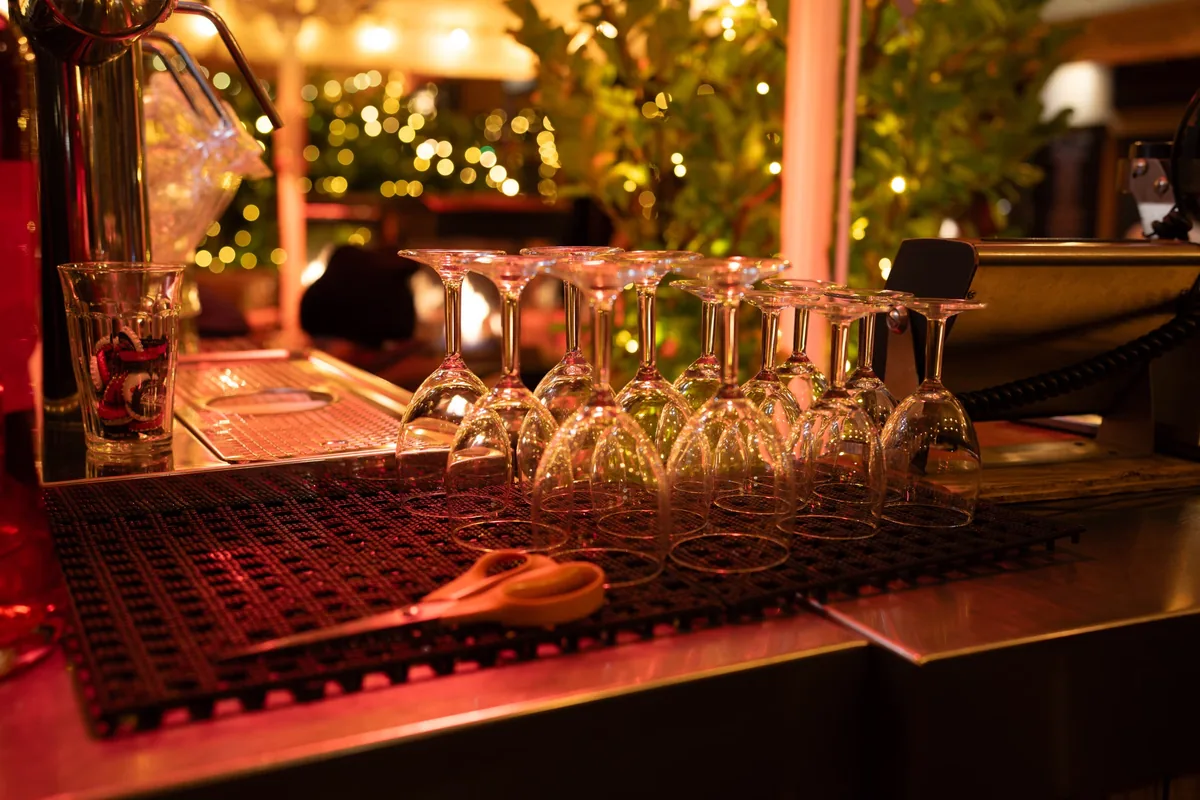
Pick the two spirits first, then design the party around them: vodka for a cranberry-lime highball and a white Russian, whiskey for an old-fashioned and a hot toddy. Two signature cocktails printed on a small card next to the bottles does more for a smooth bar than five bottles nobody remembers, and it cuts the mixer list in half. The mixer rule is one two-liter bottle of soda or juice per 4 guests, plus cranberry juice (the December workhorse), citrus, and tonic.
Garnish and tools round out the station: one bag of limes, one of cranberries, a shaker, a jigger, and a bar towel. Nothing else — the professional bar kit earns its shelf space across a season, but a single party runs perfectly on two spirits, three mixers, and clean ice. Set the bottles at the back of the counter, mixers in a cooler underneath, and the trash bowl in front where guests can see it; that layout alone prevents most of the counter puddles.
4. Ice, cups and the non-alcoholic backstop
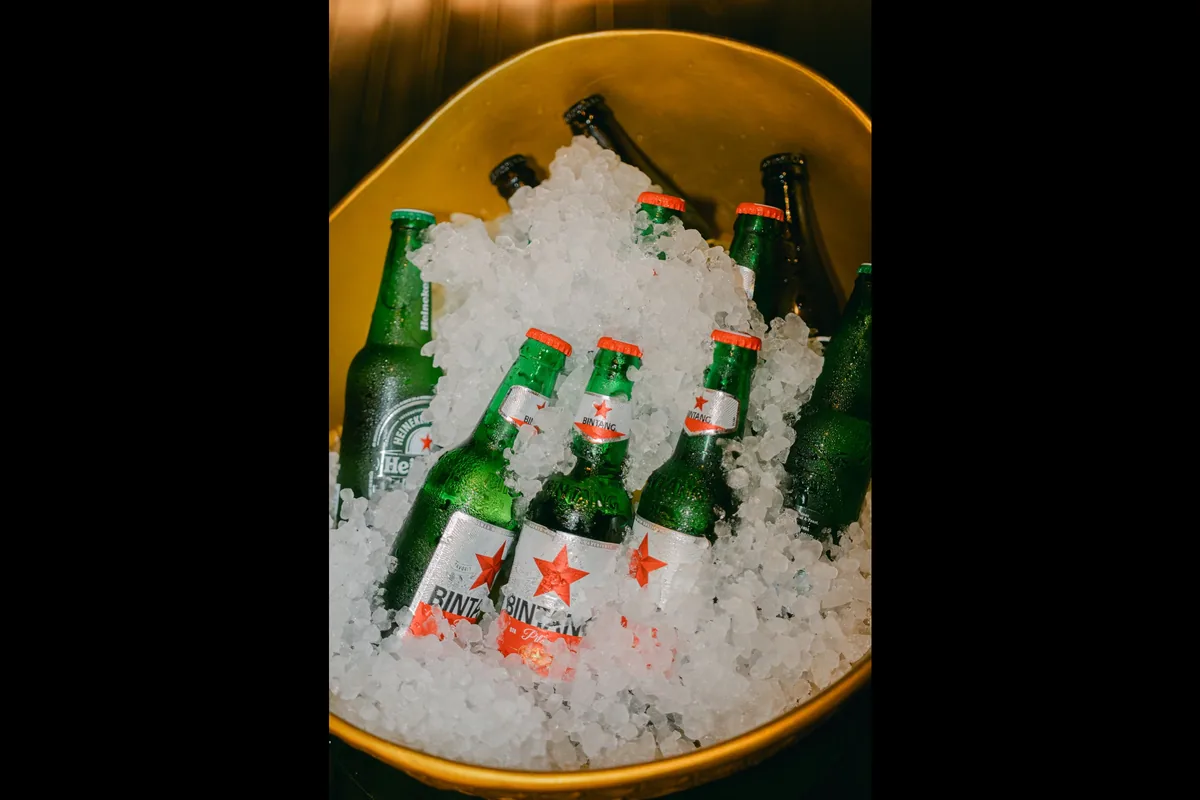
Ice is the purchase hosts under-buy every December, and it is the one that ends the party early. The working number is 1 pound of ice per guest per 2 hours — a 20-guest, 4-hour party needs 40 pounds, which is four bags from the supermarket freezer, not the two most people grab. Ice that lives in a cooler with the bottles melts slower than ice in a bucket on the bar, and keeping a spare bag unopened in the freezer is the cheapest insurance policy in hosting.
| Guests | 2-hr party | 3-hr party | 4-hr party | 5-hr party |
|---|---|---|---|---|
| 10 | 10 lb | 20 lb | 20 lb | 30 lb |
| 20 | 20 lb | 30 lb | 40 lb | 50 lb |
| 30 | 30 lb | 45 lb | 60 lb | 75 lb |
| 40 | 40 lb | 60 lb | 80 lb | 100 lb |
Cups are the quiet budget line: the drink total times 1.15 covers the ones that get lost, doubled, or dropped. Actual counting from real parties says roughly 30% more cups get used than drinks poured at events without glass markers — a guest sets a drink down, loses it, takes a fresh one — which is why the marker trick in section 6 pays for itself in one evening. Recycling two cup styles (one for beer, one for everything else) halves the confusion.
The non-alcoholic backstop is two glasses per guest of water and soda, bought before the party and never reopened unless needed. It covers the drivers, the kids, the pregnant friend, and the guest pacing themselves — and stocking it visibly, not hiding it in the fridge, is what makes those guests comfortable staying late. A pitcher of sparkling water with frozen cranberries and lime wheels looks like a plan, not an apology.

As an Amazon Associate, Herpickery earns from qualifying purchases.
5. Punch bowl math for New Year’s Eve
Punch converts the whole drink list into one number: total cups times 8 ounces, divided by 128, equals gallons needed. A 20-guest, 5-hour New Year’s Eve lands at 120 cups, which is 8 gallons of punch — about 8 batches of a standard 16-cup recipe. No single punch bowl holds that, which is why the self-serve dispenser (two gallon jars on the table, one refilling in the fridge) beats the ceremonial crystal bowl for every party bigger than ten.
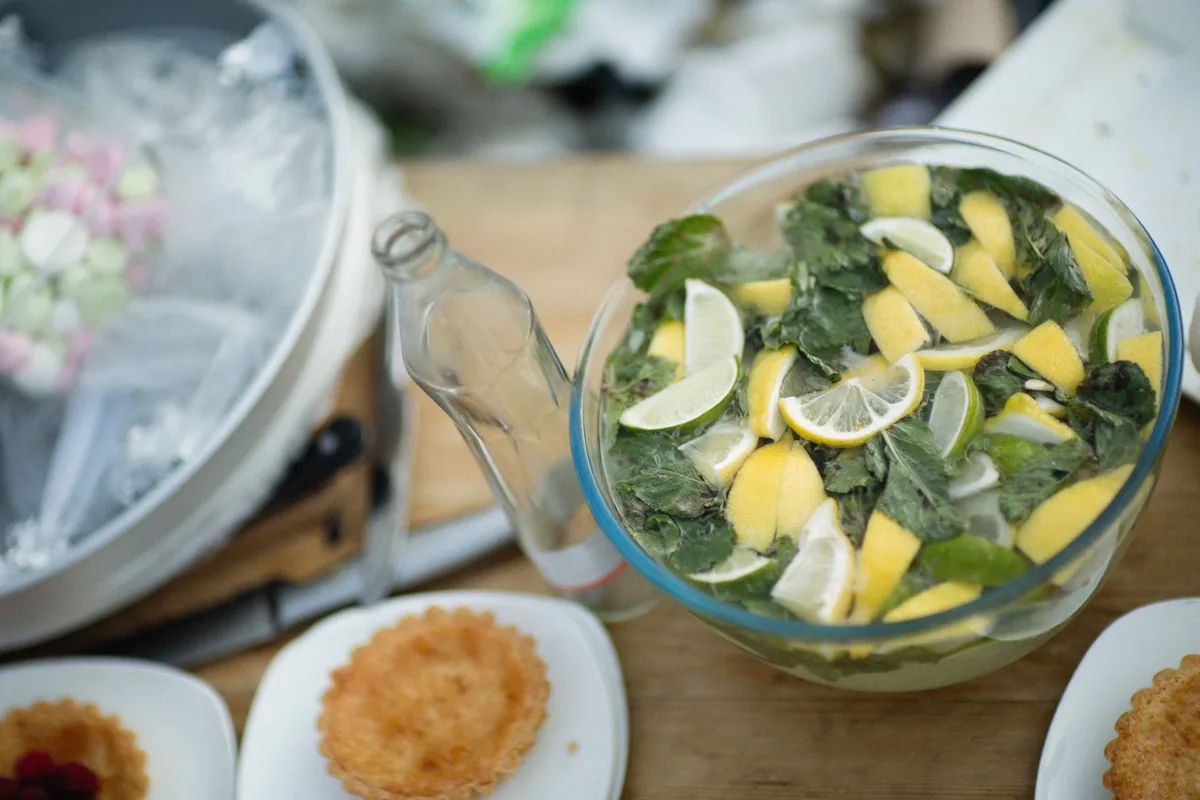
Batch the punch in the kitchen, not in the bowl: mix base, juice, and tea in the fridge overnight, add the sparkling element and ice ring at door time, and refill the table dispenser from the reserve. Ice rings frozen with fruit instead of plain water keep the batch from diluting — a muffin tin frozen with cranberries and water makes perfect punch-size cubes by the dozen. The classic host error is putting the last gallon on the table at hour one; hold half the batch back and the punch tastes fresh at midnight, not watery by ten.
Alcohol in batch punch follows the 20% rule — one part spirit to four parts everything else — which keeps a 5-hour party pleasant rather than a memory nobody wants. For a 16-cup batch that is roughly 3 cups of spirit to 13 cups of juice, tea, and sparkling wine, and guests can always add a splash from the two-bottle station beside it. The punch station pairs naturally with the dessert table; the New Year’s Eve table setting guide covers the layout and the midnight toast placement next to it.
6. The mocktail corner and the lost-drink fix
Every good drink plan has a corner nobody had to ask for. Batch one genuine mocktail — a cranberry-lime spritz or a spiced-apple fizz, made in the same gallon dispenser as the punch — and label it in writing, because the designated driver who has to ask “is this alcoholic?” has already been made to feel like an afterthought. The mocktail math reuses the punch formula: about 1.5 cups per non-drinking guest per 3 hours, which for a typical party means one to two gallons set aside before anyone counts them.
The lost-drink problem is worth 30% of your cup budget, and it has a two-dollar fix. Glass charms (the kind that clip to a stem) or marker pens that write on plastic cups give every drink a name; at parties that use them, the cup count drops to almost exactly the drink count. For larger parties, skip the markers and run a one-cup rule with a sharpie station by the cups — guests write their names, the bartender stops guessing, and the recycling bin at the end of the night tells the truth about how much was really poured.
Last call logistics close the plan: stop pouring new drinks 45 minutes before the end, put water and the kettle front and center for the last hour, and have the spare cups away from the table so the count naturally winds down. Guests who need a ride share the most at hour four, and a host with the numbers — 5 drinks a guest, 40 pounds of ice, a dry corner with a label — is the one whose party still has clean glasses at midnight. For the morning after, the Christmas morning brunch table plan picks up where the last glass lands, and the cookie exchange calculator covers the bake that pairs with the cocoa.
FAQs
How many drinks do you need for a party of 20?
For a 4-hour party, plan about 100 drinks (5 per guest). That splits into roughly 60 beers and 40 glasses of wine for a beer-and-wine bar, or 40 spirit pours, 35 beers, and 25 wine glasses for a full bar.
How much ice do I need for 30 guests?
About 1 pound of ice per guest per 2 hours: a 4-hour party for 30 people needs 60 pounds, or six 10-pound bags. Keep one bag unopened in the freezer as the emergency reserve.
How many bottles of wine do I need for 20 guests?
One bottle pours five 5-ounce glasses. A 20-guest evening where wine is half the drinks runs about 8 bottles; for a wine-only dinner, plan half a bottle per person, or 10 bottles, with two extra for good measure.
How much punch do I need for 30 guests?
About 1.5 cups per guest per hour of party. A 3-hour party for 30 guests is roughly 135 cups, or 9 gallons — about 8 batches of a 16-cup punch recipe, best served from two gallon dispensers rather than one bowl.
How far ahead can you batch cocktails for a party?
Spirit-and-juice bases batch 24 hours ahead and stay fresh refrigerated. Add anything sparkling, plus ice, in the final 30 minutes before guests arrive, and hold half the batch in reserve so the last glasses taste like the first.
Related guides
[…] cleaning up from the party? The holiday party drinks calculator closes out the bar math, and the gift wrapping station guide shows how to store the paper and […]
[…] drinks station is part of the table. The Holiday Party Drinks Calculator sizes the punch, ice, and cups so the beverage corner never runs dry […]
[…] to go with the bake? The Holiday Party Drinks Calculator runs the same headcount math for punch gallons, beer cases, and ice […]