
One December I became convinced our cat had developed a taste for stand water. The level dropped a visible inch every morning — roughly a liter gone overnight — and I ran a full detective file on the cat before accepting the boring truth: the tree was drinking it. A 2.5-inch trunk pulling a quart of water a day is a houseplant on sports drinks, and no one warns you, because the stand is the only product you buy that asks you to perform daily maintenance for a month.
The math is simple enough to run at the tree lot: daily water ≈ 1 quart per inch of trunk diameter, with day one running double. This page turns that formula into a full watering audit — the peak-curve table, what a dry stand actually does to a tree, capacity vs. refill frequency, the additive myths, the whole-season gallon count, and the tools that make the daily check take thirty seconds instead of crawling under the skirt with a flashlight.
Table of Contents — 12 Ideas
- How much water does a Christmas tree drink per day?
- The first 24 hours: the biggest drink of the season
- What happens if the stand runs dry?
- Stand capacity and the refill schedule
- Trunk diameter math (and why drilling holes doesn’t help)
- Heat, vents and the thirsty corner
- The 30-second daily check
- Aspirin, sugar, 7-Up: the additive verdict
- The whole-season gallon count
- Watering tools: funnel, tube and the bucket hack
- When a tree stops drinking
- Species: which trees drink most
1. How much water does a Christmas tree drink per day?
How much water does a Christmas tree drink per day?
The usable rule comes from tree-farm extension guidance and it scales with the cut surface, not the tree’s height: a fresh tree takes up about 1 quart (1 liter) of water per day for every inch of trunk diameter — so a 2-inch trunk drinks ~2 quarts, a 3-inch trunk ~3 quarts, and the National Christmas Tree Association’s care guidance notes a tree can pull up to a gallon in its first 24 hours. Height barely matters; diameter is the pump. Two trees of the same height with different trunk thicknesses are different customers. For your trunk’s exact day-one peak, steady rate and refill cadence, use the Christmas Tree Water Calculator.
| Trunk diameter | Peak day (day 1) | Steady daily | Per week |
|---|---|---|---|
| 1.5″ | ~1.5 qt | ~1 qt | ~1.5 gal |
| 2″ | ~2 qt | ~1.5 qt | ~2.2 gal |
| 2.5″ | ~1 gal | ~2.5 qt | ~3 gal |
| 3″ | ~1.3 gal | ~3 qt | ~4 gal |
| 4″ | ~2 gal | ~1 gal+ | ~5.5 gal |
2. The first 24 hours
Why is day one the biggest drink of the season?
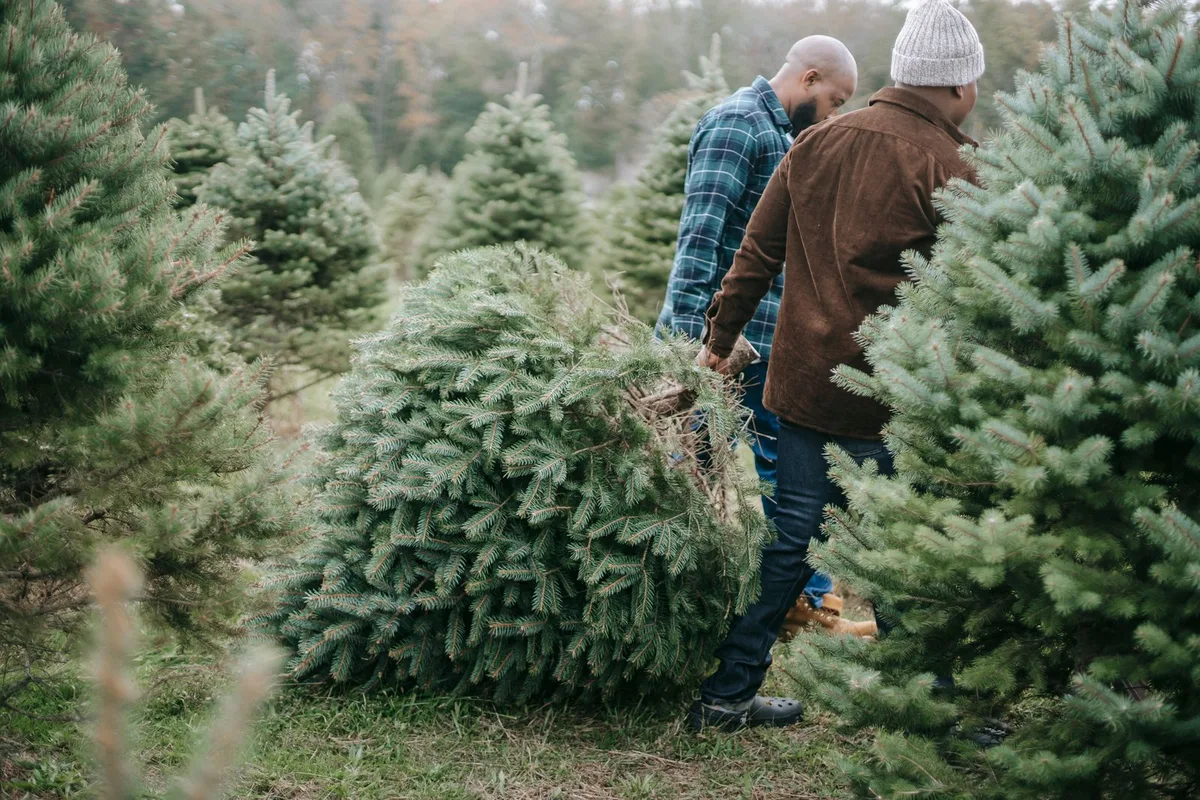
The first day after a fresh cut is the tree’s whole vacation in one sip: an open cut surface is at maximum suction, and a tree can take up 1 to 2 quarts (sometimes a full gallon) in its first 24 hours indoors — roughly double its steady-state rate for the rest of the season. The mechanics: the outer sapwood rings act like bundled straws, and capillary action plus transpiration pulls water up the moment the cut is made. That is why the base must go into water within a couple of hours of the cut; a tree left dry on the lot or in the car loses its first day even if you fill the stand later.
Practical sequencing: make the cut at the lot (most sell the service), get it in the stand with water within 2 hours, and fill generously the first evening — the peak happens while you sleep. The fresh-cut math also connects to the footprint guide’s tape-oval test: do the room check before the cut, because after the cut the tree is on a schedule and measuring is a you-problem, not a tree-problem.
3. The dry-stand disaster
What happens if the Christmas tree stand runs dry?
A dry stand is not a slowdown — it’s a shutdown: within 4 to 6 hours of drying out, the cut base seals itself with dried sap, uptake drops close to zero, and the only fix is a new cut — saw another half inch off the bottom before refilling. That means dragging the decorated tree away from the wall and re-trimming under the skirt, which is exactly as fun as it sounds. This one fact is why the watering guides all sound like alarm bells: the risk isn’t thirst, it’s the reseal.
My own near-miss: the year we traveled for four days mid-December, the stand held exactly enough — barely. The neighbor-check is the honest fallback; a full stand on departure day is a coin flip for anything over a 2.5-inch trunk at peak. And there’s a safety angle: a tree that reseals dries from the top down, and dry needles are the fuel in the fire-safety videos that end in seconds. Water is the fire retardant that comes free with the tree.
The dry-stand timeline in one table — the risk is never thirst, it is the reseal:
| Time after stand runs dry | What the trunk does | What you do |
|---|---|---|
| 0–4 hours | Uptake slows, sap starts thickening at the cut | Refill immediately — no harm done yet |
| 4–6 hours | Cut base seals itself with dried sap; uptake drops close to zero | New cut required: saw another half inch off the bottom before refilling |
| After reseal | Tree dries from the top down regardless of water level | Re-trim under the skirt, then treat every check as non-negotiable |
4. Stand capacity and refills
How often do you need to refill a Christmas tree stand?
Refill frequency is a division problem — capacity ÷ daily uptake — and the small stands fail it: a 1-gallon stand under a 2.5-inch trunk at peak needs topping every day and a half at best; the half-gallon reservoirs on cheap stands go dry in 12 hours on day one. The table below is the whole schedule. The buffer matters more than the average, because the failure mode (reseal) triggers after hours, not days.
| Stand reservoir | 2″ trunk, steady | 2.5″ trunk, peak | Safe refill cadence |
|---|---|---|---|
| 0.5 gal | ~1.3 days | ~10 hours | Twice daily |
| 1.0 gal | ~2.5 days | ~1 day | Daily |
| 1.5 gal | ~4 days | ~1.5 days | Every other day |
| 2.0 gal | ~5 days | ~2 days | Every 2–3 days |
As an Amazon Associate, we earn from qualifying purchases.

- 39-inch tube reaches the reservoir from standing height — no skirt-lifting, no crawling
- 3″ wide funnel mouth takes a full gallon jug pour without splash-back
- Three sections assemble in seconds and store flat in the January bin
Price and availability shown on Amazon; listing may change.
5. Trunk diameter (and the drilling myth)
Does drilling holes in the trunk help a tree drink more?
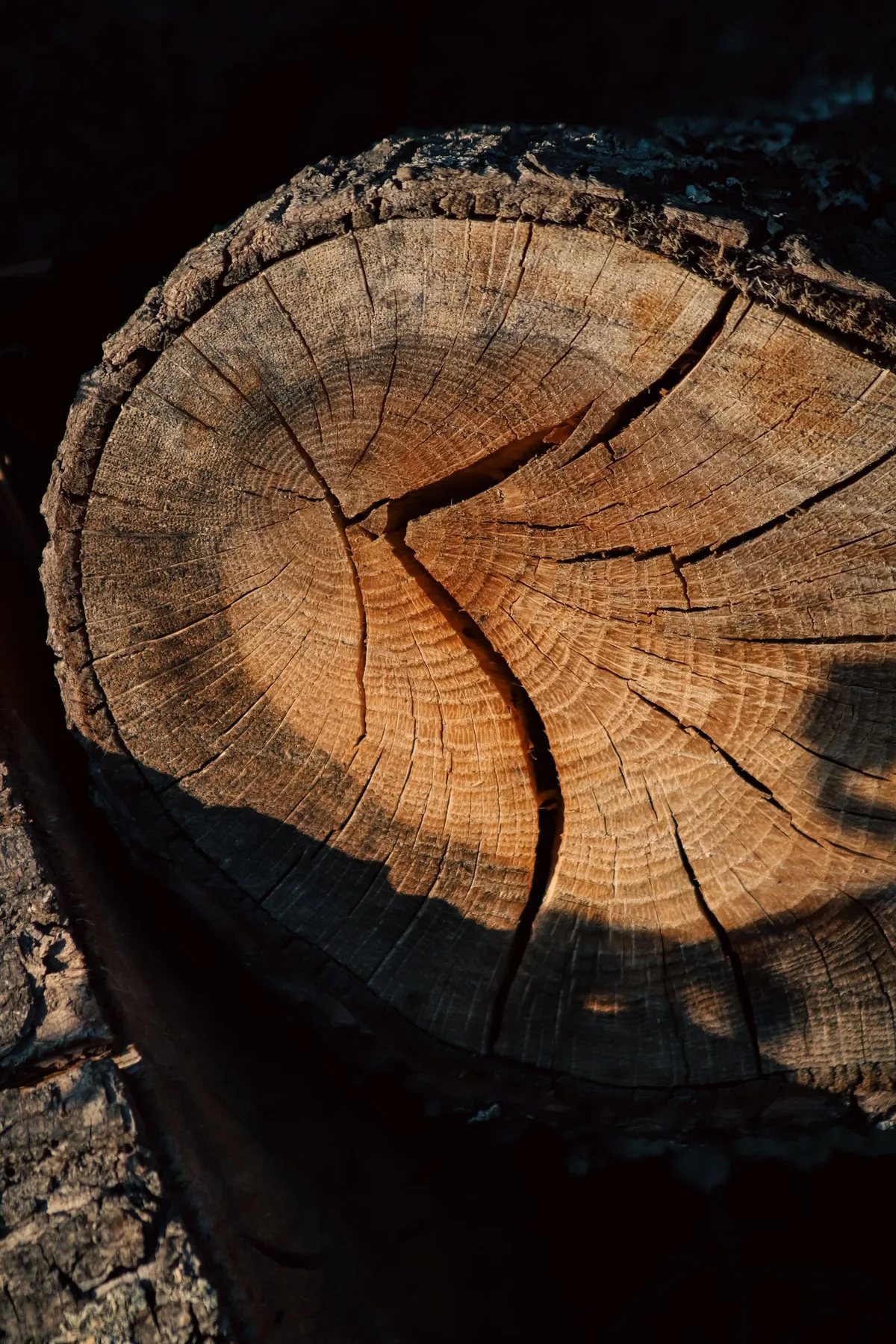
The cut face is the intake, and it’s the outer rings that do the work: water moves up only through the outermost sapwood — drilling extra holes, shaving the bark, or cutting the base into a V adds nothing, because the tree’s pump is the ring of sapwood just under the bark, not the center of the log. The classic “drill the trunk for more uptake” hack is the most persistent myth in tree care and the extension services refute it by the anatomy: a center hole bypasses exactly the tissue that drinks.
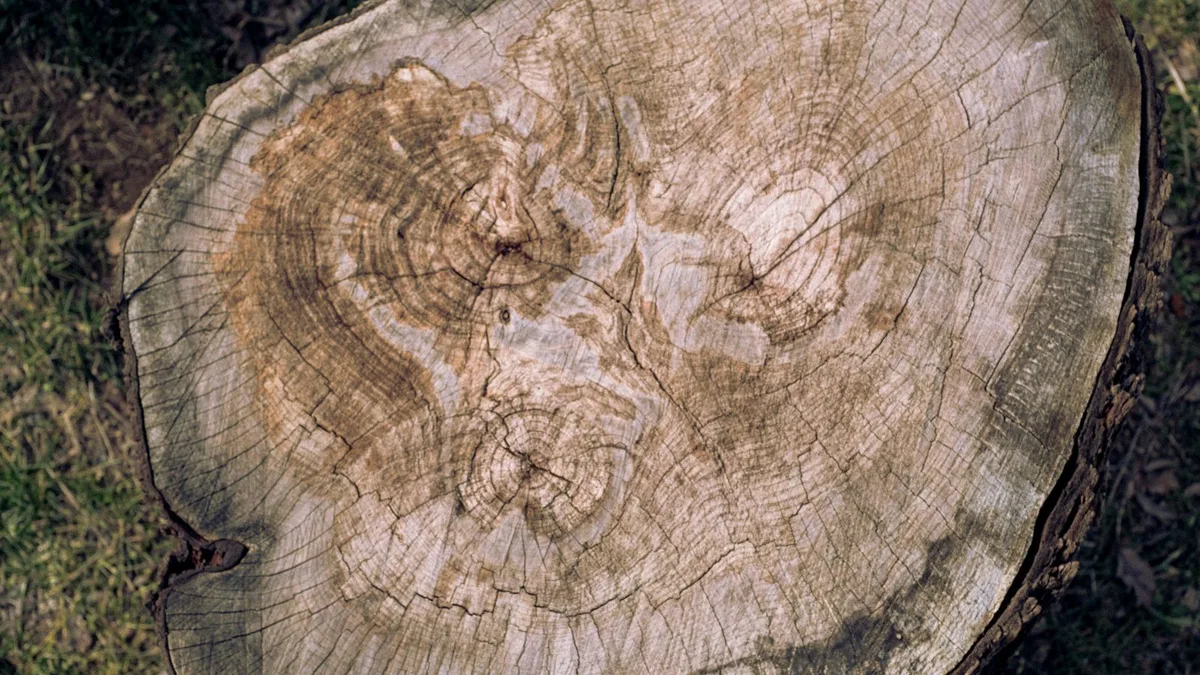
What the rings do explain is the diameter formula — a wider trunk has a wider ring of working sapwood, hence more quarts per day. The stump photo in every tree-care article is an anatomy lesson: count the rings, then measure the diameter, and you’ve just read the tree’s monthly water bill. Straight flat cuts only; angled or V-cut bases just lift out of the water contact zone on the stand’s spikes.
6. Heat and the thirsty corner
Does room heat make a Christmas tree drink more?
Where the tree stands changes the water bill more than the species does: a tree next to a radiator, heat vent or fireplace can drink 30 to 50 percent more than the same tree in a cool corner, because transpiration scales with temperature and dry air — the draft-free spot two feet from the vent is the cheapest water savings of the season. South-facing full sun counts too; lovely light, doubled thirst. The footprint guide’s tape-oval and this page’s heat check are the same audit run twice: one for the floor, one for the air.
The corner hierarchy, best to worst: cool room away from heat sources, then indirect-sun spot, then near-but-not-facing a vent, then above a floor vent (never — the hot air column hits the canopy directly), then beside the fireplace. If the tree must live near heat, bump the water budget by a third and check the stand daily, because the peak-day table above assumes a normal 68–70°F room.
| Spot, best to worst | Extra thirst | The fix |
|---|---|---|
| Cool corner, no heat sources | Baseline | The peak-day table assumes this room |
| Indirect-sun spot | Slight | Same watering schedule holds |
| Near (not facing) a vent | +30–50% | Bump the water budget by a third; check daily |
| Above a floor vent | Never | Hot air column hits the canopy directly — pick another corner |
| Beside the fireplace | Worst | Daily checks and a one-third bigger budget, minimum |
7. The 30-second daily check
How do you check a Christmas tree stand’s water level quickly?
The check that actually happens is the one that takes half a minute, and it needs exactly two props: look at the reservoir from above every morning — the water line should sit at least an inch above the cut base — and mark a fill line with a Sharpie on the stand’s inner wall on day one, so the check becomes a glance instead of a measurement. The “cover the base” minimum is the hard floor; a 2-inch buffer over the cut is the comfortable number. If the skirt blocks the view, the funnel tools in idea 10 include the versions with a visible external gauge.
Two habits make the check stick: attach it to an existing routine (coffee before the tree — same trigger, every day), and keep the water jug physically next to the stand, because a jug in the kitchen is a jug you don’t fetch. And the pets angle from our cat-proof tree guide applies here too: cats drink from tree stands, so a covered reservoir solves both the reseal risk and the “why is the cat drinking pine water” problem in one purchase. And for the four-day-trip scenario from idea 3, a programmable drip line run into the reservoir takes over the morning check entirely — that’s the travel option below.
As an Amazon Associate, we earn from qualifying purchases.

- Programmable timer runs a daily top-up line straight into the reservoir — the four-day-trip fix
- LED display shows frequency, duration and humidity at a glance, no blind guessing
- USB-C rechargeable with 10 m of hose — one kit also serves the actual houseplants
Price and availability shown on Amazon; listing may change.
8. The additive verdict
Do aspirin, sugar or 7-Up help a Christmas tree last longer?
The honest answer from the university-extension trials is boring: plain tap water performs as well as every home remedy — aspirin, sugar, corn syrup, 7-Up, bleach and commercial tree preservatives have shown no consistent benefit in controlled tests, and bleach adds one more chemical in reach of pets for zero gain. The tree isn’t hungry; it’s plumbing. The cut surface transports water by capillary action and transpiration pull, and dissolved sugar doesn’t make the straws suck harder — it can feed bacteria in warm reservoir water instead.
| Additive | Claim | What tests show | Verdict |
|---|---|---|---|
| Sugar / 7-Up | Feeds the tree | No uptake improvement; may cloud water | Skip |
| Aspirin | Prevents clogging | No measurable difference | Skip |
| Commercial preservative | Prolongs freshness | Results within noise of plain water | Optional, harmless |
| Plain tap water | — | The baseline everything matched | Winner |
The money you’d spend on preservatives buys the thing that actually moves the needle: a bigger reservoir or a funnel. Room-temperature water is fine; the “warm water helps” claim has weak support and matters only on the very first fill if the tree is badly wilted.
9. The season total
How much water does a tree drink over the whole season?
Stretched across a typical four-week run, the quarts become a household number: a 2.5-inch-trunk tree kept from Thanksgiving to Boxing Day drinks roughly 12 to 16 gallons in total — about 8 to 11 quarts a week at steady state, front-loaded with the peak first week. The weight matters more than the volume: a gallon is 8.3 pounds, so a filled 1.5-gallon stand carries 12.5 pounds of water before the tree’s own weight — one more reason the footprint guide makes you measure the real spot, not the corner you’re imagining.
| Trunk | Week 1 (peak) | Weeks 2–4 | 4-week total |
|---|---|---|---|
| 2″ | ~2.5 gal | ~1.5 gal/wk | ~7 gal |
| 2.5″ | ~3.5 gal | ~2.5 gal/wk | ~11 gal |
| 3″ | ~4.5 gal | ~3 gal/wk | ~13.5 gal |

10. Watering tools
What’s the easiest way to water a Christmas tree?
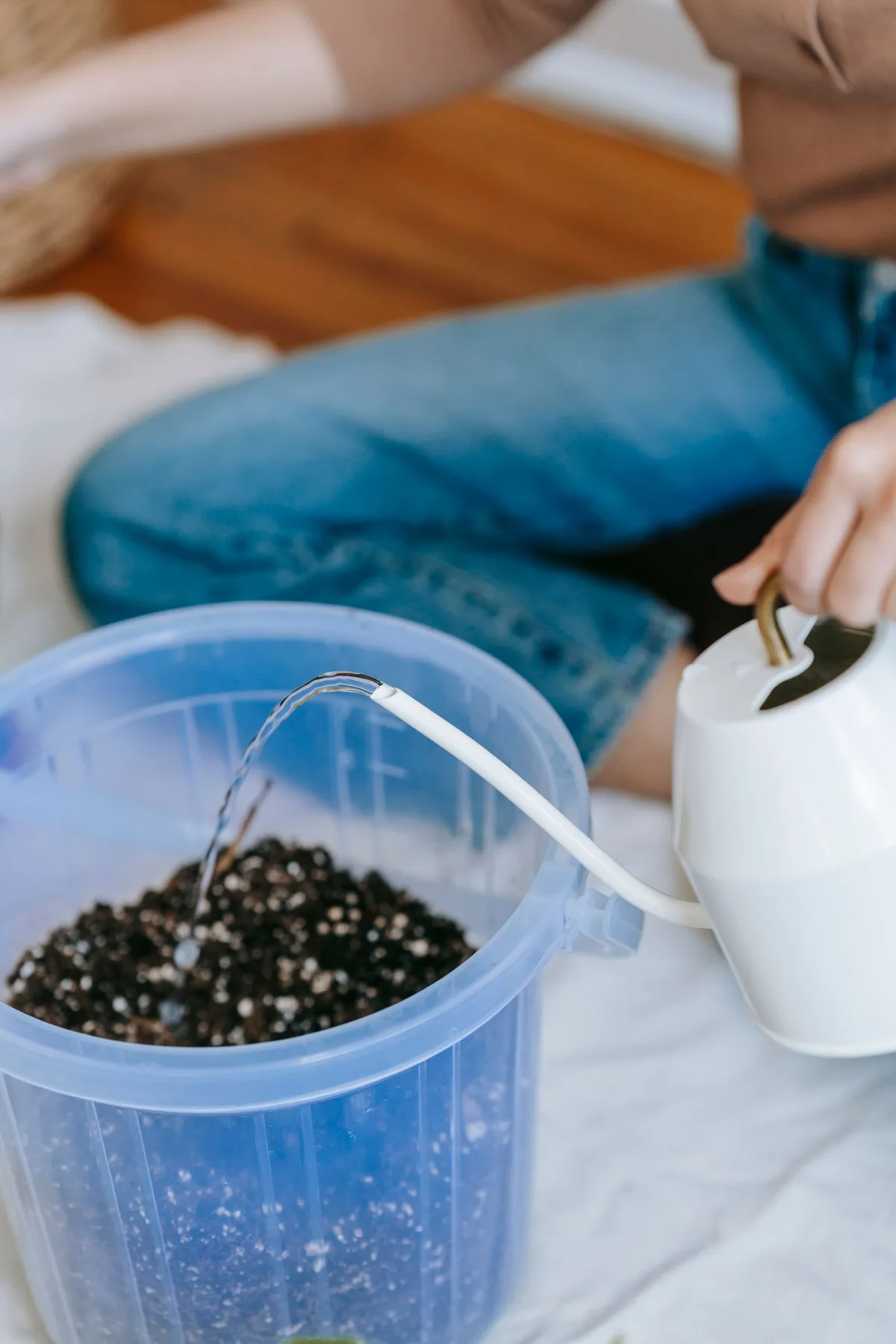
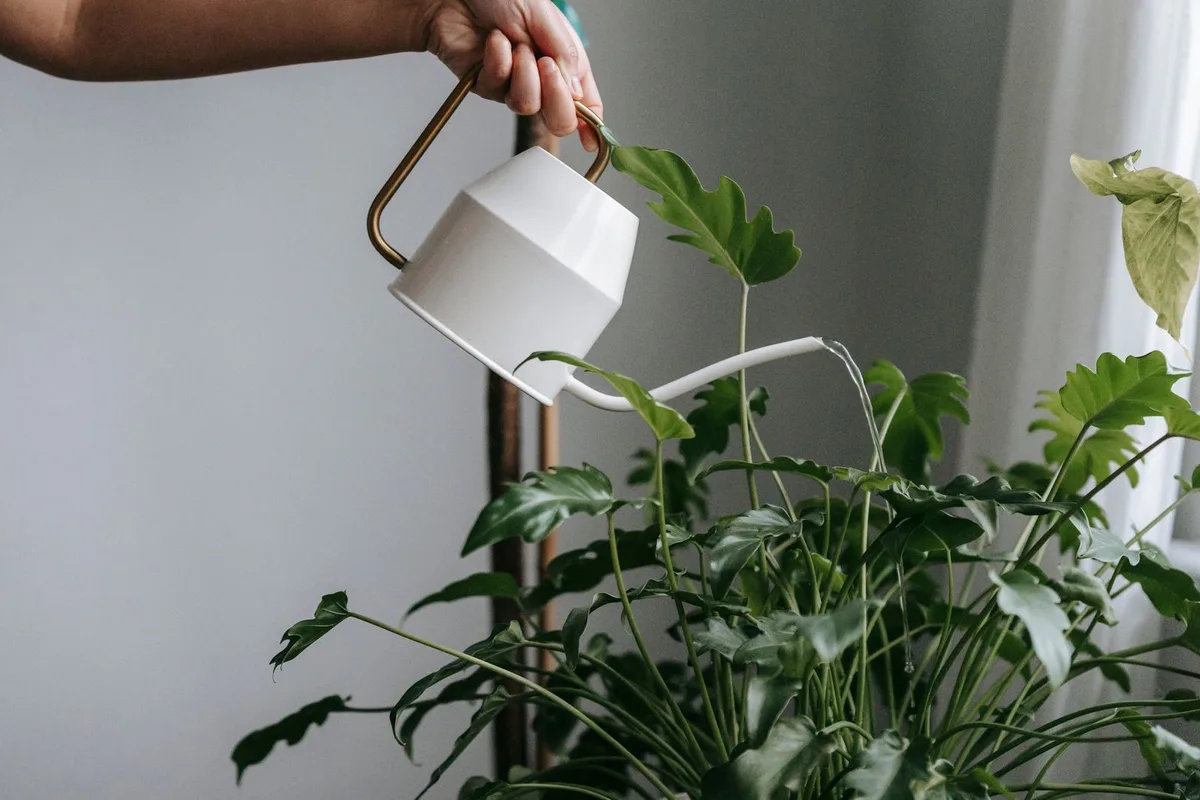
Under-the-skirt watering fails for ergonomic reasons, so the tools exist to remove the crawl: the two proven options are a long-spout watering can that reaches the reservoir without moving the skirt, and a funnel-with-tube that stays permanently installed so you pour from standing height; the automatic fillers with an external level gauge are the version for anyone who travels mid-season. The bucket-and-measure hack (fill a gallon jug, pour via funnel, count) doubles as the calibration for learning what your stand’s “full” actually holds.
Whatever the tool, the sharpie line from idea 7 still applies — the tool moves the water, the line tells you when to stop. And the long-spout can earns its place for the rest of the year with the actual houseplants, which makes it the rare Christmas purchase with a January job.
| Tool | How it works | Best for |
|---|---|---|
| Long-spout watering can | Reaches the reservoir without moving the skirt | Everyone — and it waters houseplants in January |
| Funnel with tube | Stays permanently installed; pour from standing height | No-crawl daily top-ups |
| Automatic filler with level gauge | Keeps the reservoir topped up | Anyone traveling mid-season |
| Gallon jug + funnel | Count the pours; calibrates what “full” holds | Learning your stand’s real capacity |
As an Amazon Associate, we earn from qualifying purchases.

- Long thin spout reaches under the skirt without disturbing a single branch
- 35 oz (1 L) capacity — two pours cover a 2.5-quart watering day, so you feel the quota
- Rust-proof stainless steel with a wooden handle that earns its keep on houseplants in January
Price and availability shown on Amazon; listing may change.
11. When the drinking stops
How do you know when a Christmas tree stops taking water?
The tree announces the end in three signals, and the water level is the first one: when uptake drops to near zero for two or three days, needles shed at a touch, and branches sag at the tips, the seal has won — a tree that no longer drinks is also the tree that no longer bends, and it’s time to plan the exit date. A healthy tree at week three still pulls visible water daily; a tree that sat dry once in week one often never recovers its peak rate even after a re-cut.
The needle-pull test is the quick check: grasp a needle near the outer branch and pull gently — fresh needles resist, drying needles release in small clumps. Combined with the water-line, you get two honest data points on the same glance. Set the tree out by the municipal pickup date, keep it watered until the door, and the last week stays as photogenic as the first.
12. Species and thirst
Which Christmas tree species drink the most water?
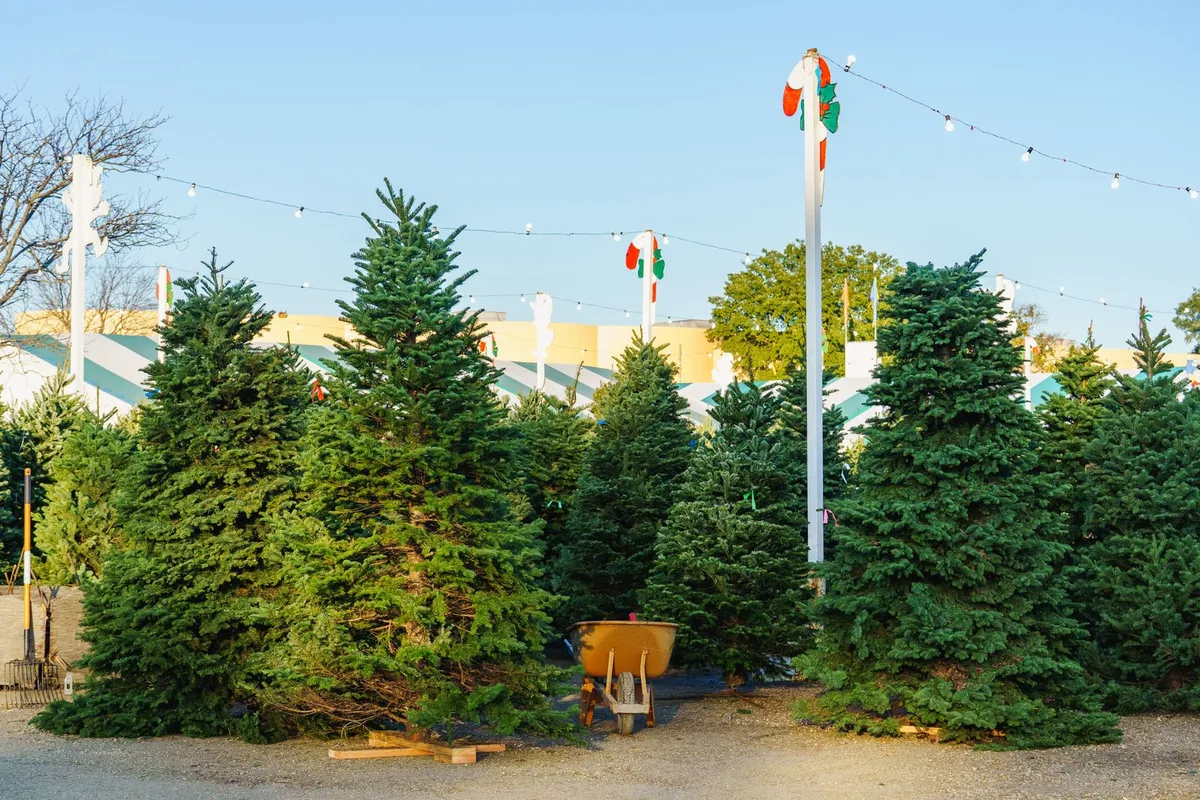
Species changes the needle-holding more than the drinking, but the pattern is real: Fraser firs and Nordmann firs are the reliable drinkers with excellent needle retention; pines drink well but stretch in warm rooms; spruces (Norway especially) start dropping needles early and punish a single dry day hardest. The lot-side test in the market photo — bend a needle, check the scent, run a hand along a branch — reads freshness, which is what actually predicts uptake, more than the species tag does.
| Species | Drinking | Needle retention |
|---|---|---|
| Fraser fir | Reliable drinker | Excellent |
| Nordmann fir | Reliable drinker | Excellent |
| Pines | Drink well | Good; branches stretch in warm rooms |
| Norway spruce | Punishes one dry day hardest | Drops early |

The checklist below compresses this whole page into the ten-second version you can save to a phone note — the same list with the formula and the two hard numbers (6-hour reseal, 1 qt per inch) pre-filled.
The Tree Watering Checklist
- ☐ Cut the base fresh at the lot; into the stand with water within 2 hours
- ☐ Formula: 1 quart per inch of trunk diameter daily; day one runs double
- ☐ Never let the reservoir run dry — a dried cut reseals in 4–6 hours
- ☐ Stand capacity ≥ 2 days of the trunk’s peak uptake (see idea 4 table)
- ☐ Mark the full line with a Sharpie on day one; check every morning
- ☐ Keep the tree out of the heat-vent / radiator / fireplace zone
- ☐ Plain tap water only — skip aspirin, sugar and soda
- ☐ Travel plans over 2 days = assign a neighbor or install an auto-filler
- ☐ Watch for the three end-of-life signs: no uptake, needle shed, sag
- ☐ Covered reservoir if the cat drinks from the stand
FAQ
How much water does a Christmas tree drink the first day?
Up to a gallon for a typical 2.5-inch trunk — roughly double its steady rate. The National Christmas Tree Association’s care guidance treats the first 24 hours as the peak, which is why the base must go into water within two hours of the cut.
How often should you water a real Christmas tree?
Check daily and top up whenever the level drops below an inch over the cut base. For a 2.5-inch trunk on a 1-gallon stand, that means a refill every day to day-and-a-half in the first week, stretching to every two or three days later in the season.
Do you need to add sugar or aspirin to Christmas tree water?
No. Controlled tests by university extension services found plain tap water performs as well as sugar, aspirin, soda and commercial preservatives. The tree transports water mechanically through its outer sapwood rings; additives don’t improve uptake.
What happens if the Christmas tree stand goes dry overnight?
The cut base seals with sap within 4 to 6 hours and water uptake nearly stops. If it happens, saw a fresh half-inch cut off the bottom before refilling — even with a decorated tree — or the tree will dry from the top down for the rest of the season.
Does drilling holes in the trunk help a tree absorb more water?
No. Uptake happens through the outer sapwood just under the bark, so drilling the center does nothing. A straight flat cut at the base is the correct preparation; angled or V-cut bases lose water contact on the stand’s spikes.
How many gallons does a Christmas tree drink in a month?
For a typical 2.5-inch trunk over four weeks: roughly 11 to 16 gallons total — the peak first week takes 3 to 4 gallons by itself, then about 2.5 gallons a week steady. Bigger trunks scale up at about one quart per inch per day.
Related Reading
- Christmas Tree Water Calculator: Daily Water by Trunk Size
- Christmas Tree Footprint Math: Floor Space, Skirt Size and the Gifts Underneath
- Cat-Proof and Dog-Proof Christmas Tree: The Anchoring Math
- Tree Too Tall for the Ceiling? The Height and Clearance Math
- How Many Ornaments and Lights Does a Christmas Tree Need?
- Christmas Entryway Decor Ideas That Survive Boots and Backpacks
- Small Christmas Tree Ideas for Apartments: The Scale Math
Last updated: November 19, 2026. The cat was innocent; the tree was thirsty.
[…] drink rate comes straight from our watering guide: a tree pulls about 1 quart of water per inch of trunk diameter per day, and double that the first […]