
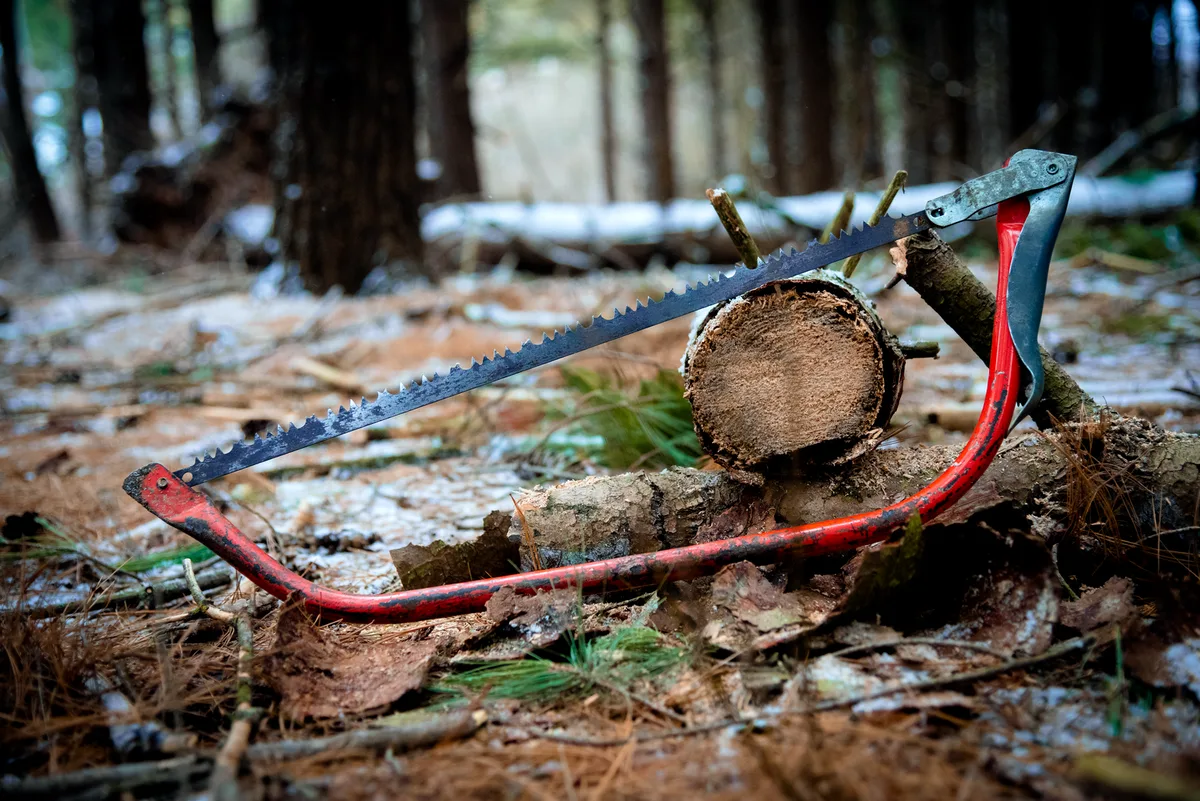
Our first real tree stood in a stand inherited from a previous tenant, and by Christmas Eve it leaned like it was eavesdropping on the next room. I tightened the eyebolts in the wrong order, shimmed one leg with a folded pizza box, and spent the holiday watching a $70 fir test my improvised engineering. The stand wasn’t broken — it was just three sizes too small for a trunk it was never meant to grip, and no label on the box had said so in a language I understood.
The fix is arithmetic you can do at the lot with a tape measure: cup diameter = trunk diameter + 1 inch minimum, leg spread = tree height ÷ 4, water capacity = daily drink × the days you refuse to walk to the kitchen. This page turns those three equations into tables — what “up to 8-ft” actually promises, how the taper fooling everyone works, the refill schedule your capacity forces on you, and the push test that predicts a tip before it happens.
Table of Contents — 12 Ideas
- How do I measure my trunk for a stand?
- What does “up to 8-ft” on a stand label actually mean?
- Can one stand hold both a 5-ft and a 9-ft tree?
- How much water capacity does the stand need?
- Do heavy cast iron stands really tip less?
- What makes a stand stable — the three-part test?
- Why is my tree leaning, and how do I level it?
- How tight should the eyebolts be?
- Will the stand fit inside my skirt or collar?
- What protects the floor under the stand?
- Should I trim the trunk to fit a smaller stand?
- Do small trees need real stands too?
1. Measuring the trunk (the number the label hides)
How do I measure my trunk for a stand?
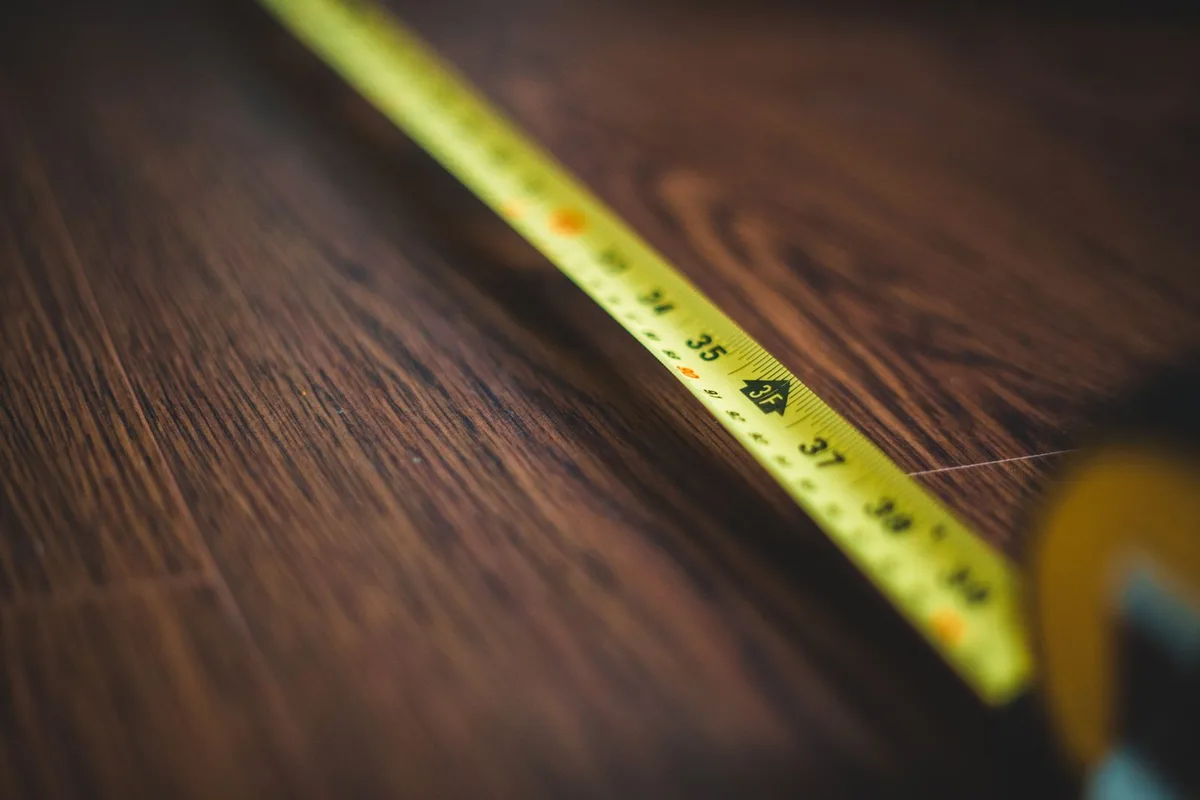
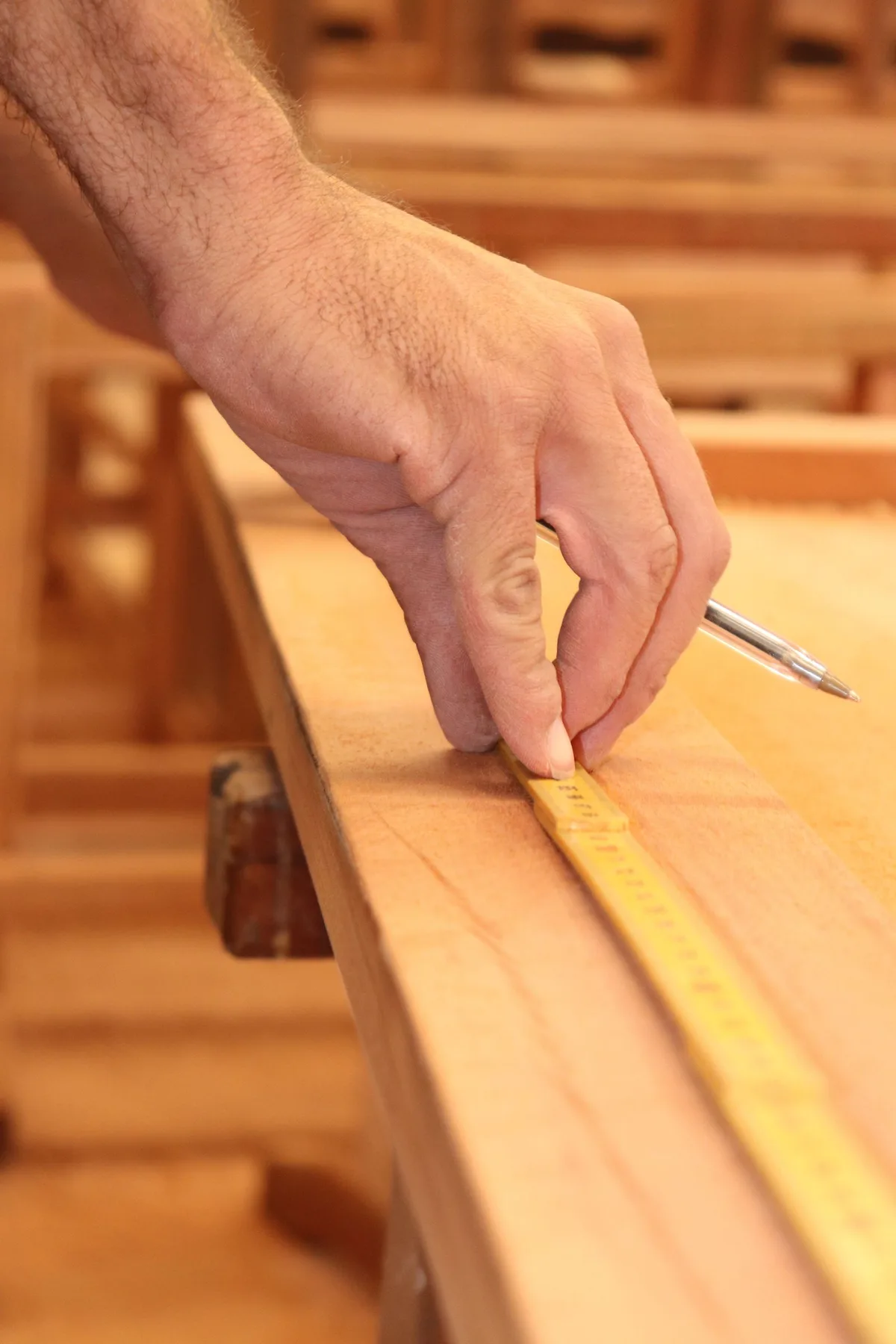
Measure the trunk’s diameter about 6 inches above the cut, not at the very bottom. Trunks taper — the base flares where the roots began, so the same tree that measures 5.5 inches at its flared foot can measure 4.5 inches six inches up. The stand’s cup grips the trunk at whatever depth the tree sinks into it, which is usually 3 to 6 inches, so the diameter 6 inches up is the number the cup actually meets. Wrap a soft tape (or string you lay against a rigid one) around the trunk and divide by 3.14; a 14-inch circumference is a 4.5-inch trunk.
Write the number down before you touch a single stand on the shelf — every stand decision in this page hangs off that one figure. The photo below is the field kit: tape, pen, and the phone note that survives the drive home.
| Trunk diameter (6 in above the cut) | Typical tree size | Stand cup to look for |
|---|---|---|
| 3–4 in | 4–6 ft | Small stands, capacity 1+ qt |
| 4.5–5 in | 6–7.5 ft | Mid stands, capacity 1.5–2 qt |
| 5.5–6 in | 7.5–9 ft | Large stands, capacity 2–3 qt |
| 6+ in | 9 ft and up | Check the rating label — “universal” usually stops at 5 in |
2. Decoding the height label
What does “up to 8-ft” on a stand label actually mean?
The height on a stand’s box is the maximum tree the cup and leg spread were tested with — and it assumes a tree at the top of the label’s range has a trunk on the slim side. A “fits trees up to 8 ft” stand usually carries a 5-inch cup, which accepts a 4-to-4.5-inch trunk with margin, but an 8-foot fir with a fat 6-inch bottom sits badly in it. The label is a ceiling, not a guarantee; the cup diameter is the promise that matters.
| Tree height | Typical trunk Ø 6″ above cut | Min cup diameter | Min leg spread (height ÷ 4) | Stand class |
|---|---|---|---|---|
| 4–5 ft | 2–3″ | 4″ | 12–15″ | Tabletop / mini |
| 5–6 ft | 3–4″ | 5″ | 15–18″ | Standard |
| 6–7 ft | 4–5″ | 6″ | 18–21″ | Standard |
| 7–8 ft | 5–6″ | 7″ | 21–24″ | Heavy duty |
| 8–9 ft | 6–7″ | 8–9″ | 24–27″ | Heavy duty |
| 9–10 ft | 7–8″ | 10″ | 27–30″ | Extra large |
Read the table as a chain of minimums: your tree’s measured trunk must fit the cup, and your tree’s height must fit the leg spread. If either fails, size up — the stand is the one product where oversizing costs $10 and undersizing costs the tree.
As an Amazon Associate, we earn from qualifying purchases.

- Welded powder-coated steel with a 5.75-inch max trunk, 28-inch leg span and a lifetime warranty
- The box says 12 ft, the cup says 5.75 inches — measure your trunk 6 inches above the cut before trusting the label (idea 2’s warning, made of steel)
- 0.9-gallon reservoir and removable legs; a 4-inch trunk drains that tank in under a day at peak, so budget your pitcher trips
Price and availability shown on Amazon; listing may change.
3. The “universal stand” myth
Can one stand hold both a 5-ft and a 9-ft tree?
No single stand serves that range honestly, because the two trees stress it in different directions. A 5-footer with a 3-inch trunk asks almost nothing of a big stand’s cup but wobbles if the eyebolts bottom out before they grip — some large cups simply can’t close down far enough for slim trunks. A 9-footer with a 7-inch trunk overpowers a small stand twice: the cup can’t open wide enough, and the 24-inch leg spread that suits a 6-footer becomes geometrically underfoot.
Households that alternate sizes (the apartment years, then the first house with 9-foot ceilings) own two stands or borrow one for the off-size year. If you must bridge the gap with one, buy for the big tree — a slim tree in an oversized cup can be shimmed with a scrap of two-by-four cut to length, but a fat trunk in an undersized cup is unfixable without a saw, and the fix that involves a saw is the one in idea 11 that you should never perform.
The one-stand bridge, and where it breaks in both directions:
| Your tree | Where the bridge fails | The fix |
|---|---|---|
| 5 ft, 3-inch trunk in an oversized cup | Eyebolts bottom out before they grip — some large cups can’t close down far enough for slim trunks | Shim with a scrap of two-by-four cut to length |
| 9 ft, 7-inch trunk in an undersized stand | Cup can’t open wide enough, and a 24-inch leg spread suits a 6-footer, not this | None without a saw — buy for the big tree or own two stands |
4. Water capacity vs. your walking stamina
How much water capacity does the stand need?
The drink rate comes straight from our watering guide: a tree pulls about 1 quart of water per inch of trunk diameter per day, and double that the first 24 hours. Capacity then sets your refill schedule — divide tank size by daily drink, and the quotient is how often you carry the pitcher. The National Christmas Tree Association’s care guide makes the same point from the other side: check the reservoir daily, because a dry base reseals in hours.
| Trunk Ø | Peak daily drink | Refill interval on 1-gal (4 qt) stand | Refill interval on 1.5-gal (6 qt) stand |
|---|---|---|---|
| 2″ | 2 qt (1 gal on day 1) | Every 1.5–2 days | Every 2–3 days |
| 3″ | 3 qt (1.5 gal on day 1) | Daily | Every 1.5 days |
| 4″ | 4 qt (2 gal on day 1) | Daily, twice on day 1 | Daily |
| 5″ | 5 qt (2.5 gal on day 1) | Twice daily first week | Daily, twice on day 1 |
| 6″ | 6 qt (3 gal on day 1) | — undersized | Twice daily first week |
The pattern worth noticing: from a 4-inch trunk upward, a 1-gallon stand is a twice-a-day commitment during the week you’re busiest. If the tank math conflicts with your December schedule, buy capacity, not vigilance — the tree can’t sip from a calendar.
5. Weight and the tip equation
Do heavy cast iron stands really tip less?

Partly — but the mechanism matters. A cast iron stand resists tipping two ways: its own 8 to 15 pounds sit low, below the water line, and rigid legs don’t flex or lift the way thin stamped plastic does when a 60-pound tree shifts its weight. The full system weight tells the story: a 7-foot fir runs 50 to 70 pounds fresh, its water adds 8.3 pounds per gallon, and a cast iron base adds 10 to 15 more. That’s 70 to 100 pounds of low-hung ballast versus 55 to 85 on a light plastic stand.
The honest caveat: weight helps most against the bump-and-swing loads (pets, toddlers, the vacuum), and barely at all against a genuinely off-balance trunk. If the tree itself leans because the cut is crooked, ten more pounds of iron just tips with more confidence. Stability is a three-part test, and mass is only one part — idea 6 has the other two.
The three dominant stand designs trade the same three currencies — grip range, water volume and floor footprint — in different proportions:
| Stand type | Typical cup range | Water capacity | Typical weight | Best at / weak at |
|---|---|---|---|---|
| Steel ring, 4 eyebolts | 3–6″ | 1–1.5 gal | 4–8 lb | Mid trees, fast setup / thin legs flex on 8-ft trees |
| Cast iron, pin or screw | 3–7″ | 0.5–1 gal | 8–15 lb | Stability, decades of life / shallow reservoir means more refills |
| Swivel-cup steel, 3–4 ft legs | 4–8″ | 1.5–2.5 gal | 7–12 lb | Big trees, low refill frequency / widest footprint under skirts |
The pattern: cast iron wins the tip contest and loses the refill contest, while big swivel-cup stands do the opposite. Choose by which failure annoys you more — a wobble you’ll never see, or a pitcher you’ll carry twice a day.
As an Amazon Associate, we earn from qualifying purchases.

- 1.65-gallon leak-proof reservoir — the refill-friendly side of the trade-off in the table above, where cast iron tanks hold half as much
- Wide 22-inch circular steel base, about 12 lb, rated for 6-to-11-foot trees
- Rust-resistant powder-coated finish built for decades of Decembers
Price and availability shown on Amazon; listing may change.
6. The three-part stability test
What makes a stand stable — the three-part test?
Run all three before the skirt goes on; each catches a failure the others miss.
1. Geometry. Leg spread must reach at least one quarter of the tree’s height — 21 inches for a 7-footer, measured tip of leg to tip of leg. This is the same tipping-lever logic from our pet-proofing guide, scaled down: the wider the base, the more sideways force at the top it takes to lift a leg.
2. Grip. With the tree in the cup and eyebolts snug, grab the trunk at 4 feet and push with about 5 pounds of force — a firm handshake, not a shove. The tree should flex and return without the stand shifting, rocking, or lifting a leg. Any leg lift means the geometry or the grip is out of votes.
3. Settle. Re-check everything on day 3. A fresh trunk loses a little moisture and the eyebolts relax a quarter turn; a stand that was perfect on setup Sunday can pass a loose bolt by Wednesday. The 30-second re-check catches it.
| Test | How to run it | Pass looks like |
|---|---|---|
| 1. Geometry | Leg spread vs tree height, tip to tip | Spread ≥ one quarter of tree height (21 in for a 7-footer) |
| 2. Grip | Push the trunk at 4 ft with ~5 lb of force | Tree flexes and returns; no rocking, no leg lifting |
| 3. Settle | Re-check everything on day 3 | Eyebolts still snug after the trunk loses its first moisture |
7. Leaning trees and leveling
Why is my tree leaning, and how do I level it?
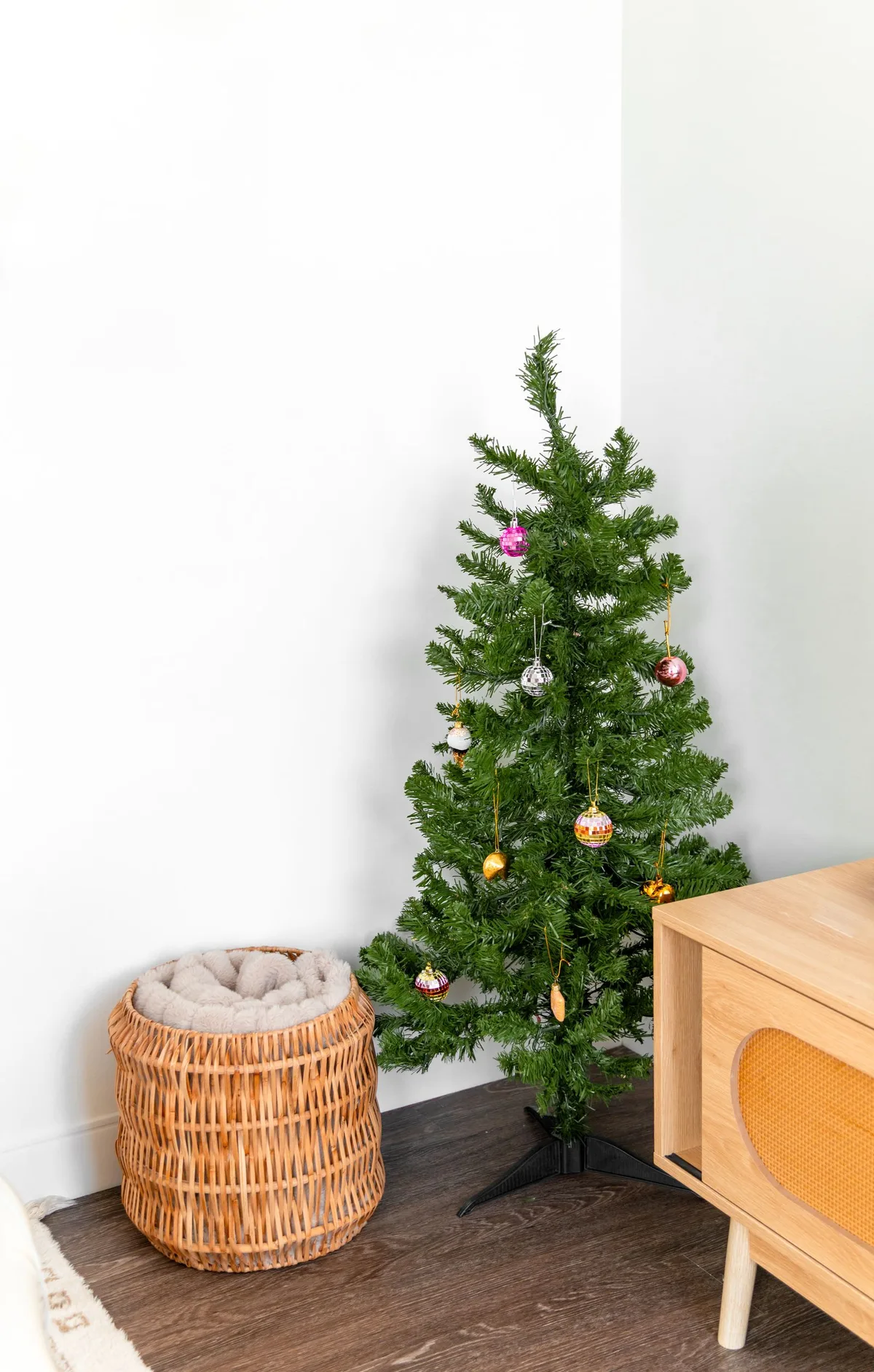
A lean has exactly two sources: the trunk grew crooked near the base, or the stand sits on an uneven floor. Diagnose by looking at the trunk itself, not the tree — if the trunk enters the stand vertically, the floor is the suspect and the fix is a shim under the low leg (hardwood shim, not cardboard, which compresses). If the trunk itself angles, rotate the tree in the cup until the lean points into a corner’s sightline, or split the difference with the eyebolts: slack the side it leans toward, tighten the side it leans away from, a quarter turn at a time.
The professional move is a helper with a second opinion: one person holds the tree plumb while the other works the bolts. Solo, step back after each quarter turn — leaning looks obvious from 8 feet and invisible at 8 inches. And do all of this before decorating; re-leveling a dressed tree redistributes ornaments badly and spills reservoir water worse.
8. Eyebolts without superstition
How tight should the eyebolts be?
Snug plus a quarter turn — meaning firm contact all around the trunk, then one more quarter turn of effort, and stop. Two failure modes bracket the target: bolts left loose let the trunk rock micro-distances that wear the cup’s grip smooth over days, while bolts cranked hard on a soft pine trunk dent the sapwood — the same outer ring that drinks — and can crack a plastic cup outright. Work the bolts in a star pattern (or alternating pairs on a four-bolt stand) so pressure stays even, never tightening one fully before the others touch.
Re-tighten on day 3 as the trunk settles, and again after any re-leveling. If a bolt bottoms out — spins without gripping — the trunk is slimmer than the cup’s minimum, and the fix is a shim ring cut from a soup can or a proper reducer, not heroics with a screwdriver.
Four eyebolt states, two of which cost you the tree:
| Eyebolt state | What happens |
|---|---|
| Snug plus a quarter turn (the target) | Firm contact all around the trunk, even pressure in a star pattern, then stop |
| Left loose | Trunk rocks micro-distances that wear the cup’s grip smooth over days |
| Cranked hard on a soft pine trunk | Sapwood dented — the same outer ring that drinks — or a cracked plastic cup |
| Bottoms out (spins without gripping) | Trunk slimmer than the cup’s minimum — shim ring cut from a soup can or a proper reducer |
9. Fitting under the skirt and inside the collar
Will the stand fit inside my skirt or collar?
This is where the stand’s footprint collides with everything else you bought. A tree skirt needs to clear the stand’s full leg spread with an inch or two of margin — our footprint guide‘s 56-to-60-inch skirt for a 6-foot tree exists partly for this reason, because the stand alone can claim 20 to 24 inches of diameter. A tree collar (the rigid ring around the base) is less forgiving still: the stand’s entire footprint, plus the fill spout’s swing radius, must fit inside the collar’s opening, which is why shallow, compact-base stands pair so well with collars and wide-legged cast iron pairs badly.
Measure the stand’s leg-tip to leg-tip span before the tree comes home, and check it against the skirt’s flat diameter and the collar’s opening. The tape-oval test from the footprint guide settles it in one move: tape the stand’s outline on the floor, then check the skirt and collar against the tape before the trunk is anywhere near the room.
10. Floor protection under the base
What protects the floor under the stand?
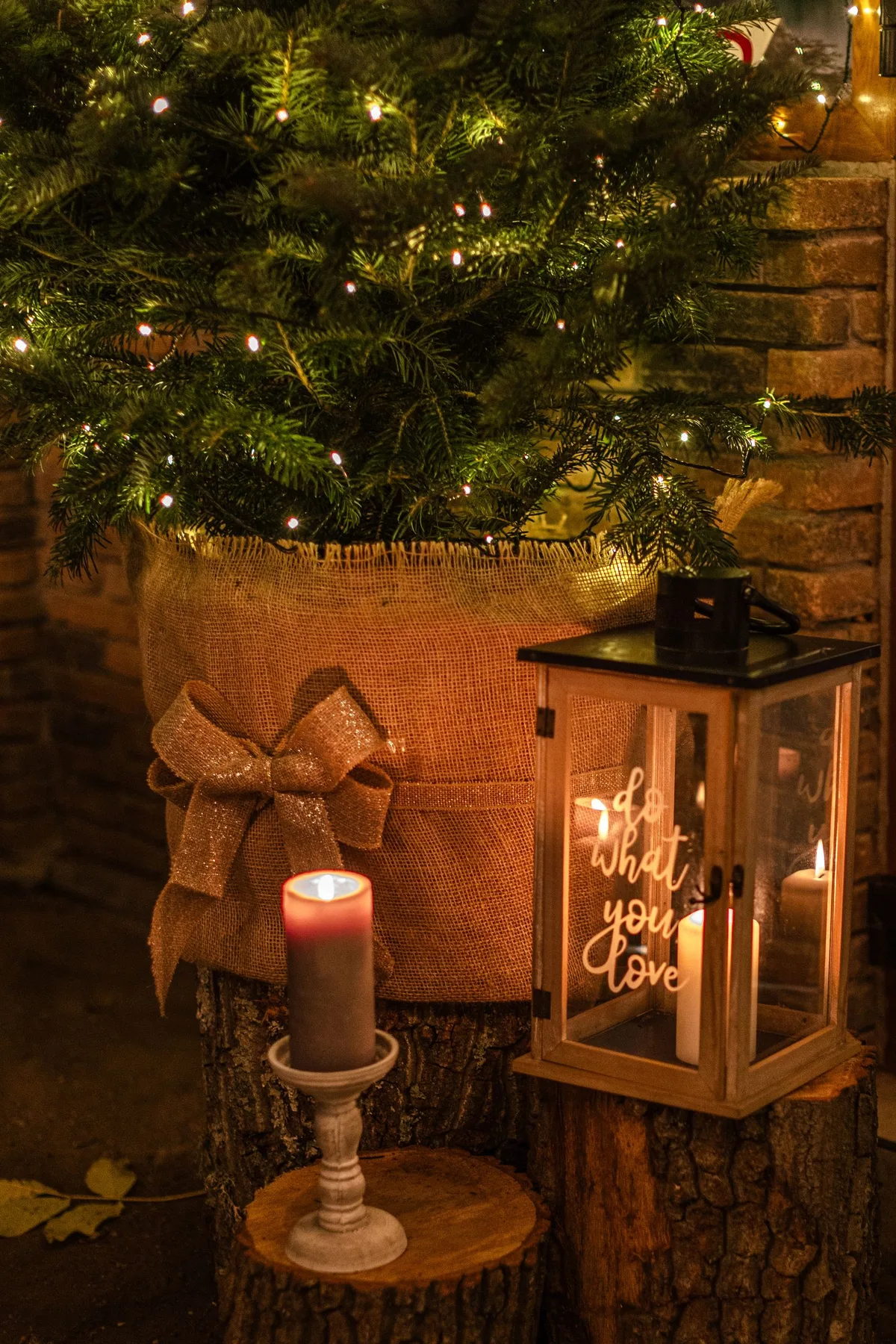
Three liquids threaten the floor: reservoir overflow from an over-enthusiastic pitcher, wicking and condensation on the stand’s underside, and the slow weep of a stand whose seams give up in week three. Hardware answers each: an absorbent mat cut slightly larger than the leg spread catches overfills and weeps invisibly; a rigid drip tray catches the catastrophic gallon; and felt pads under each leg stop scratches while adding a quarter inch of gap that lets you slide the whole assembly for vacuuming.
The mat earns its place on wood floors especially, where a unnoticed weep through January leaves a finish ghost that outlives the tree by years. Cost is a coffee’s worth; the alternative is sanding.
As an Amazon Associate, we earn from qualifying purchases.

- Absorbent fabric traps overfills, sap and needle mess; waterproof slip-resistant backing stops soak-through to the floor
- 28-inch round covers the 20-to-26-inch leg spread of most standard stands with margin
- Machine washable, rolls up for storage, made in the USA from over 50% recycled fiber
Price and availability shown on Amazon; listing may change.
11. The trunk-trimming trap
Should I trim the trunk to fit a smaller stand?
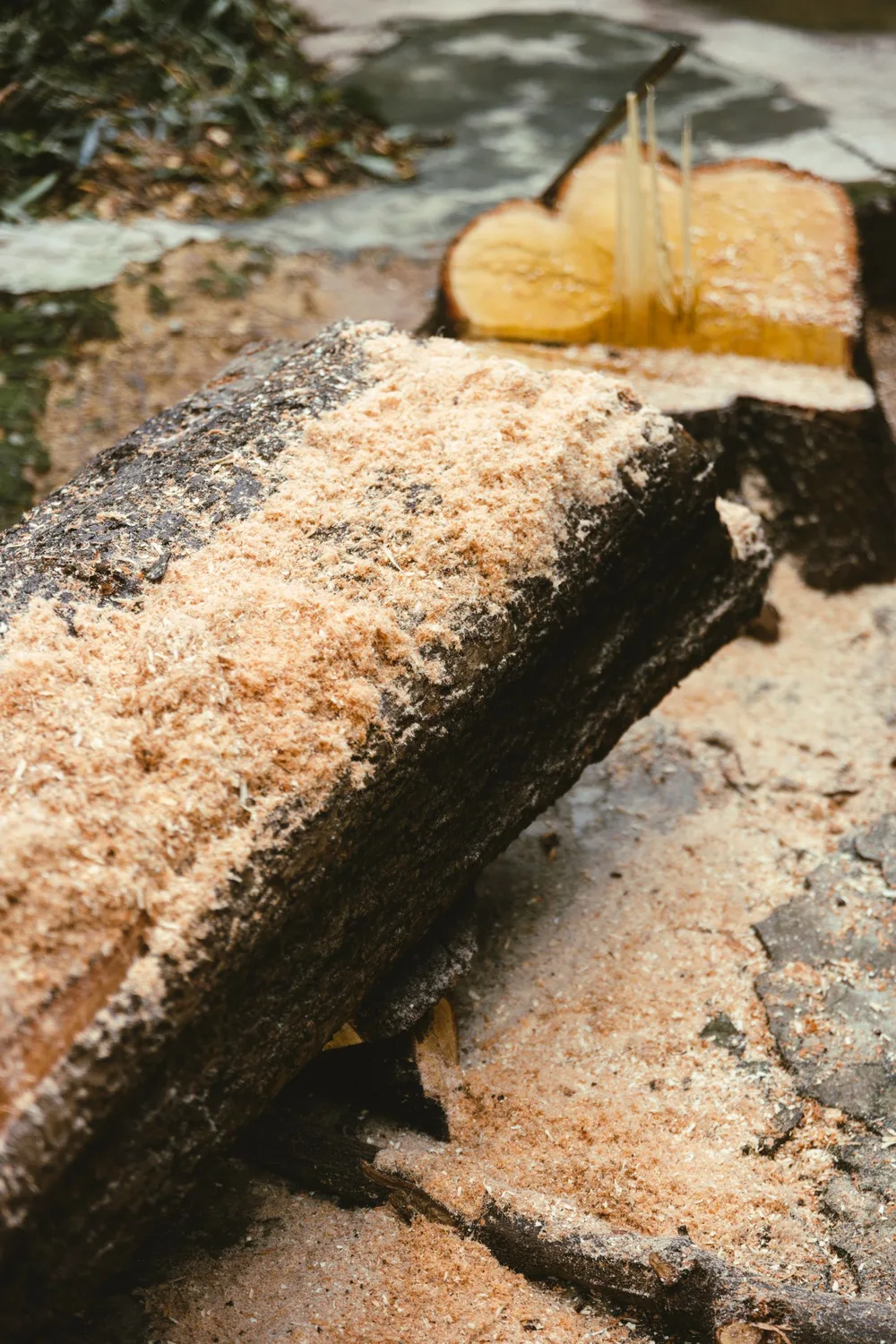
Cutting the base flat and square is correct — that’s the fresh cut every tree needs within hours of coming home. Shaving the trunk’s sides to wedge a fat trunk into a small cup is the single most damaging thing you can do, because the sapwood just under the bark is the tree’s entire water pump. Shave it and you’ve turned a 5-inch trunk’s drinking capacity into a 3-inch trunk’s, on the tree least able to afford it. The same logic kills the “V-cut” and the angled cut: less contact surface with water, faster reseal.
The correct fix for a trunk too big for the cup is a bigger cup — the $15 to $25 the right stand costs is the cheapest insurance in the whole tree budget. If the trunk is marginally oversize (a half inch), a stand with a wider maximum rating handles it; if it’s wildly oversize, the tree and the stand were never a match and one of them should go back.
| Cut | Verdict | Why |
|---|---|---|
| Base cut flat and square | Correct | The fresh cut every tree needs within hours of coming home |
| Shaving the trunk sides | Never | Sapwood under the bark is the entire water pump — shaving turns a 5-in drinker into a 3-in one |
| V-cut or angled cut | Never | Less contact surface with water, faster reseal |
| Trunk too big for the cup | Buy a bigger cup | $15–$25 for the right stand is the cheapest insurance in the budget |
12. Small trees, real stands
Do small trees need real stands too?

A 3-to-4-foot tree runs a 1.5-to-2.5-inch trunk and drinks 1.5 to 2.5 quarts a day at peak — smaller numbers, same physics. Tabletop trees in buckets of sand or floral foam are the classic slow-dry setup: foam holds just ounces and sand hides the water line entirely. A proper mini stand with a visible reservoir, checked on the same schedule as the big tree, is what keeps a tabletop tree from becoming kindling with ornaments.
The stability math shrinks but doesn’t vanish: a 4-foot tree on a 30-inch console still wants a base spread of a foot, and cats ignore tree-size conventions completely — our apartment tree guide covers the small-space anchoring version of this problem.
The 8-Point Stand Setup Checklist
- ☐ Measured trunk diameter 6″ above the cut (circumference ÷ 3.14)
- ☐ Cup diameter ≥ trunk + 1″; leg spread ≥ tree height ÷ 4
- ☐ Water capacity ≥ daily drink × 1.5 days (or a watering schedule you’ll keep)
- ☐ Fresh flat cut made within 2 hours of the stand (re-cut if it sat dry longer)
- ☐ Tree plumb: trunk vertical, lean rotated or shimmed before decorating
- ☐ Eyebolts in star pattern, snug + quarter turn, no bottomed-out bolts
- ☐ 5-lb push test at 4 ft: flex returns, no leg lift, no stand walk
- ☐ Mat or tray under the base; re-check bolts on day 3
Related Reading
- How Much Water a Real Tree Actually Drinks
- Christmas Tree Footprint Math: Floor Space, Skirt Size and the Gifts Underneath
- Cat-Proof and Dog-Proof Christmas Tree: The Anchoring Math
- Tree Too Tall for the Ceiling? The Height and Clearance Math
- How Many Ornaments and Lights Does a Christmas Tree Need?
- Small Christmas Tree Ideas for Apartments: The Scale Math
Last updated: November 20, 2026. The pizza box retired; a hardwood shim took the job.
[…] Write down three numbers while you’re up there: total rail length, the spacing between balusters you plan to anchor to, and the rail’s circumference (wrap the tape around it once — most wood rails run 8 to 10 inches around). Those three figures feed every other calculation on this page, the same way the trunk measurement drives the stand math. […]