
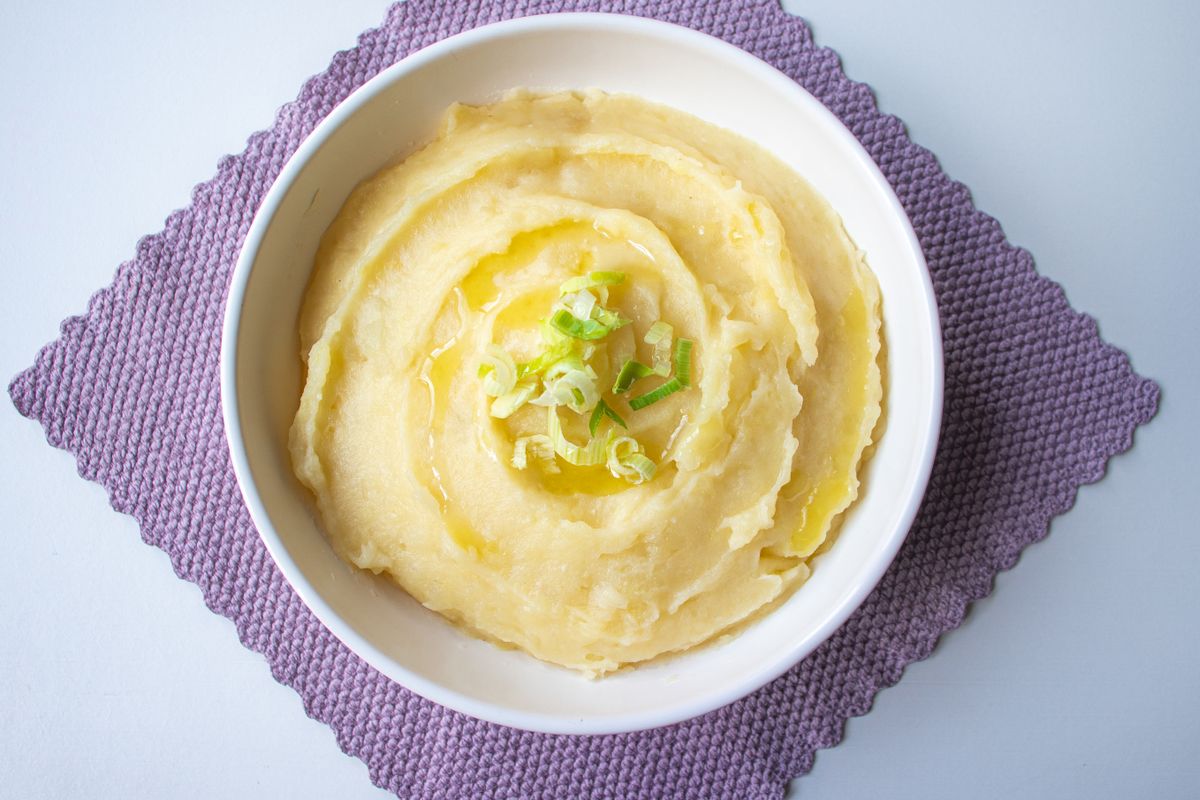
The mashed potatoes that wrote this page came off the heat at 3:40 p.m. on a Thanksgiving Thursday, went into a serving bowl at 4, and sat on the back of the stove — uncovered, beside a warm oven, in a kitchen full of bodies — until the second seating at 7:45. By then they had a tan, a skin you could lift like a lid, and a smell my aunt generously called “rustic.” We served them. Everyone survived. But when I finally bought a $12 instant-read thermometer the next February and measured a test bowl through the same four-hour arc, it read 122°F at hour two — four hours deep in the zone where bacteria double every 20 minutes — and I have never again served potatoes I cannot vouch for. The fix was not paranoia. It was arithmetic: mashed potatoes are a dairy-and-water food with near-perfect bacteria-friendly chemistry, and the clock that governs them is shorter and less forgiving than the one that governs dinner rolls.
Below is the full sit-out math for mashed potatoes and every side that shares their table: the two-hour rule and what it actually counts, the bacteria doubling curve inside a cooling bowl, which sides fail fastest (gravy and mash fail before the turkey does), what an overnight bowl really does to you and why reheating does not rescue it, the shallow-container fridge method and the 3-to-4-day clock that follows, the reheat ratios that make day-old potatoes taste first-day, the slow-cooker method for holding them through a long dinner, the freezing math, the restaurant steam-table trick you can steal, and a minute-by-minute serving schedule for a five-hour evening. Every number has a twelve-guest example. The arithmetic continues on the turkey leftovers calculator once the meal is over — this page covers the bowl, that one covers the week.
The short version
Table of contents
- 1. How long can mashed potatoes sit out at room temperature?
- 2. What is the danger-zone math inside a cooling bowl?
- 3. Do mashed potatoes spoil faster than other holiday sides?
- 4. What happens if you eat potatoes left out overnight?
- 5. How should you store leftover mashed potatoes in the fridge?
- 6. What is the best way to reheat mashed potatoes?
- 7. Can you keep mashed potatoes warm for a long dinner?
- 8. Can you freeze mashed potatoes?
- 9. Can you save potatoes that sat out too long?
- 10. How do restaurants hold mashed potatoes safely for hours?
- 11. How long can the other sides on the table sit out?
- 12. What does a safe serving schedule look like for a long evening?
1. How long can mashed potatoes sit out at room temperature?
Two hours total, in a room below 90°F, and the window shifts with the room itself — the table below is the honest adjustment for a December kitchen. The USDA’s two-hour rule applies to all perishable food between 40°F and 140°F — the “danger zone” — and the clock is cumulative, not per-sitting: a bowl out for 90 minutes at 4 p.m. that goes back out at 6 p.m. has only 30 minutes left. When the room itself is hot (above 90°F, or a kitchen running three ovens), the window shrinks to one hour. This is not a quality guideline; it is a safety line, and the USDA’s danger-zone guidance exists because the bacteria in that window reproduce on an exponential curve, not a slow fade.
| Kitchen condition | Effective sit-out window | Why | Host adjustment |
|---|---|---|---|
| Cool room (below 68°F), door open | 2 hours standard | Slow cooling curve through the zone | Run the plan as written (idea 12) |
| Normal heated room (68-75°F) | 2 hours standard; mash hits 140°F floor in 45 min | Typical holiday kitchen | Equipment for the mash, clock for the rest |
| Hot kitchen, ovens running (90°F+ ambient) | 1 hour | Ambient heat slows the cooling curve and speeds growth | Every perishable goes to equipment immediately |
| Bowl on top of a warm oven or radiator | About 60-75 minutes | Residual heat parks the bowl in the fast-growth band | Never stage mash on the oven top — the 2023 bowl’s mistake |
| Bowl in direct sun or by a fire | About 45-60 minutes | Radiant heat holds dish temp at 90-110°F | Move the buffet out of the sun path |
Mashed potatoes specifically fail the two-hour test faster than the rule itself, for three reasons. First, they are dairy carriers — butter, milk, cream, or sour cream all raise the fat-and-protein content that Listeria and Staph aureus feed on. Second, they are moist and dense: a 3-inch-deep bowl of mash holds heat like a thermal mass, which sounds protective until you realize the center stays at 120-130°F for an hour — warm enough to grow bacteria fast, too cool to kill anything. Third, potatoes are nearly neutral in pH (around 6.1), which is the comfort zone for Bacillus cereus, the spore-forming organism whose spores survive boiling and whose toxin survives reheating. A dinner roll can sit out all afternoon and only go stale. A bowl of mash runs a real countdown from the moment it leaves the pot.
The honest timeline for a typical serving bowl, measured in my own kitchen with an instant-read thermometer, looks like this — and the calculator pages that time the rest of the meal (the turkey roast-time chart is the one most of us run at 2 p.m. in a panic) should schedule the mash to come off the heat no more than 45 minutes before the buffet opens:
| Time at room temperature | Bowl temperature | What is happening | Verdict |
|---|---|---|---|
| 0-45 minutes | 140-160°F | Still above the safety floor; bacteria growth is slow | Safe — normal serving window |
| 45-90 minutes | 120-140°F | Inside the danger zone; bacteria begin doubling every 20 minutes | Safe if the total stays under 2 hours |
| 90-120 minutes | 105-120°F | Deep in the zone; two-plus bacterial generations | Edge of the USDA limit — refrigerate now |
| 2-4 hours | 90-105°F | Four to six generations; toxin production possible | Not worth the risk — discard |
| Overnight (6+ hours) | Room temperature | Twelve-plus generations; heat-stable toxins present | Discard — reheating does not help (idea 4) |
As an Amazon Associate I earn from qualifying purchases.

- 0.5-second readings with plus-or-minus 0.5°F accuracy and NIST/NSF certification — 4.7 stars across more than 2,600 buyers
- Every verdict on this page is a dish temperature, and this is the tool that reads the center of the bowl without touching the vessel wall
- Waterproof, auto-rotating backlit display, and it doubles for the turkey, the ham, and the gravy boil-check all season
Price at publish; check the listing. Budget $15-25 — the single cheapest upgrade on this page, and the only way any of these verdicts is a measurement instead of a guess.
2. What is the danger-zone math inside a cooling bowl?
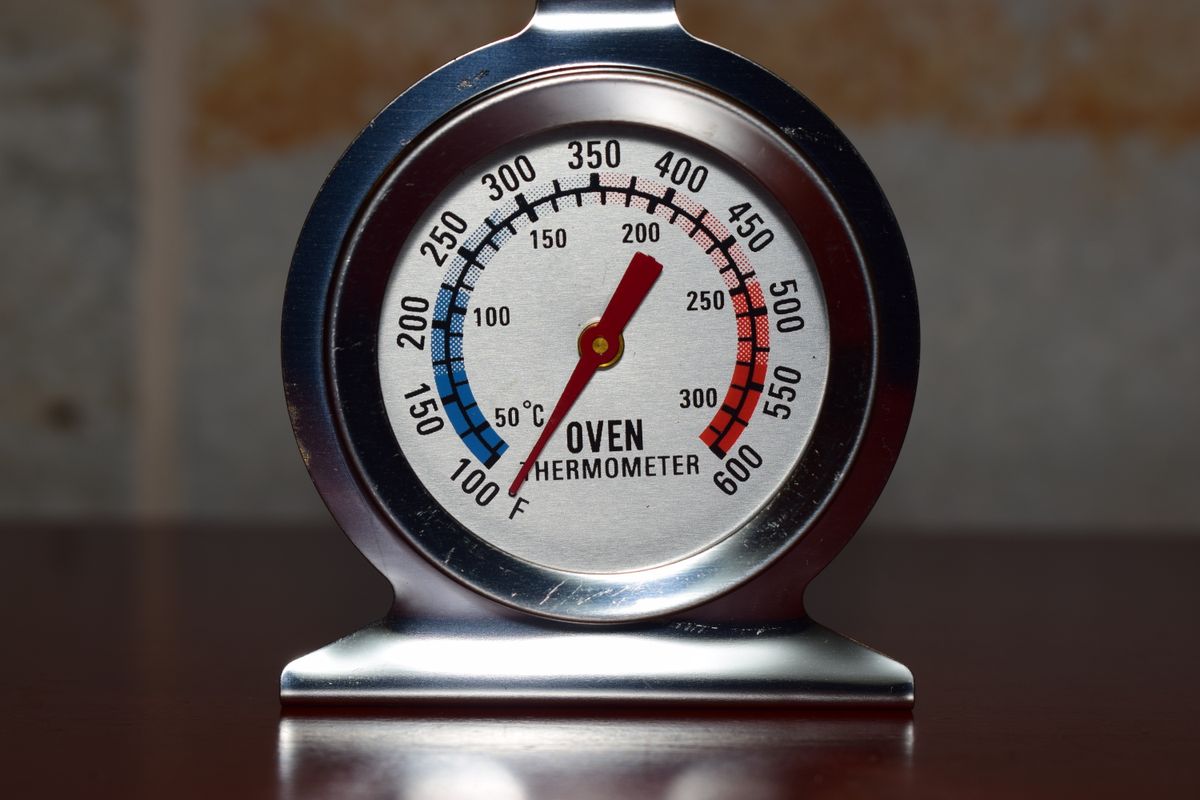
Bacteria in the 40-140°F zone can double every 20 minutes, which turns a four-hour sit into roughly twelve population doublings — 4,096 times the starting count. This is the part of food safety that intuition fails, because a doubling curve looks identical to a safe food for the first several hours. The practical math: one doubling per 20 minutes means the count multiplies by 2 every third of an hour, and the growth is geometric — hour one is manageable, hour two is a colony, hour three is a hazard, hour four is a dare. The USDA’s two-hour rule is simply where the curve crosses the line that immunocompromised guests (grandparents, babies, anyone on chemotherapy) can no longer shrug off.
Temperature inside the bowl decides how fast the doublings land. Bacteria grow fastest between 70°F and 120°F — room-to-warm territory — and slow toward both edges of the zone. That is why the shape of the cooling curve matters more than the duration: a deep bowl of mash drops from 160°F to 110°F in the first 90 minutes, spending that entire stretch in the fastest-growth band. A shallow layer in a wide dish cools faster through the danger zone, which paradoxically makes it safer for the fridge than for holding (idea 5 turns that into a method). The table below translates the doubling curve into plain numbers for a starting population of 1,000 cells per gram — a realistic post-cooking figure for potatoes, because Bacillus cereus spores survive the boil:
| Time in the zone | Doublings (1 per 20 min) | Relative count | What that means on the plate |
|---|---|---|---|
| 20 minutes | 1 | 2x | Indistinguishable from the start — no taste or smell change |
| 1 hour | 3 | 8x | Still invisible; the two-hour clock is running |
| 2 hours | 6 | 64x | The USDA line; healthy adults usually unaffected |
| 4 hours | 12 | 4,096x | Millions of cells per gram; toxin production underway |
| 6 hours | 18 | 262,000x | Gambling with emetic and diarrheal toxins |
| Overnight (10 hours) | 30 | Over a billion x | Reheating kills cells, not the toxins they left behind |
The detail most hosts miss is the cumulative clause. Two hours is a budget, not a reset: the bowl that goes out at 4 p.m., returns to the kitchen at 5:30, and goes back out at 6 p.m. has already spent 90 minutes, and the second appearance counts against the same ceiling. Commercial kitchens track this with discard timers for exactly that reason. Home translation: if your evening will run long (idea 12), the serving schedule matters more than any rescue attempt — and if a dish did slide through its budget, the decision is bin or refrigerate within the remaining window, never “leave it out and see.”
3. Do mashed potatoes spoil faster than other holiday sides?
Yes — among the standard Thanksgiving and Christmas sides, mashed potatoes are the third-fastest to fail, after gravy and cream-based casseroles, because of their dairy load, neutral pH, and moisture. Ranking the table by spoilage speed changes how you stage it: the dishes with milk, cream, or eggs need the discipline, while the bread basket and the cranberry sauce are effectively self-preserving. The comparison below is ordered by how quickly each side crosses the safety line at room temperature, and it assumes all dishes left the heat within the same 30-minute window — if the mash came off at 3:30 and the rolls at 4:30, shift every clock accordingly. The ham or turkey alongside them runs its own countdown, tracked in the ham roast-time chart for the second-protein households:
| Side dish | Why it fails (or doesn’t) | Sit-out limit | Leftover clock after |
|---|---|---|---|
| Gravy | Thin liquid cools fast; often thickened with the poultry drippings | 90 minutes practical, 2 hours absolute | 3-4 days fridge; boil 3 minutes before reuse |
| Mashed potatoes | Dairy + neutral pH + dense thermal mass | 2 hours | 3-4 days fridge |
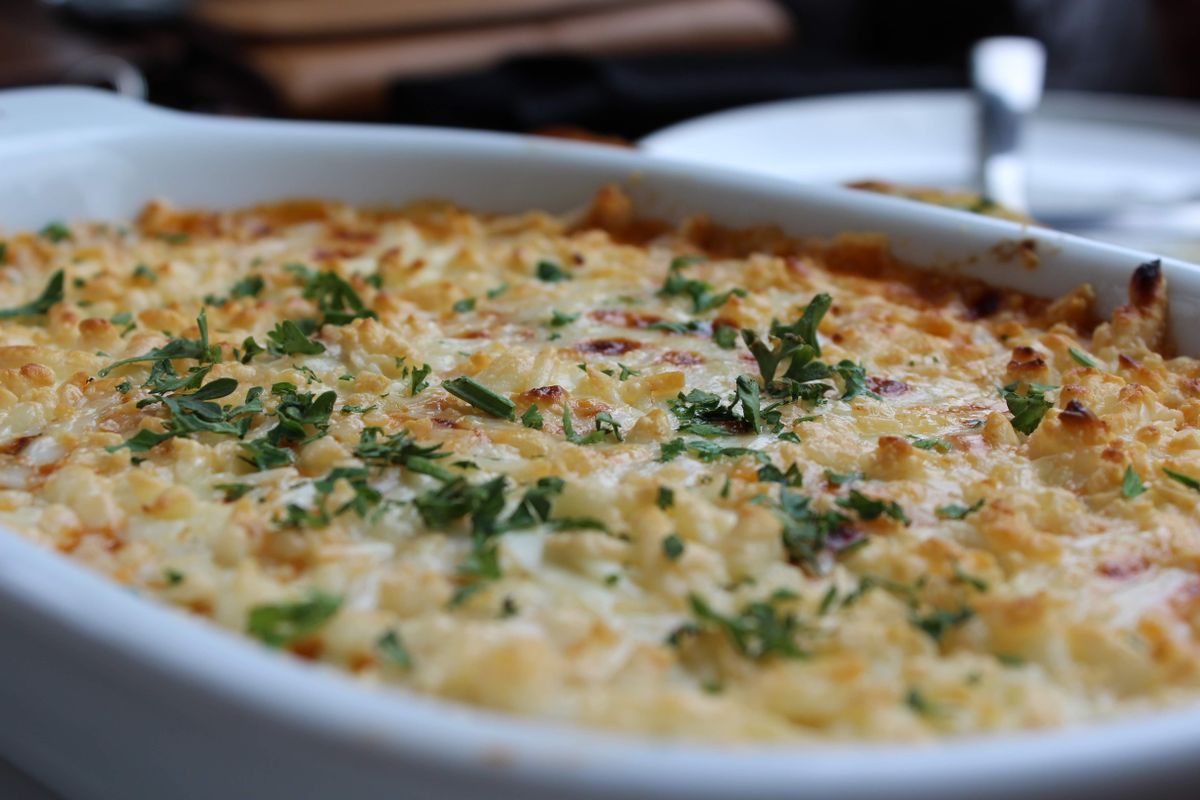
| Cream/cheese casseroles | Dairy sauce base; egg if scalloped | 2 hours | 3-4 days fridge |
| Stuffing (moist) | Moist, often egg-bound; dense center holds warmth | 2 hours | 3-4 days fridge |
| Sweet potato casserole | Similar chemistry to mash; marshmallow top insulates heat | 2 hours | 3-4 days fridge |
| Green bean casserole | Cream base; topping goes stale but safety is the cream layer | 2 hours | 3-4 days fridge |
| Pumpkin/pecan pie | Egg-and-dairy custard fillings | 2 hours | 3-4 days fridge |
| Cranberry sauce | High acid and sugar — hostile to bacteria | Practically indefinite; 4+ hours safely | 10-14 days fridge |
| Dinner rolls and bread | Low moisture; spoilage is staleness, not safety | All day | 2-3 days counter |
Two practical conclusions fall out of the ranking. First, the sides that need the clock are also the ones people love most — so the serving schedule (idea 12) should be built around protecting the dairy dishes, not the bread. Second, “but it looked and smelled fine” is exactly what every one of these dishes says at hour three: the organisms that make you sick do not produce off-smells at their dangerous stage, and the ones that make food smell sour are usually not the pathogens. Sensory checks fail both directions, which is why every verdict on this page is a number, not a sniff test.
4. What happens if you eat potatoes left out overnight?
Probably nothing, if you are lucky — but the specific gamble is Bacillus cereus and Staph aureus, both of which leave toxins that survive reheating, and neither gives you a warning smell. The overnight-bowl folklore (“my grandma did it every year”) survives because most bowls most years contain low pathogen counts and most adults shrug off low doses. The risk is not uniform: the same bowl can put a healthy thirty-year-old on the couch and a grandmother in the ER. Two organisms dominate the mashed-potato case file, and their profiles explain why “just boil it” is bad advice:
| Organism | Grows in mash because | Onset after eating | Symptoms | Why reheating fails |
|---|---|---|---|---|
| Bacillus cereus (emetic) | Spores survive boiling; potatoes are its classic vehicle (“fried rice syndrome” is its sibling) | 30 minutes – 6 hours | Nausea and vomiting, usually brief | The vomit toxin is heat-stable to 121°F-plus cooking |
| Staph aureus | Transferred by hands during mashing/tasting; grows fast in warm dairy-starch | 30 minutes – 8 hours | Violent vomiting, cramps | Its enterotoxins survive boiling for 30 minutes |
| Clostridium perfringens | Spores survive cooking; grows in slowly-cooled bulk batches | 6-24 hours | Cramps and diarrhea (“the cafeteria bug”) | Classic holiday-outbreak organism for held leftovers |
| Listeria monocytogenes | Grows even at fridge temperatures in dairy-rich dishes | Days to weeks | Flu-like; serious for pregnancy and 65+ | The reason the 3-4 day fridge clock exists |
The onset table is why overnight potatoes are a particular gamble for holiday gatherings: the emetic and staph toxins strike within hours, mid-celebration weekend, while perfringens lands a day later and gets blamed on “something else.” None of these organisms change the potatoes’ appearance or smell in their dangerous window. If a bowl did sit out overnight, the honest move is to throw it away — the cost of replacement is two potatoes and twenty minutes, the cost of a staph night is the whole household’s holiday Monday. If the same question involves the whole leftover spread, the leftovers calculator applies the same clocks to the bird, the gravy, and the stuffing so one decision covers the fridge.
5. How should you store leftover mashed potatoes in the fridge?
Within 2 hours of leaving the heat, into shallow containers no more than 2 inches deep, cooled uncovered for 20-30 minutes, then lidded — giving you 3-4 days of fridge life or an immediate path to freezing. Container geometry is the whole trick: a 3-inch-deep tub of warm mash takes 6-plus hours to drop below 40°F in the center, spending hours in the fast-growth band on the way down (and warming every neighboring item in the fridge). The same mash spread 2 inches deep in a wide glass dish crosses below 40°F in under 2 hours. Depth, not volume, is what buys the fridge clock.
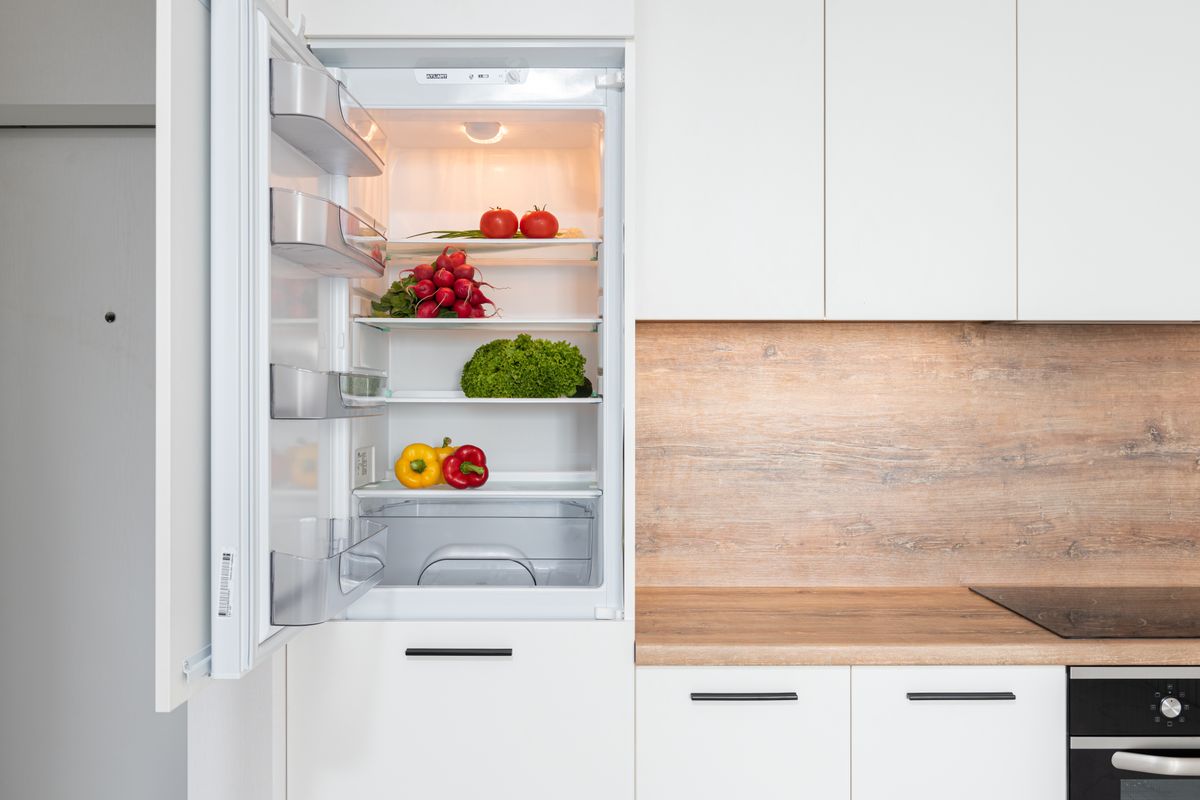
The standard container for a twelve-guest batch is four to six 3-to-4-cup glass containers, each loaded 2 inches deep. Glass over plastic matters for reheating: the same container goes fridge-to-oven (up to 450°F for oven-safe glass) without a transfer, and mash reheated in its own dish loses half the moisture it loses to a pot transfer. Press plastic wrap directly onto the surface before lidding — the skin that forms on mash is moisture loss, and surface contact blocks it. Label with the discard date (cook day plus 4): the fridge stops bacteria but does not freeze them, and Listeria keeps growing slowly at 40°F, which is exactly why the clock below ends at day 4 rather than drifting:
| Storage state | Container depth | Time to below 40°F | Fridge life |
|---|---|---|---|
| Shallow glass dish, 1.5-2 inches | 3-4 cups per dish | About 90 minutes | Full 3-4 days |
| Medium tub, 3 inches | 6 cups | 3-4 hours | 2-3 days (center spent hours in the zone) |
| Deep pot, 5+ inches, lidded hot | 8 cups | 6-plus hours | 1-2 days at best — the classic holiday mistake |
| Shallow, then frozen at hour 2 | 2 inches | Cool first, then freeze | 2 months peak quality (idea 8) |
As an Amazon Associate I earn from qualifying purchases.

- Eight 22-ounce dishes at roughly 4.5 stars from more than 16,000 buyers — one feast’s worth of shallow-cooling containers with lids included
- Glass goes fridge-to-oven-to-microwave without transfers, so day-two revival happens in the same dish it cooled in
- Four divided sections per set means mash, gravy, and stuffing each cool in their own 2-inch layer instead of one deep tub
Price at publish; check the listing. Budget $25-40 for an eight-pack, and buy it before the holiday — the whole two-hour plan fails in the hour after dinner if the house has zero clean shallow containers.
6. What is the best way to reheat mashed potatoes?
Stovetop-low with added dairy is the quality winner (5-8 minutes), the oven at 350°F covered is the batch winner (20-30 minutes), and every method needs added liquid — roughly 2 tablespoons of milk and 1 tablespoon of butter per 2 cups of mash. Refrigeration retrogrades the potato starch: over days in the cold, the starch molecules re-crystallize and the mash tightens into a paste, which is why day-old mash is dense and gluey before it is even warm. Heat alone reverses some of that; liquid reverses the rest. The milk does double duty as moisture and as a fresh dairy buffer; the butter restores the fat coating that keeps the starch from re-clumping.
Method choice follows the batch size and the clock. For two people, a saucepan on low with a lid, stirring every 2 minutes, beats every appliance on speed and texture. For a full container fleet, the oven wins because eight dishes fit on two racks at once. The microwave is the emergency lane: 50% power with a splash of milk, stirring every 60 seconds, or the outside turns gluey while the center stays cold. The slow cooker (idea 7’s equipment on LOW for revival, then WARM for holding) handles the “guests arrive in 90 minutes and I refuse to cook” scenario. Never reheat in the deep container it was stored in if that container is more than 3 inches — the center lags the edges by 15 minutes and half the batch scalds:
| Method | Heat setting | Time for 4 cups | Liquid to add | Best for |
|---|---|---|---|---|
| Saucepan, low | Low, lidded, stir every 2 min | 5-8 minutes | 2 tbsp milk + 1 tbsp butter per 2 cups | 1-4 cups; best texture |
| Oven | 350°F, covered with foil | 20-30 minutes | 1/4 cup milk + 2 tbsp butter per 4 cups | Multi-dish fleets; hands-off |
| Microwave | 50% power, stir every 60 s | 4-6 minutes | 1-2 tbsp milk per 2 cups | Emergency single portions |
| Slow cooker | LOW 1-2 hours, then WARM | 90 minutes | 1/4 cup milk per 4 cups | “Guests in 90 minutes” revival-and-hold |
| Double boiler | Simmering water below | 10-15 minutes | 1 tbsp butter per 2 cups | Never-scald small batches |
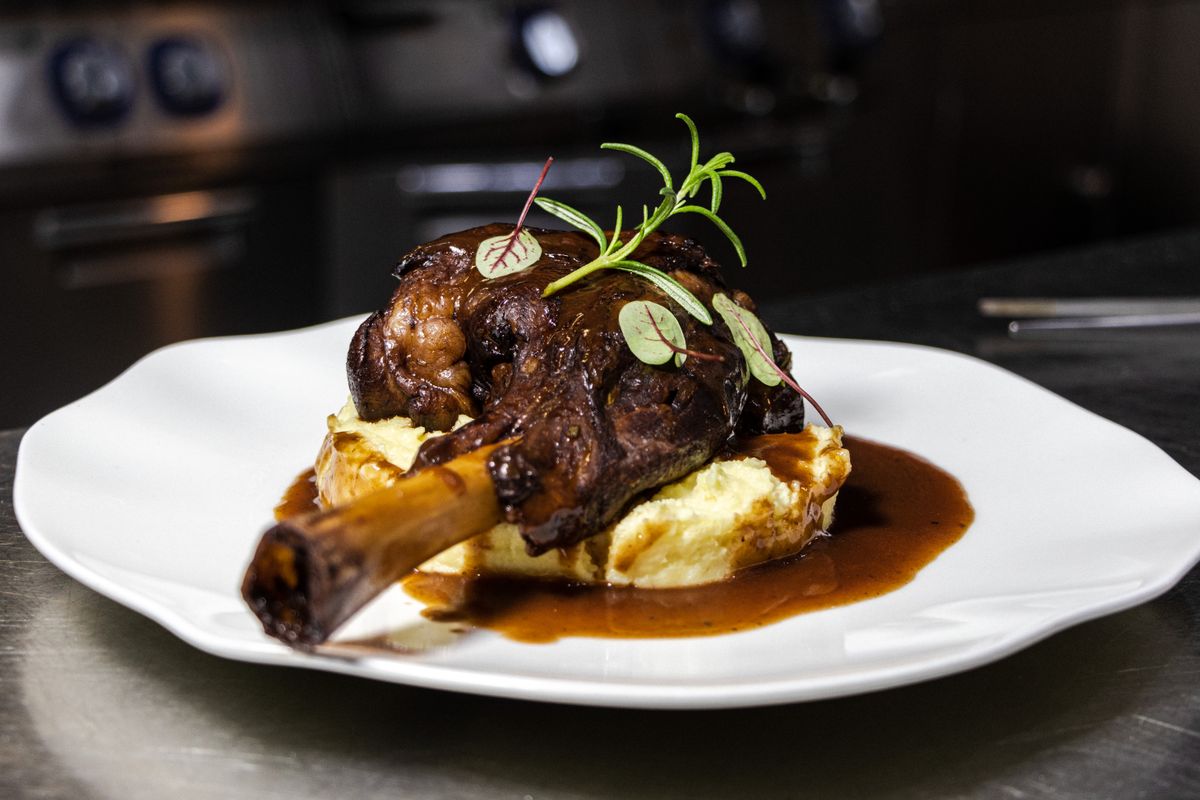
The revival ratio deserves its own card, because it is the single most-requested number from this page’s sibling guides: per 2 cups of refrigerated mash, 2 tablespoons of whole milk or cream plus 1 tablespoon of butter, added cold, folded in during the first minute of heating. For mash made with sour cream or cream cheese, halve the milk — those bases carry more of their own fat and the extra milk makes them loose. Salt after heating, not before: cold mash tastes under-salted even when it is not, and the misread leads to over-salting a full batch.
7. Can you keep mashed potatoes warm for a long dinner?
Yes — a slow cooker on WARM holds mash at 145-165°F safely for up to 2-3 hours of quality and 4-6 hours of safety, if you preheat the crock, fill it half to two-thirds, and stir every 90 minutes. This is the legitimate escape from the two-hour ceiling: the rule counts food in the danger zone, and equipment that holds above 140°F stops the clock entirely. The crock is the best home tool for it because mash is the single ideal crock food — moist, stir-friendly, forgiving of long holds — whereas crust-prone dishes suffer. The mistakes that ruin it are knowable: loading cold mash into a cold crock (steals 30 minutes of hold at the start), filling it to the brim (the edges scald before the center warms), and never stirring (a crust ring forms where ceramic meets mash and browns over hours).
The twelve-guest arithmetic: one 6-quart crock holds 20-25 servings of mash at half to two-thirds fill, so a single crock covers the table with room for seconds. Preheat it with boiling water for 10 minutes while the mash finishes, dry it, load the hot mash, and set WARM. Stir at 90 minutes and again at 180, scraping the walls where the crust ring starts. If dinner will run past hour three, fold in 2 extra tablespoons of milk at the second stir — holding costs moisture even above the safety line. A 1.5-quart model (the one below) is the right size for a side-dish station or a four-to-six-person dinner; the 6-quart family crock does the full batch:
| Hold equipment | Hold temperature | Capacity for mash | Quality window | Notes |
|---|---|---|---|---|
| Slow cooker, WARM | 145-165°F | 20-25 servings in 6 qt | 2-3 hours (safety 4-6) | Preheat + stir every 90 min |
| Slow cooker, LOW | 175-200°F | Same | Revive-then-hold: 60-90 min | Use for cold-start revival, then switch |
| Oven, 200°F covered | About 180°F dish temp | Whatever fits | 2-3 hours | Add milk under the foil; mash tolerates hold well |
| Chafing dish, water pan | 150-165°F | 20-25 servings per 6 qt pan | 4 hours per fuel can | The buffet answer when the oven is full |
| Warming tray under the bowl | 150-180°F surface | One serving bowl at a time | 2-3 hours | Only for shallow metal bowls; glass insulates poorly |
As an Amazon Associate I earn from qualifying purchases.

- The 4.6-star, 16,000-plus-review classic that solves the small-batch hold: 8-10 servings of mash held above 140°F for hours without drying
- LOW revives refrigerated mash in 90 minutes, then the Keep Warm switch holds it through a five-hour evening
- Removable stoneware goes to the dishwasher, and the footprint fits a buffet corner the 6-quart crock cannot
Price at publish; check the listing. Budget $20-35 — it is the cheapest legitimate way off the two-hour clock on this page, and it earns its counter space at every holiday from November to New Year’s.
8. Can you freeze mashed potatoes?
Yes — freeze within 2 days of cooking (ideally right after cooling) for 2 months at peak quality, up to 10-12 months at safe-but-degraded, and the butter and cream in the recipe are what protect the texture. Fat is the freezing friend of mash: potatoes with generous butter, cream, or cream cheese freeze dramatically better than low-fat versions, because the fat coats the starch granules and interrupts the ice-crystal damage that makes thawed mash watery-then-gluey. Low-fat, milk-only mash freezes into a separated, grainy mess that needs heavy revival work; a proper holiday mash (which is already fat-rich) freezes like a bought product. Add nothing during freezing — revive with the idea-6 ratios on the other side.
The method: cool to below 40°F in shallow dishes first (never freeze a warm bowl — it warms the freezer’s other contents and freezes unevenly), then portion into freezer bags or containers flat, 1.5-2 inches thick, pressed to remove air. Flat packs thaw 3x faster than tubs and stack like files. Thaw overnight in the fridge, or straight-from-frozen into a covered saucepan with 2 tablespoons of milk per 2 cups over low heat for 15-20 minutes. Do not thaw on the counter — that spends danger-zone hours outside the fridge clock:
| Freezer state | Pack format | Thaw time | Quality after thaw |
|---|---|---|---|
| Under 2 months | Flat bags, 1.5 inches | Overnight fridge, 8-10 hours | Near-fresh with revival ratios |
| 2-4 months | Same | Overnight fridge | Good; needs full butter-and-milk revival |
| 4-12 months | Any | Overnight fridge | Safe but watery-gluey; rescue with extra butter and a yolk if desperate |
| From frozen, no thaw | Flat pack into covered pan | 15-20 minutes on low | Surprisingly close to fridge-thawed |
9. Can you save potatoes that sat out too long?
No — past the two-hour line the honest answer is discard, because the organisms that matter leave heat-stable toxins, and no oven or boil undoes them. But the near-miss cases deserve precise handling, because most real-world moments fall between “clearly fine” and “clearly out.” A bowl at 60 minutes in a cool kitchen: safe, refrigerate or re-serve, budget continues. A bowl at 3 hours that never went above 120°F and the house is cold: technically over the line; healthy-adult risk is low but the rule exists for the guests who cannot afford the gamble. The toxin logic (idea 4) is the tiebreaker: reheating to 165°F kills living bacteria, which matters for organisms that infect rather than poison, but B. cereus emetic toxin and staph enterotoxin are molecules, not cells, and molecules do not die.
What about the visual alarm bells that are not actually safety alarms? Gray or brownish mash is oxidation and iron-potato chemistry, not bacterial spoilage — harmless, and fixable by stirring in a splash of milk (the color often lightens with rewarming). A skin on top is moisture loss, not contamination: peel or stir it in. Sour smell is the real border: by the time mash smells fermented or sour, bacterial acids are present in quantity, and that bowl is done regardless of the clock. The full decision tree in table form, covering every state a bowl can arrive in:
| Situation | Clock status | Sensory check | Action |
|---|---|---|---|
| Bowl out 45 minutes, hot from the pot | Under budget | Normal | Serve or return to equipment — fully safe |
| Bowl out 90 minutes, uncovered | Half spent | Normal; skin may be forming | Skim the skin, serve, refrigerate remainder at close |
| Bowl out 2 hours, kitchen was cool | At the line | Normal | Refrigerate immediately — do not re-serve |
| Bowl out 2-3 hours, unknown temp | Over budget | Looks and smells fine | Healthy-adult risk call; default no for elderly, pregnant, immune-compromised |
| Bowl out 4+ hours | Way over | May look perfect | Discard — toxin math from idea 4 applies |
| Any sour, fermented, or slimy bowl | Irrelevant | Off | Discard immediately — sensory failure trumps the clock |
| Gray or brown mash, any age | Whatever it is | Color off, smell normal | Oxidation, not bacteria — safe; stir in milk and rewarm |
10. How do restaurants hold mashed potatoes safely for hours?
Steam tables at 140-150°F, small-batch refills every 30-45 minutes, and a hard 2-hour discard timer per batch — three habits that translate directly to a holiday kitchen. Restaurant mash holds for a lunch service of four hours not because restaurants have better food, but because they hold it above the safety line with powered equipment and they throw away on schedule instead of stretching. The two transferable tricks are the batch discipline and the temperature discipline. Batch discipline: instead of one giant bowl that spends the evening dying, keep the bulk hot (crock or 200°F oven) and refill a modest serving bowl every 30-45 minutes — the table always shows fresh, glossy mash, and the aged remainder never exists at room temperature. Temperature discipline: every restaurant steam well sits above 140°F by code, checked by thermometer, which is the same floor this page has been repeating.
| Restaurant practice | Why it works | Home translation |
|---|---|---|
| Steam table at 140-150°F | Hot-holding floor stops the danger-zone clock | Slow cooker WARM or 200°F oven underneath the service bowl |
| Small-batch refills every 30-45 min | Service bowl never ages; bulk stays hot and covered | Half-fill the serving bowl; refill from the crock |
| 2-hour batch discard timer | Removes the “how long has it been out” guesswork | Write the clock on tape on the crock lid |
| Thermometer checks, not sniff checks | Pathogens have no smell at their dangerous stage | One instant-read in the center of the bulk before each refill |
| Shallow hotel pans | Thin layers hold temp evenly and reheat fast | 2-inch container depth from idea 5, everywhere |
The refill trick is the single highest-leverage habit on this page for buffet-style holidays: guests eat with their eyes first, and a bowl refreshed at 6 p.m. reads “made just now” even though the bulk went in the crock at 3. It also quietly enforces the food-safety line, because the room-temperature quantity on the table at any moment is one small bowl instead of one tall one — the difference between 10 minutes of exposure and 2 hours.
11. How long can the other sides on the table sit out?
Every dairy- or egg-based side runs the same 2-hour clock as the mash; cranberry sauce and the bread basket are the exceptions that buy you breathing room. Idea 3 ranked the table by failure speed; this section turns that ranking into a single serving-plan overlay, because the real question on the day is not “is the mash safe” but “which dishes need the equipment and which can ride.” The chemistry in one line per dish: thin liquids cool fastest (gravy first), dairy-rich dense dishes cool slowest-to-fastest depending on depth (mash, casseroles, stuffing), acid-and-sugar dishes are self-preserving (cranberry), and dry starches are quality-limited rather than safety-limited (rolls).
| Dish | Sit-out limit | Equipment if the evening runs long | Fridge life |
|---|---|---|---|
| Gravy | 90 min – 2 hours | Small crock or thermos; never the serving boat | 3-4 days |
| Mashed potatoes | 2 hours | Slow cooker WARM (idea 7) | 3-4 days |
| Cream/cheese casseroles | 2 hours | 200°F oven hold, covered | 3-4 days |
| Stuffing | 2 hours | 200°F oven hold; re-crisp 400°F for 10 min | 3-4 days |
| Sweet potato casserole | 2 hours | Chafing dish or oven hold | 3-4 days |
| Green bean casserole | 2 hours | Warming tray; re-top with fresh onions | 3-4 days |
| Pumpkin/pecan pie | 2 hours | None — refrigerate after the buffet closes | 3-4 days |
| Cranberry sauce | Effectively none (acid + sugar) | None needed | 10-14 days |
| Rolls and bread | None (staleness only) | Bread basket anywhere | 2-3 days counter |
One boundary note for the pie course, because it is the most-missed item on the list: pumpkin, pecan, and custard pies are egg-and-dairy dishes wearing dessert clothes, and they inherit the 2-hour rule after they cool. Fruit pies (apple, cherry) are genuinely fine covered on the counter. The dessert table that sits out from 5 p.m. to 9 p.m. with a pumpkin pie on it has run the same experiment as the 2023 mash bowl that started this page — the drinks math for the same evening lives in the holiday drinks calculator, and the cookie tray is the other self-preserving rider per the cookie exchange math.
12. What does a safe serving schedule look like for a long evening?
Two serving waves with a fridge checkpoint between them: buffet open 4:30-6:30, everything perishable back in equipment or the fridge by 7, second wave 7:15-8:30, hard kitchen shutdown by 9 — which keeps every dish inside its budget while the evening runs five hours. This is the schedule that reconciles “guests graze until 9” with “the two-hour rule says no,” and it is mostly a staging problem: the dishes that need the clock stay in powered equipment (crocks, oven hold, chafers) between waves and only visit room temperature in small service bowls (idea 10’s restaurant refill, home edition). A twelve-guest evening built around a 5 p.m. dinner looks like this:
| Time | Action | Why |
|---|---|---|
| 3:30 p.m. | Mash finishes; straight into the preheated crock on WARM; serving bowl half-filled | Equipment clock starts, not the room-temperature clock |
| 4:30 p.m. | Buffet opens: turkey, mash (from crock), gravies in thermoses, sides out | Every perishable spends hour one above 140°F or shallow-clocked |
| 5:30 p.m. | First stir of the crock; refill service bowls; swap gravy thermos #2 | Restaurant refill discipline; crust ring broken early |
| 6:30 p.m. | Wave one closes; leftovers at the table go to fridge or equipment; bulk stays in crock/oven | Room-temperature dishes hit their 2-hour budget exactly |
| 7:00 p.m. | Fridge checkpoint: desserts in, condiments stay, second-wave dishes re-heat | The reset that makes wave two legal |
| 7:15 p.m. | Wave two opens: revived mash, re-boiled gravy, re-crisped sides | New clock; guests read it as fresh because it is |
| 8:30 p.m. | Wave two closes; last perishables into shallow containers | Idea 5’s cooling method starts at hour zero |
| 9:00 p.m. | Hard shutdown: fridge full, crock off, counter clear | Nothing perishable spends the night out — ever |
The schedule scales by shifting the clock, not by inventing exceptions: a 1 p.m. lunch runs the same spine three hours earlier, and a cocktail-party format (grazing from 6 to 10) runs it twice, with the 8 p.m. checkpoint doubling as the second reset. The dessert-table math and the evening drinks quantities come from their own pages, but the rule that protects the mash is the one printed above: room temperature is a two-hour budget per dish, and equipment or the fridge is where every budget renews. The cookie-exchange math covers the one station that ignores all of this — cookies keep, which is why they anchor the late-evening table while everything perishable is back in the cold.
Frequently asked questions
Related holiday kitchen guides
These are the guides built alongside this one — each covers a different corner of the same table:
- Turkey Leftovers Calculator — the fridge-and-freezer clocks for the bird once the mash is stored.
- Turkey Roast Time Calculator — the schedule that decides when the potatoes come off the heat.
- Ham Roast Time Calculator — the second protein’s countdown on dual-main tables.
- Turkey Thaw Calculator — the cold-chain math that starts the whole food-safety week.
- Holiday Party Drinks Calculator — the beverage quantities for the same grazing evening.
- Cookie Exchange Calculator — the one station that ignores every clock on this page.
Last updated on November 25, 2026 by Emily Harper — bowl temperatures measured with an instant-read thermometer, storage clocks matched to USDA guidance.
[…] thaw panic ends in carved turkey; the next panic is the bowl on the stove. The mashed-potatoes sit-out math answers the second half of the November question — how long the sides can actually sit out […]