
Two Christmases ago I spent ninety dollars on a centerpiece — frosted branches, glittered berries, a vase the size of a fire hydrant — and watched it read as “craft store clearance bin” from across the room. The next year, my sister set her table with a dark green tablecloth from the back of her closet, two brass candlesticks she’d inherited, and spruce clippings from the tree lot dumpster. It looked like a hotel charged $400 a plate for. That’s when it clicked: an expensive-looking Christmas table is a discipline problem, not a budget problem.
The twenty-five ideas below are every swap I’ve tested since — on my table, my sister’s, and a few I snuck in at friends’ dinners before anyone could stop me. They’re ordered from foundation to finishing touch: base layer, metallic thread, light, and the small tricks that photograph like money. Most cost under $30, several are free, and idea 25 is for anyone reading this on December 24th.
Last updated on November 13, 2026 · Written by the Herpickery home team
In this guide: 25 Christmas table setting ideas that look expensive
- Start with a deep, dark linen base
- Run live greenery down the middle
- Set the table with gold flatware
- Put a gold charger under every plate
- Tuck a sprig of spruce on every plate
- One statement centerpiece, not five small ones
- Fold napkins as flat envelopes
- Scatter loose gold ornaments along the runner
- Cluster candles at three heights
- Use real dripless tapers in brass holders
- Pour the good glassware
- Repeat one metallic figurine down the table
- Float cranberries in a crystal vase
- The citrus trick: oranges, cloves, dried slices
- Line up three mini trees
- Tie chair backs with velvet ribbon
- Mix your own china — with a rule
- Skip the bread plates (or style them hard)
- Serve dessert on a raised stand
- Rent or borrow the one big thing
- Lock the palette to three colors
- Layer a woven or velvet runner under the greenery
- Light it like a restaurant
- Style the sideboard to match
- Set it the night before
First, what actually reads as expensive
Before the ideas, the principle they all serve: expensive is a texture-and-restraint signal, not a price signal. Restaurants and hotel tables look expensive because of weight (cloth, real glass), repetition (every seat identical), and discipline (a tight palette). Cheap is the opposite — light materials, mixed everything, many colors. Every swap below moves you one row to the right:
| Usually reads cheap | Reads expensive instead | Why it works |
|---|---|---|
| Paper napkins | Oversized cloth napkins, pressed | Weight and drape — the single biggest material tell |
| Mixed everyday glasses | One crystal or colored glass per guest | Light passes through glass; plastic absorbs it |
| Mismatched cutlery | One matching gold or matte black set | Uniform shine reads as hotel, not hand-me-down |
| One big fluffy centerpiece | Low greenery line + candle trio | Sightlines and structure beat volume |
| Every color at once | Three colors, one metallic | Restraint is the most expensive-looking thing on the table |
Now the twenty-five swaps, from foundation to garnish.
1. Start with a deep, dark linen base
The fastest expensive-looking move costs nothing if you already own it: put the pale tablecloth away and use a dark one. Forest green, charcoal, navy, or burgundy — a deep base instantly adds contrast, and contrast is what makes gold cutlery, candle flames, and white plates photograph like a magazine spread. Light tablecloths wash everything into one flat tone and show every stain; dark linen hides sins and frames the good stuff. If you only change one thing from last year, change this — my charcoal linen gets mistaken for an expensive buy every single December, and it was $22.
| Base color | Pairs best with | Typical cost |
|---|---|---|
| Forest green | Gold flatware, spruce | $15-$40 |
| Charcoal | Silver or gold, glassware | $20-$45 |
| Navy | Silver, eucalyptus | $15-$40 |
| Burgundy | Gold, dried orange | $15-$40 |
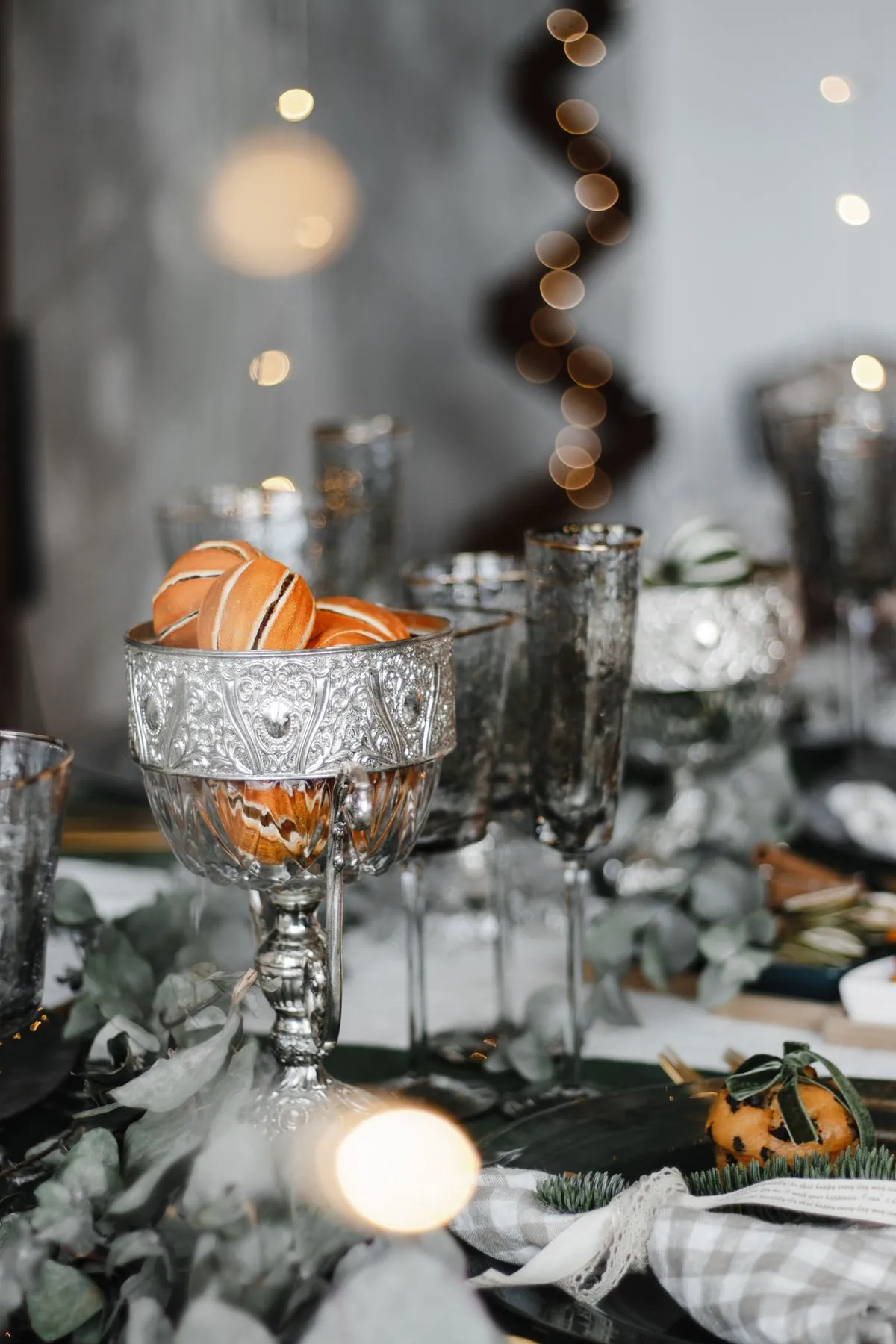
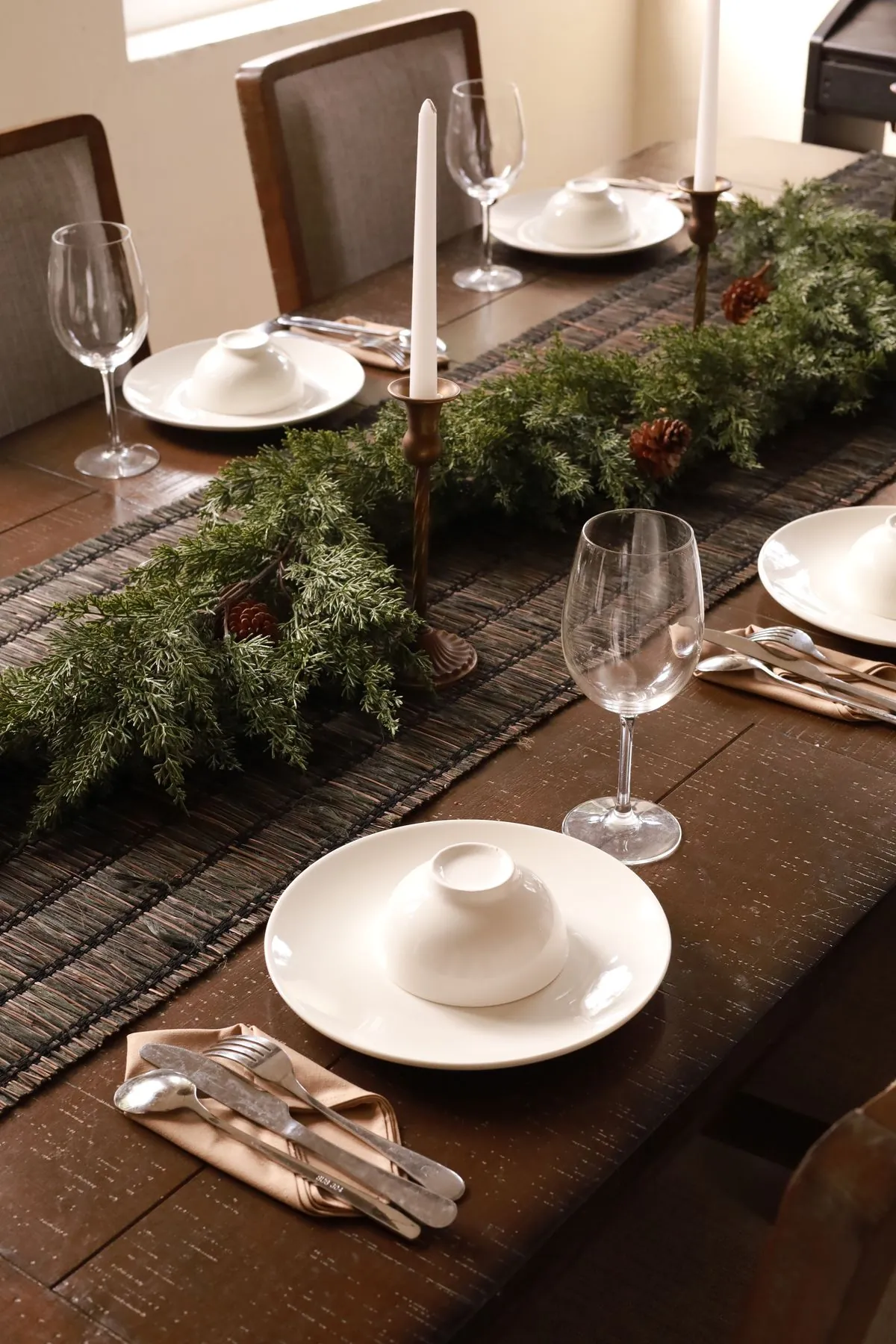
2. Run live greenery down the middle
A runner of real greenery — spruce, fir, eucalyptus, or whatever your tree lot sells as trimmings for a few dollars, or gives away free — is the backbone of every expensive-looking holiday table you’ve pinned. Lay 3–4 foot pieces along the table’s center line, overlap them so no gaps show, and the structure is done. Fresh greenery also smells like Christmas, which no plastic garland has managed in fifty years of trying. Ask at tree lots for the branches they’ve already cut off bottoms; in my experience they hand them over for free if you ask early in the season.
| Table length | Pieces needed | Piece length | Cost |
|---|---|---|---|
| 4 ft | 3 pieces | 3-4 ft | Free-$5 |
| 6 ft | 5 pieces | 3-4 ft | Free-$8 |
| 8 ft | 7 pieces | 3-4 ft | Free-$10 |
3. Set the table with gold flatware
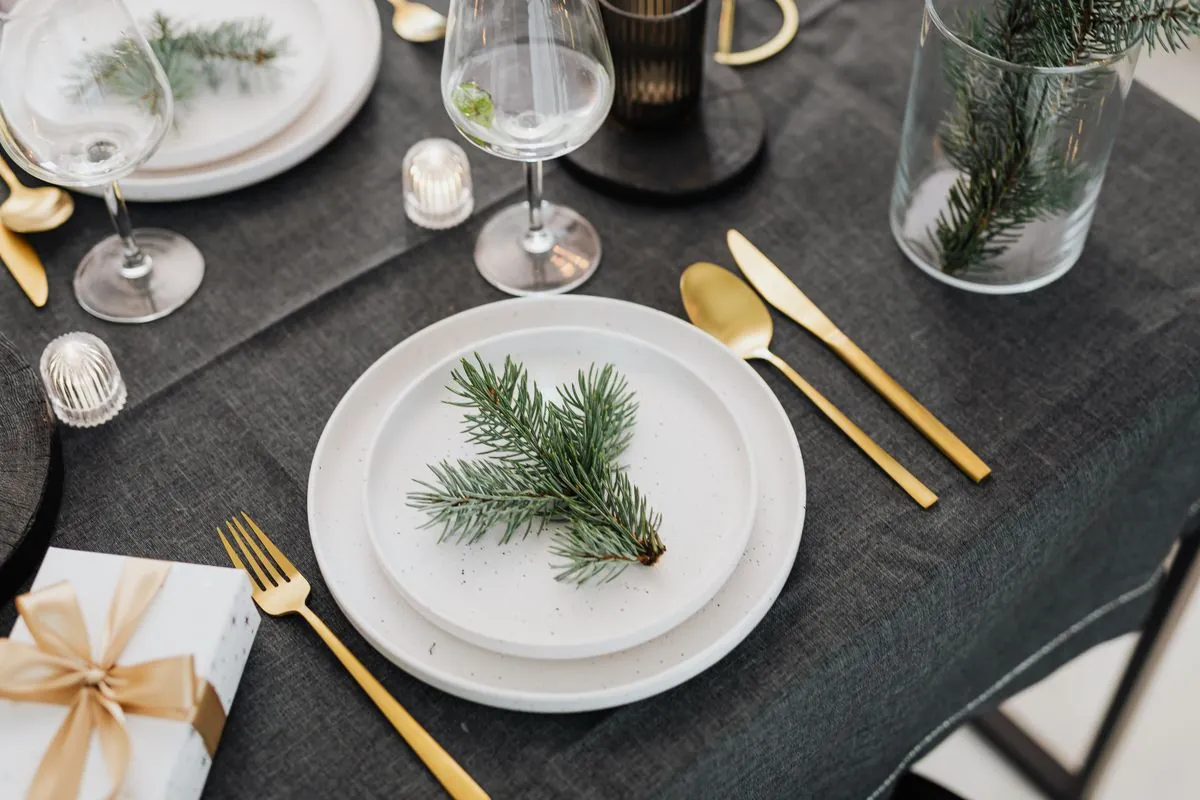
If the greenery is the backbone, gold flatware is the jewelry. Nothing on a table catches candlelight — and compliments — like a matched gold set, and the price gap between “looks like a wedding venue” and reality has collapsed in the last few years. One set of four or six covers most holiday dinners, and because you’ll use it for every December dinner, New Year’s, and anniversary from now on, the cost per use drops to nothing. Matte gold reads softer and more modern; polished gold reads formal. Either way: same set for every guest, always.
| Set size | Seats covered | Finish | Price range |
|---|---|---|---|
| 20-piece | 4 guests | Polished or matte | $25-$50 |
| 30-piece | 6 guests | Polished or matte | $35-$70 |
| Add serving set | Any table | Match finish | $10-$20 |
As an Amazon Associate, Herpickery earns from qualifying purchases.

- The single fastest expensive-looking upgrade — one matched set for every seat
- Stainless steel core: survives dishwashers and gravy, unlike plated vintage sets
- Works for every December dinner, New Year’s, and anniversary after this one
Prices change often — check the current listing. We only feature sets we’d trust with our own gravy.
4. Put a gold charger under every plate
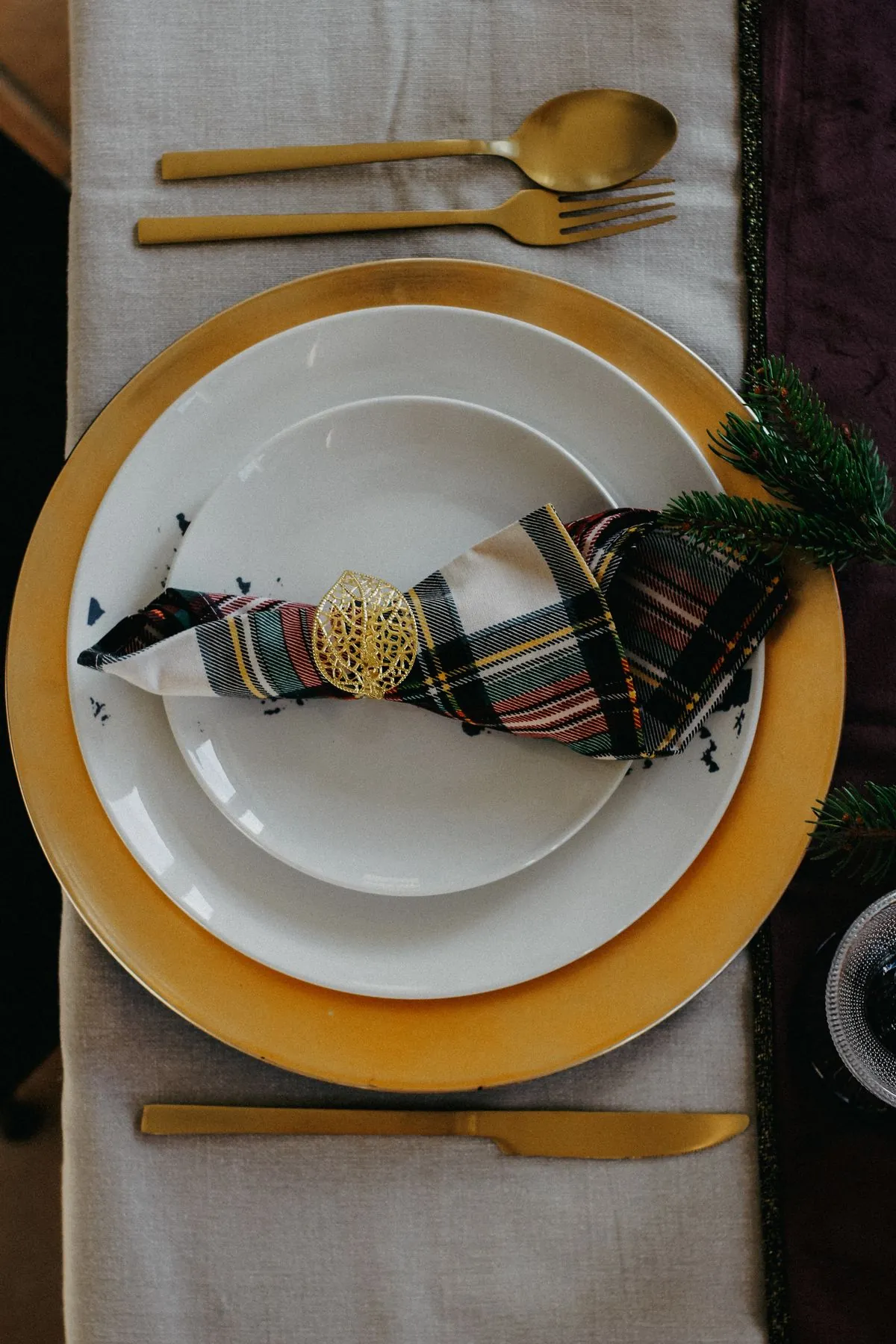
Chargers — the big decorative plates that sit underneath your dinner plate — are the oldest restaurant trick in the book, and they work because they add a frame. A plain white plate suddenly has an outer ring of shine or color, and the whole place setting gains the layered look that reads as “catered.” You never put food on them, which means they last forever and can be the cheapest acrylic or even paper version on the market without anyone knowing. Gold rims for warm palettes, silver for cool ones; a set of six covers a typical dinner, and paper chargers come 100 to a box for big tables.
| Charger type | Diameter | Count | Price range |
|---|---|---|---|
| Acrylic gold | 13 in | Set of 6 | $12-$25 |
| Mirrored paper | 13 in | 100-count box | $20-$35 |
| Metal rim | 13 in | Set of 4-6 | $25-$45 |
As an Amazon Associate, Herpickery earns from qualifying purchases.

- Mirrored gold rim frames every plain plate — the catered look for pennies a seat
- Disposable: scrape, toss, done — no washing 12 delicate plates at midnight
- 100 in the box covers big dinners and next year’s party; they stack flat
Prices change often — check the current listing. Match the metal to your flatware for the full effect.
5. Tuck a sprig of spruce on every plate
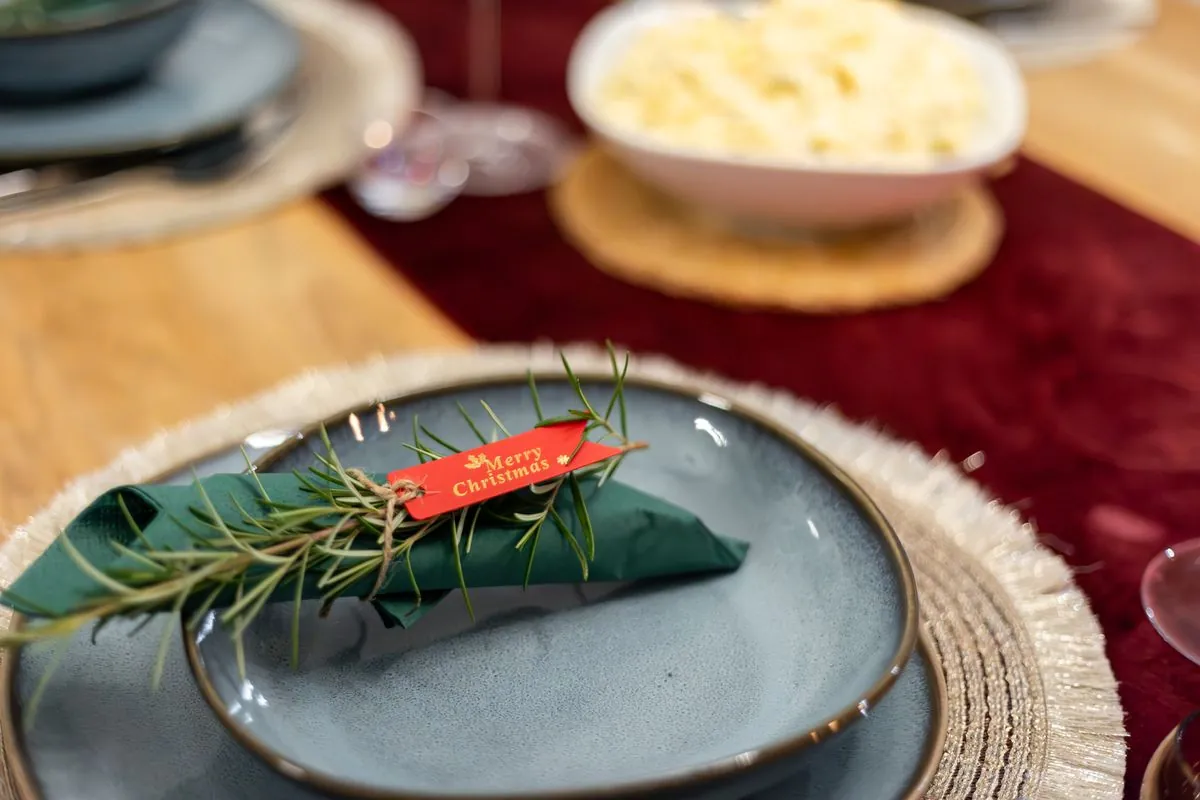
This is the idea with the best effort-to-effect ratio on the entire list, and it’s free: cut 2-inch tips from your greenery stash (idea 2) and lay one sprig across each dinner plate or napkin. A single fresh sprig does three jobs at once — it marks the plate as styled, it carries scent to every seat, and it repeats the runner’s material so the whole table looks designed as one thought. Eucalyptus reads softer, spruce reads classic, rosemary reads edible. Guests notice this detail more than centerpieces twice the price; I’ve watched people photograph a $0 sprig and ignore a $90 arrangement.
6. One statement centerpiece, not five small ones
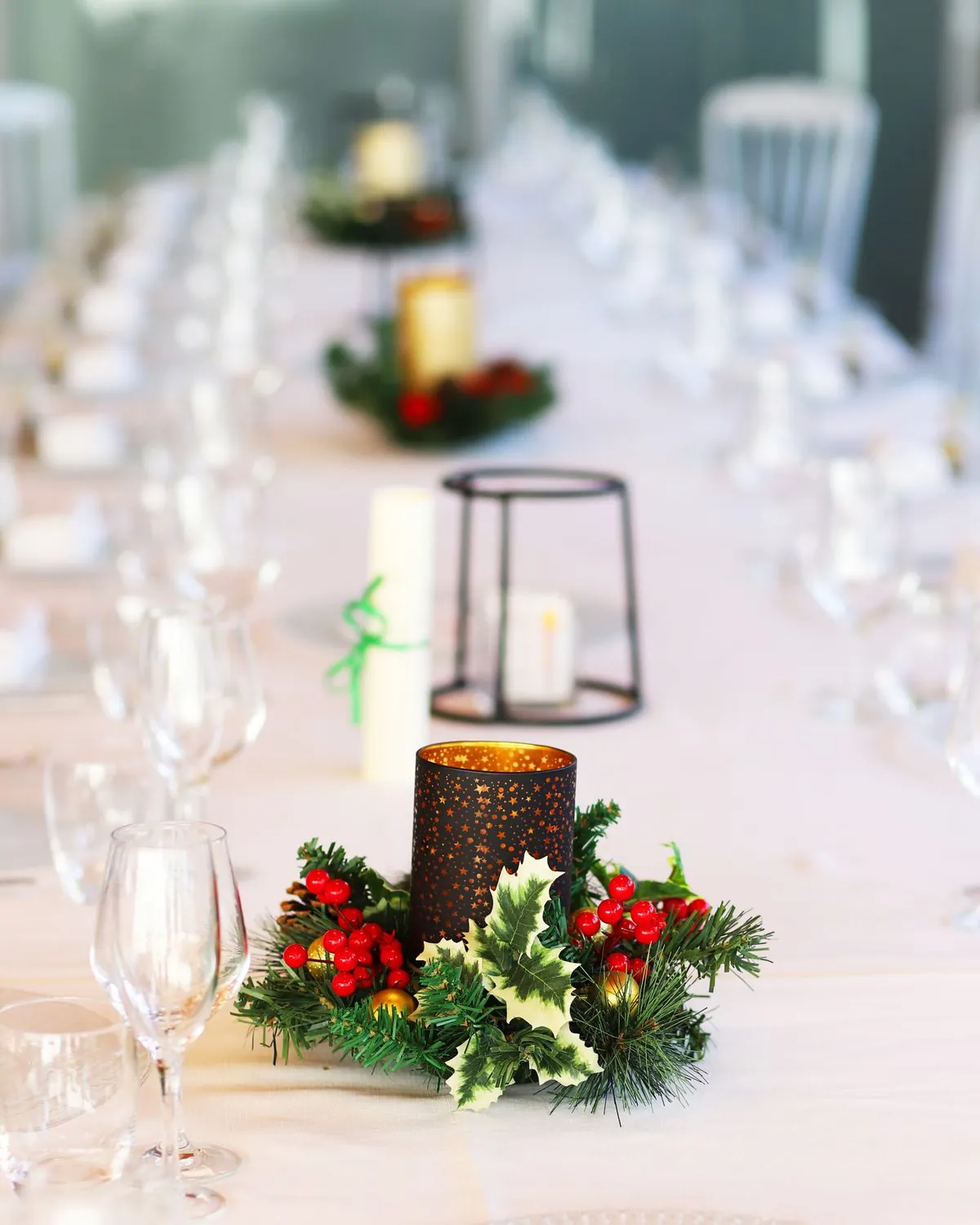
The most common expensive-looking failure is the opposite of what people expect: it’s not too little decoration, it’s decoration chopped into too many pieces. Five small arrangements scatter the eye; one anchor holds the table together and looks decisive. Pick your anchor — a lantern, a low wreath around a candle trio, a footed bowl — and give it the middle. Everything else along the runner should be supporting cast: greenery, scattered ornaments, candle pairs. One hero, a supporting line, done. Tables that look “designed by a stylist” almost always have exactly one focal point and the discipline to leave it alone.
7. Fold napkins as flat envelopes, then tuck
Standing napkin sculptures — the swans, the trees, the fan things — flop, shed, and photograph like a cruise ship buffet. The look that actually reads as expensive is flat: fold the napkin into a simple rectangle or envelope, lay it across the plate, and tuck one thing into the fold — a spruce sprig, a cinnamon stick, or the name card from idea 8’s cousin. Flat folds show off the fabric’s weight (which is the whole reason cloth beats paper) and they survive being moved by guests who couldn’t care less about your styling. Thirty seconds per seat, and it’s the last napkin tutorial you’ll ever need.
8. Scatter loose gold ornaments along the runner
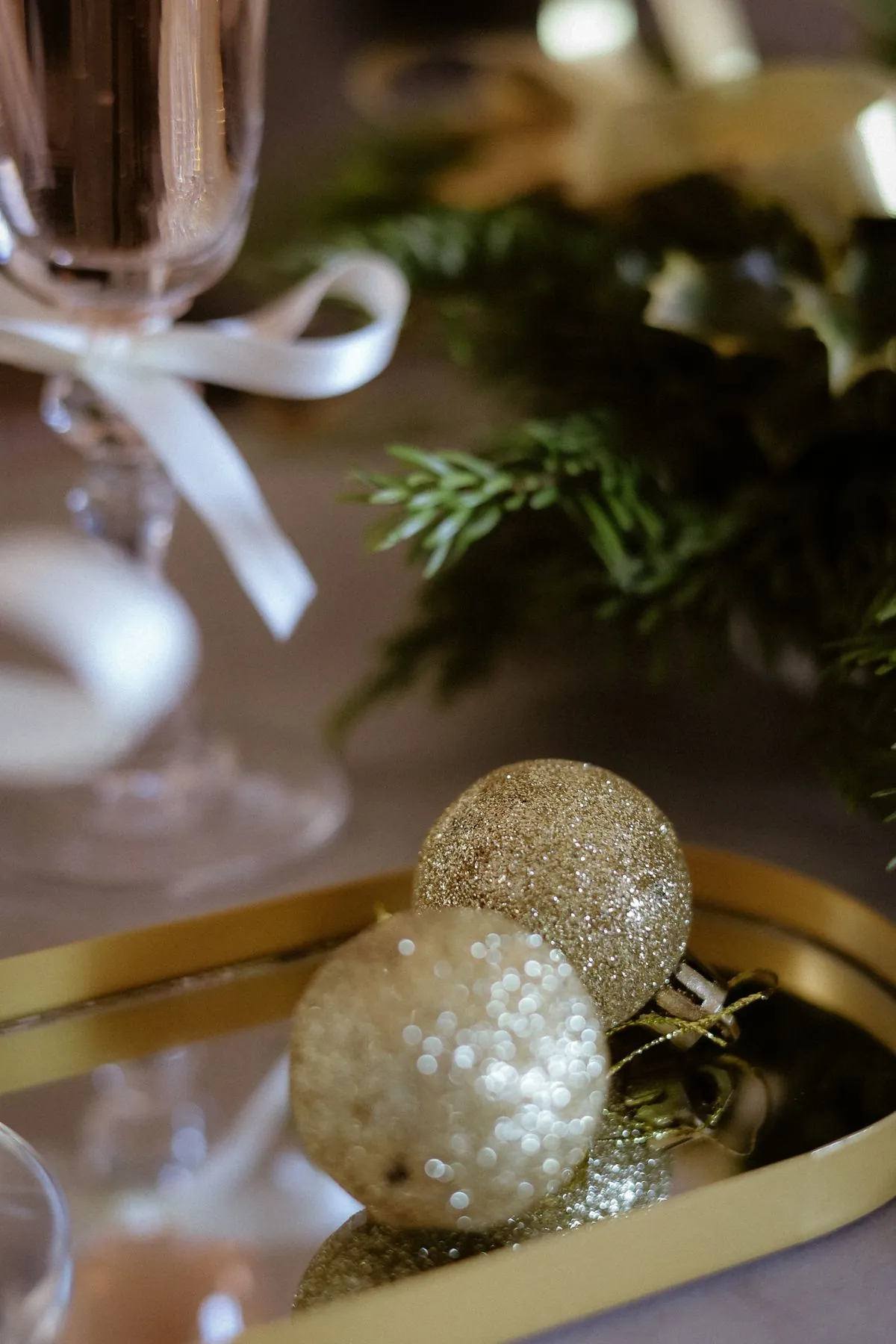
Here’s the stylist trick hiding in plain sight: take a handful of shatterproof gold ornaments out of their boxes and just lay them loose along the greenery line, in the gaps, at uneven intervals. Ungrouped baubles catch individual candles and add the “finished” shimmer that flat greenery lacks — for roughly the cost of nothing, because they come from the tree decorations you already own. Three rules keep it elegant: keep them all one metal (gold or silver, never both), use matte and shiny mixed for depth, and stop before it looks like the ornaments missed their tree. Eight to twelve on a six-foot table is plenty.
| Table length | Ornaments to scatter | Cost |
|---|---|---|
| 4 ft | 6-8 baubles | $0 (own box) |
| 6 ft | 8-12 baubles | $0-$12 |
| 8 ft | 12-16 baubles | $0-$18 |
9. Cluster candles at three heights
Single-height candle rows look like a restaurant chain; clustered heights look like a boutique hotel. Group pillars and tapers in threes and fives — one tall, one medium, one low — close enough that their flames overlap in your line of sight. The staggered flames create depth that a flat row can’t, and the cluster becomes a second focal point wherever your centerpiece isn’t. Keep flames above elbow level when seated so nobody wears the atmosphere, and remember the small-room rule from our Thanksgiving guide: clusters in odd numbers, always.
| Height tier | Candle size | Per cluster |
|---|---|---|
| Tall | 10-12 in taper | 1-2 |
| Medium | 6-8 in pillar | 2-3 |
| Low | 3-4 in votive | 3-4 |
10. Use real dripless tapers in brass holders
Flameless candles have their place — our Thanksgiving small-dining-room guide recommends them for crowded tables — but on a formal Christmas table, real flame is the upgrade. The flicker is subtler, the light is warmer, and the slow burn down the evening is part of the experience. Buy dripless tapers (it says so on the box; the generic ones aren’t lying about it anymore), and put them in holders with real weight — brass, ceramic, or glass — because a wobbly candle next to good china breaks the spell instantly. Trim wicks to a quarter inch before guests arrive and the drips stay away for the whole dinner.
11. Pour the good glassware
One real glass per guest — crystal, or a colored goblet, or even just your actual wedding-china-adjacent stemware — changes the table’s acoustic and its price tag simultaneously. Glass catches and bends candlelight in a way everyday tumblers never will, and the sound of a proper glass set down is a luxury signal people feel before they see it. If you don’t own any: one set lives at every thrift store on earth for pennies, and mixing slightly different vintage glasses down the table is not just acceptable but fashionable. Just keep the shape family consistent — all bowls or all flutes, not both.
12. Repeat one metallic figurine down the table
One gold or brass animal — a reindeer is the classic — repeated three or four times down the greenery line reads as a designed collection, not an accident. The repetition is what does it: a single figurine is clutter, but three of the same creature at uneven intervals looks like a motif a designer chose. Thrift stores are stocked with them in November because everyone donates their grandmother’s in January; a set of four costs less than a coffee. Deer, birds, and bottlebrush trees all work — the rule is one species, one metal, repeated.
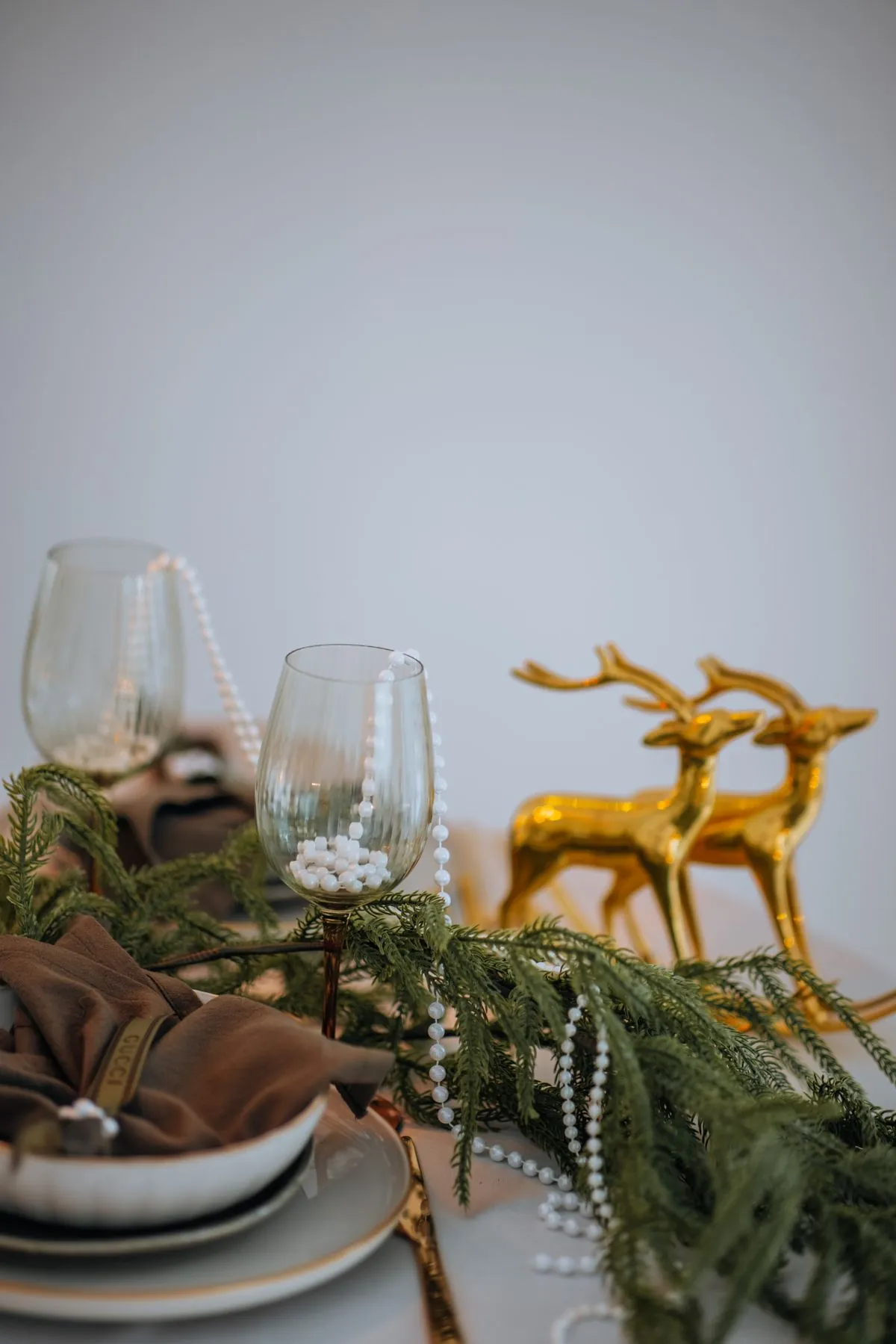
13. Float cranberries in a crystal vase
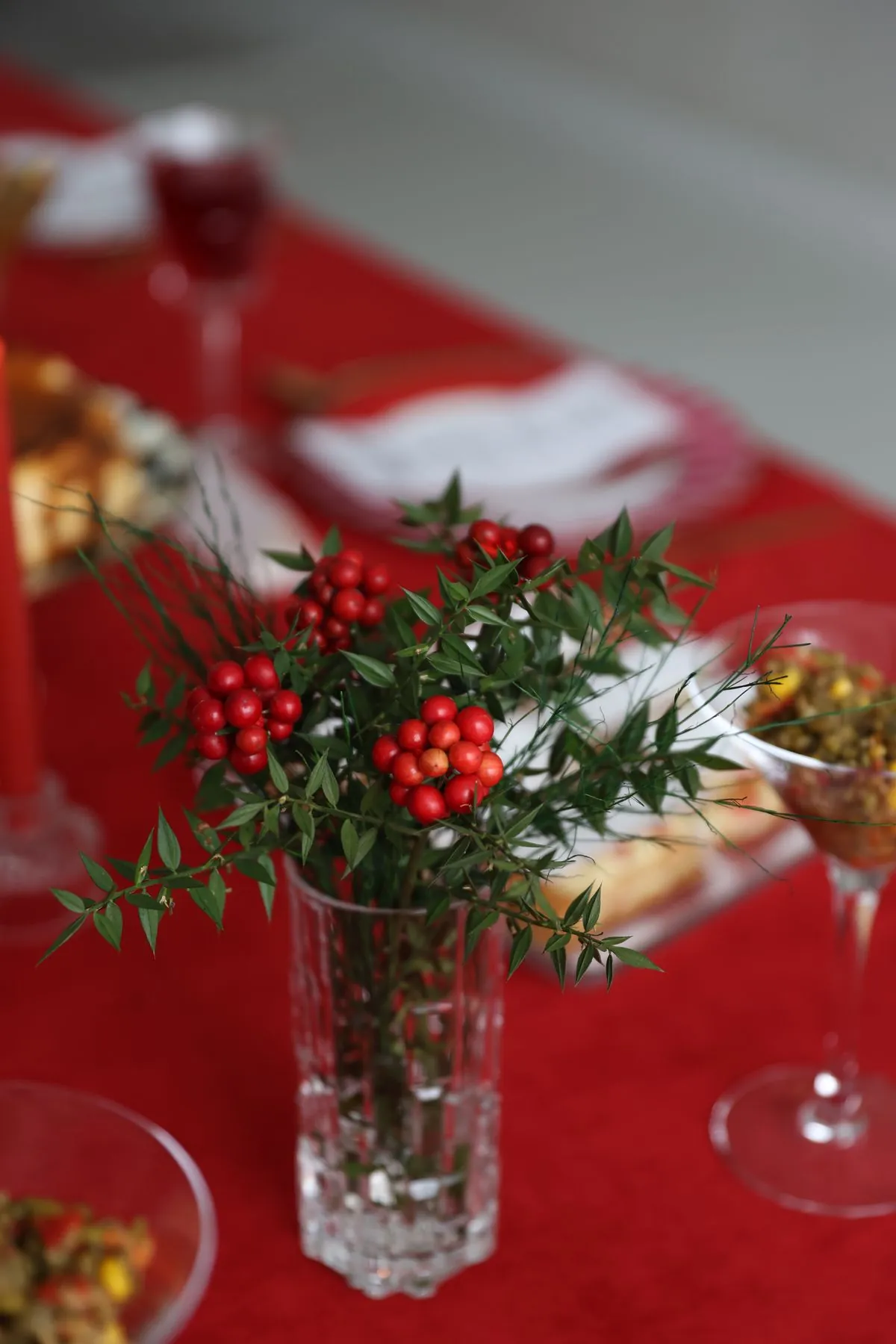
This is the five-minute centerpiece that guests always assume took a plan: fill a clear vase a third full with fresh cranberries, add water, and drop in a few berry stems or a short cluster of holly. The berries float and swirl, the red reads intensely festive against candlelight, and the whole thing costs about $4 in the produce aisle. Use a squat, wide vase rather than anything tall — the low profile keeps sightlines open, and a wide mouth lets the berries spread into a pattern instead of clumping. It keeps for two days at room temperature, so you can build it the night before (see idea 25).
| Step | Detail | Time |
|---|---|---|
| Fill vase 1/3 | Fresh cranberries, squat wide vase | 2 min |
| Add water | Berries float and spread | 1 min |
| Drop in stems | Berry stems or short holly | 2 min |
| Total build | Keeps 2 days at room temperature | 5 min |
14. The citrus trick: oranges, cloves, dried slices
Citrus is the oldest luxury signal in European Christmas decorating, and it’s nearly free. Three ways to use it: whole oranges studded with cloves in a bowl (the scent alone sells it), thin slices dried at 200°F for three hours and tucked into the greenery, or a row of halved oranges used as candle holders with the flesh scooped out. The orange-gold against deep green is a color combination that reads “expensive” in every decade since the Victorians invented it. My sister’s table from the story that started this article? The garnish everyone photographed was dried orange slices from her oven, strung with twine from the hardware store.
| Method | Prep | Cost |
|---|---|---|
| Whole clove oranges | 6-8 studded, in a bowl | $3-$6 |
| Dried slices | 200 F oven, 3 hours | $2-$4 |
| Orange candle holders | Halved, flesh scooped | $3-$5 |
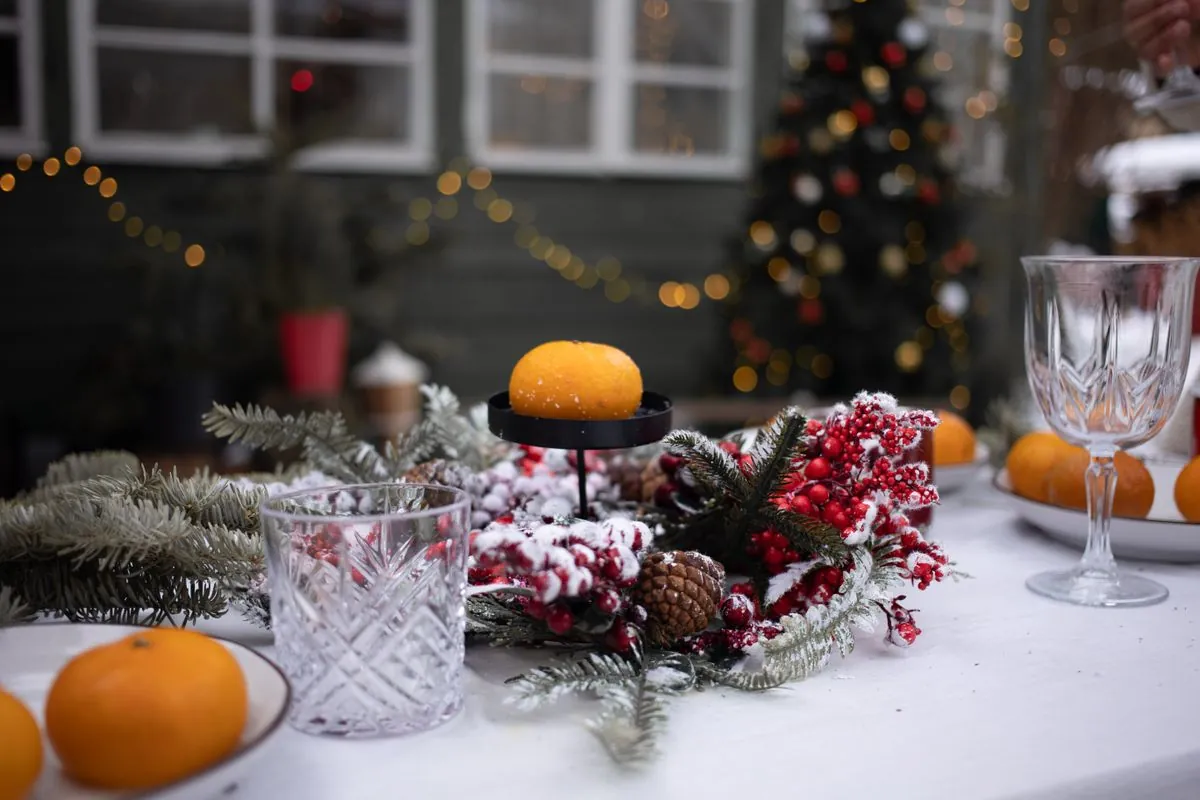
15. Line up three mini trees
A row of three small potted evergreens — the $8 supermarket kind — running down the table’s center does what a big floral arrangement can’t: it gives the centerpiece height without blocking faces, and each guest gets a “their” tree to glance at. Pot them in foil, terracotta, or a liner of burlap, drop the pots into a shallow line, and you have a living runner that survives into January on a windowsill afterward. Odd numbers only; three works for most tables, five for a long one. After dinner they’re gifts — each family takes one home, which is a favor and a cleanup plan in the same move.
| Table length | Mini trees | Cost | After dinner |
|---|---|---|---|
| 4-6 ft | 3 trees | $24 | Windowsill or gifts |
| 8 ft or longer | 5 trees | $40 | One per family |
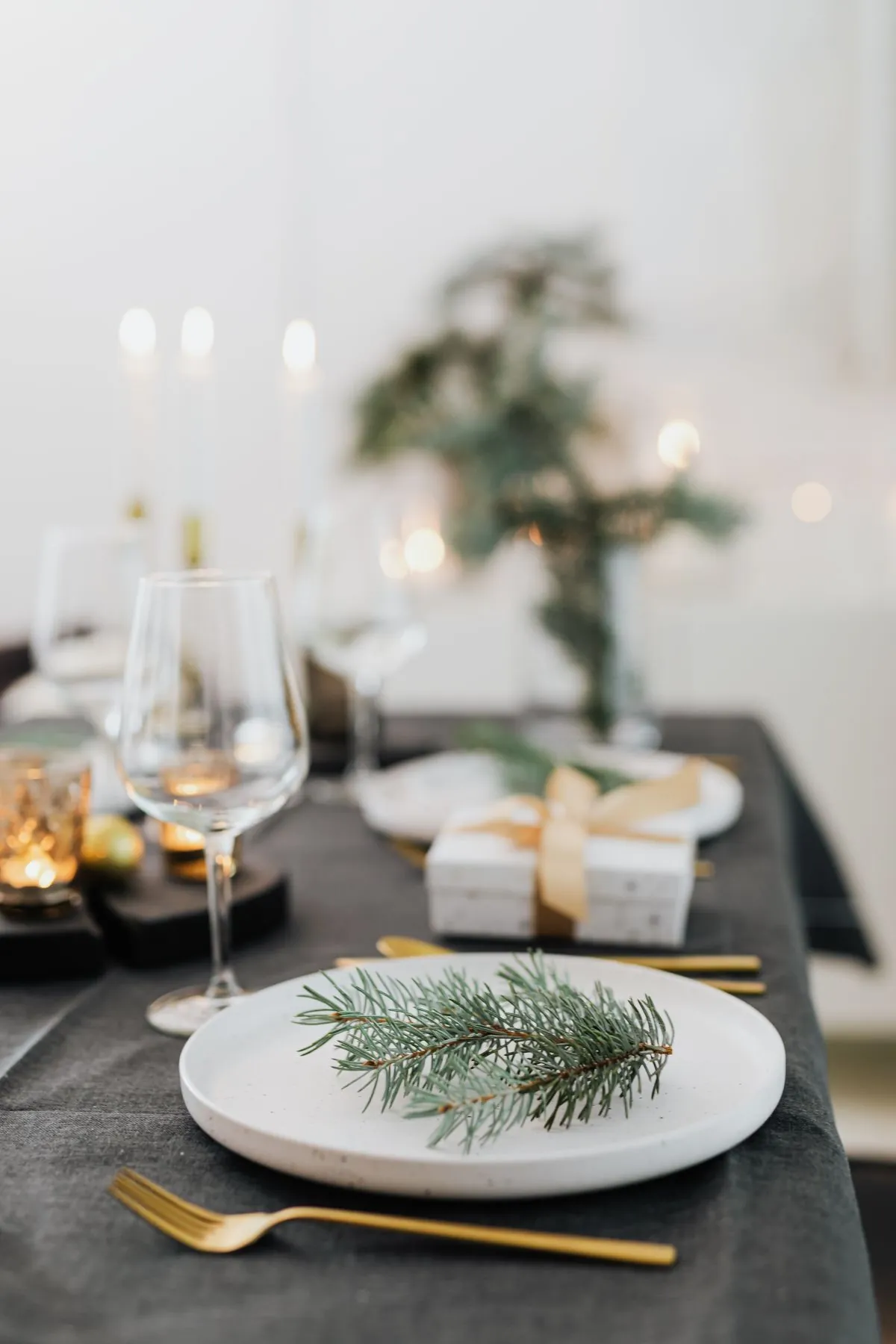
16. Tie chair backs with velvet ribbon
The table is only half the visual; the chairs are the frame around it, and unstyled chairs read as “kitchen chairs pushed in.” A wide ribbon — velvet or wired plaid, 2 inches or wider — tied in a loose knot or simple bow on each chair back costs about $10 in ribbon and finishes the room. Match the ribbon to your palette’s base color, keep every knot at the same height, and stop at bows: no greenery on chairs (it sheds into sweaters), no bells (they jingle every shift). This is also the cheapest idea here that guests mention unprompted, in my experience.
| Chairs | Ribbon needed | Width | Cost |
|---|---|---|---|
| 4 chairs | About 7 yards | 2 in | $6-$10 |
| 6 chairs | One 10-yard spool | 2 in | $10-$15 |
| 8 chairs | Two spools | 2 in | $15-$20 |
As an Amazon Associate, Herpickery earns from qualifying purchases.

- One 10-yard spool finishes six chair backs — the frame around the table, done
- Velvet grips velvet and holds its knot; satin slides loose by dessert
- Deep burgundy pairs with gold and green palettes; leftovers wrap gifts
Prices change often — check the current listing. Match your palette’s base color, same knot height on every chair.
17. Mix your own china — with a rule
Full matching china services are a museum exhibit, not a living tradition. The look that photographs as expensive is “inherited eclecticism”: plain white dinner plates as the constant, one gold-rimmed or patterned piece rotated in, and every seat getting the same treatment. The rule that keeps it cohesive is the one from our Thanksgiving guide — repeat each pattern at least twice around the table. White-and-gold is the safest pair, but white with any single color of transferware reads the same way. You already own enough plates to do this; the expensive look was hiding in your cabinet.
18. Skip the bread plates (or style them hard)
Bread plates are the first casualty of a full table, and honestly, at a dinner this styled, you can just not serve bread plates at all — warm rolls in a cloth-lined basket passed family-style read as more generous anyway, not less. But if your menu demands them, commit: butter the rim of the bread plate with a sprig tucked against it, or use small brass-rimmed plates so they add a shine layer instead of dead porcelain. What kills the look is the half-hearted version — a lonely white saucer hovering next to the charger with nothing on it. Full commitment or no bread plate; there’s no expensive middle ground.
19. Serve dessert on a raised stand
Dessert is the one course where a vertical move pays: a cake stand, a two-tiered server, or even an upturned bowl under a plate puts sweets at eye level and turns the last course into a finale. This is hotel logic — displays read as abundance when they grow upward, and flat platters read as leftovers by the time guests reach them. If you own one cake stand and never use it, this is its night. The five-dollar version is a plate balanced on an inverted bowl, wrapped in a tea towel; nobody at the table will know, and everyone will photograph it.
20. Rent or borrow the one big thing
Every truly expensive-looking table has one item that’s clearly “a piece” — real linen napkins in a color you don’t own, a silver candelabra, a set of gold chargers for fourteen. You do not need to buy it. Party rental companies rent table linens for a few dollars apiece, and the borrowed candelabra from the relative who never hosts costs you one phone call and a compliment. The stylist secret is that tables only need one hero piece to read as professional; everything else on this list supports it. Spend on (or borrow) the single hero, save everywhere else, and nobody can do the math.
21. Lock the palette to three colors
If you remember one number from this article, make it three: base color, metallic, and fresh element. Every idea above snaps into place once the palette is locked, and every expensive-looking table you’ve ever admired was running a formula like these:
| Formula | Base | Metallic | Fresh element |
|---|---|---|---|
| The Classic | Forest green linen | Gold | Spruce + cranberries |
| The Warm One | Burgundy or rust | Gold | Dried orange + cinnamon |
| The Cool One | Navy or charcoal | Silver | Eucalyptus + white flowers |
| The Quiet One | Natural linen | Copper | Rosemary + mini trees |
When something on the table “doesn’t look right,” the diagnosis is almost never that the object is bad — it’s that it’s a fourth color. Remove it or re-home it to the sideboard.
22. Layer a woven or velvet runner under the greenery
Greenery lying directly on bare wood looks like kindling; greenery on a runner looks styled. The runner doesn’t have to be Christmas-themed — a charcoal, cream, or plaid runner you already own, or even a length of raw linen fabric from a fabric store, gives the greenery a boundary and the table a finished spine. Velvet reads richest against fir; woven texture reads most modern. This is the same 10–12 inch width discipline from our fall table runner guide, applied in winter colors: narrow line, everything else stays clean.
23. Light it like a restaurant
The last free upgrade, and the one people forget on the night: thirty minutes before guests arrive, dim or kill the overhead, switch on two lamps in surrounding rooms, and light every candle at once. Restaurants never use overhead light because it flattens faces and food; pools of warm light do the opposite, and your dark linen base from idea 1 turns into a stage for it. The photo below is the effect at work — no filter, just discipline about switches. If your dining room has no dimmer, unscrew the overhead bulb halfway for the same effect tonight, and put a dimmer on the wishlist for next year.
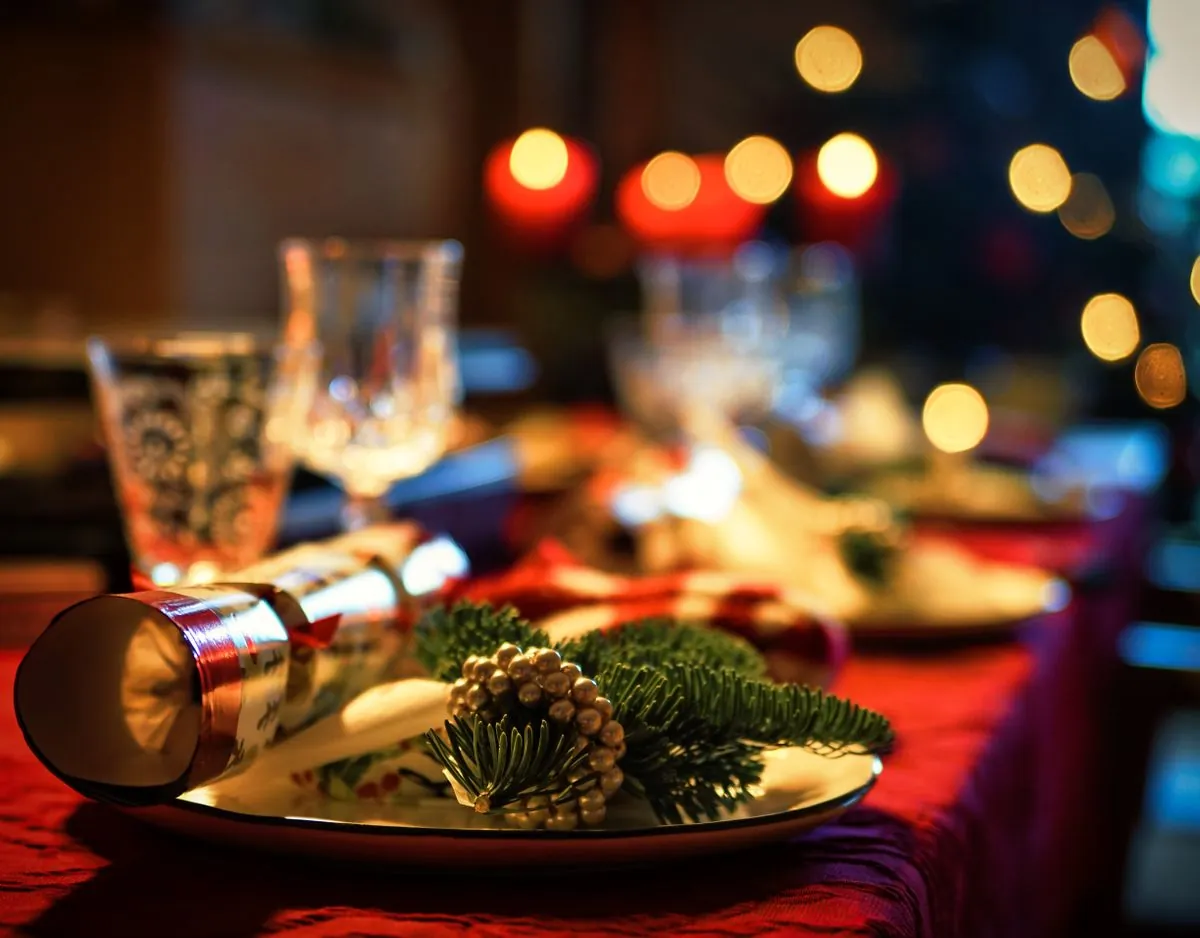
24. Style the sideboard to match
Guests’ eyes travel from the door to the table, and an undecorated sideboard or console along that path breaks the spell you spent twenty-four ideas building. Echo the table with one gesture — a short length of the same greenery, one candle cluster, the bowl of clove oranges — and stop. The sideboard is a supporting actor: it should whisper the same palette, not perform a second act. This is also where the “fourth color” objects from idea 21 go to live, and where the dessert stand from idea 19 waits its turn. One room, one story, told in two sentences instead of one.
25. Set it the night before
The professional’s final secret isn’t an object — it’s timing. Set the entire table the night before: linens, chargers, plates, napkins, greenery, ornaments, name cards. Wrap each setting in a cheap cling-film tent to keep it dust-free, stage the candles and matches next to the lighters, and photograph it that evening when the house is quiet. On the day itself, your only jobs are food, candles, and showing up calm — which, more than any gold charger, is what “effortless host” actually looks like. Perishables aside (the cranberry vase takes five minutes fresh), a table set on the 24th always beats one being built at 2pm on the 25th.
The 12-point expensive-looking Christmas table checklist
- ☐ Dark or deep linen base down
- ☐ Palette locked: base + one metallic + one fresh element
- ☐ Live greenery runner overlapped, no gaps
- ☐ One statement centerpiece only
- ☐ Gold or silver thread repeated: flatware / chargers / ornaments
- ☐ Cloth napkins, flat envelope fold, sprig tucked
- ☐ Name cards in gold ink at every seat
- ☐ Candles clustered, odd numbers, three heights
- ☐ One real glass per guest
- ☐ Chair backs tied, same height, same knot
- ☐ Overhead light off, two lamps on
- ☐ Table set and photographed the night before
Screenshot this list — it’s the whole article in one frame.
Christmas table setting FAQ
How do you make a Christmas table look expensive?
Three moves do most of the work: a dark or deep-colored linen base, one metallic thread (gold flatware, charger plates, or loose ornaments) repeated down the table, and candles clustered at three heights. Then subtract — three colors maximum, one statement centerpiece, cloth napkins instead of paper. Restraint, not spending, is the signal guests read as expensive.
What are the most elegant colors for a Christmas table?
Three-color formulas: forest green + gold + cream (the classic), burgundy + gold + dried orange (the warm one), navy or charcoal + silver + eucalyptus (the cool one), or natural linen + copper + rosemary (the quiet one). One base, one metallic, one fresh element. A fourth color is almost always the thing making a table look busy rather than rich.
How do you set a beautiful Christmas table on a budget?
Spend on one hero item (gold flatware is the highest-impact purchase under $40) and go free everywhere else: tree-lot greenery trimmings, sprigs on plates, loose ornaments from your decoration box, dried orange slices, and dimmed lamps instead of new decor. The swap list that matters most — cloth over paper, one glass per guest, matching cutlery — costs thrift-store prices.
Does the charger plate go under or on the dinner plate?
Under — the charger is a frame that stays on the table through the whole meal, with the dinner plate set inside it for each course. Food never goes on the charger itself. It’s removed (along with the dinner plate’s replacement) before dessert, or stays as the frame if your dessert plate is small enough to sit inside it.
How far in advance can you set a Christmas table?
The night before, easily: linens, chargers, plates, napkins, greenery, ornaments, and name cards all hold perfectly overnight under a cling-film tent. Build the fresh cranberry centerpiece that morning (it takes five minutes) and light candles just before guests arrive. Anything perishable — cut fruit, fresh flowers — waits for the day itself.
What should the centerpiece be for Christmas dinner?
One statement piece, kept low: a lantern, a candle trio wreathed in greenery, a row of three mini potted trees, or floating cranberries in a squat crystal vase. Under 12 inches tall keeps sightlines open, and one anchor looks more designed than five small arrangements scattered down the table.
More from Herpickery
- Thanksgiving table setting for small dining rooms — 18 ideas, the space math first
- Fall table runner ideas for every table shape — the narrow-runner rule, tested
- Cozy fall living room ideas on a budget — 15 updates, five free
- Thanksgiving kids’ table ideas — three budget setups that survive crayons
- Browse all Cozy Home
- Browse all Fall Decor
We only link products we’d actually set our own holiday tables with. Amazon links above are affiliate links — if you buy through them, Herpickery earns a small commission at no extra cost to you.
[…] storm are two different things. If you’d rather start inside, we’ve already covered the Christmas table that looks expensive and the cozy fall living room; the porch is the layer guests see first, and it’s the cheapest […]
[…] rain, applied to the table that survives the party. If you’re still finishing December, the Christmas table that looks expensive and the cozy fall living room are the two pieces to start […]
[…] It’s the same logic as the New Year’s table that survives until midnight and the Christmas dinner table that looks expensive, just aimed at the one meal where the hosts deserve to sit down the most. After dinner, the […]
[…] 15 Christmas Table Setting Ideas That Look Expensive […]
[…] Christmas Table Setting Ideas: the winter sequel for the same table […]
[…] the rest of the December house: our porch decorating ideas that survive rain, the Christmas table that looks expensive, and the brunch table you set up the night before. After the 25th, the New Year’s Eve table […]