
The first year I owned a timer, I owned it wrong: the tree lights ran from breakfast until I shuffled past the plug at 2 a.m., because walking nine feet to switch anything off was apparently beyond me. The January electric bill arrived with a number I still associate with the phrase “the lights outworked the furnace fan.” The strands were LED, so the damage was a milkshake, not a mortgage — but the arithmetic was staring at me from the bill like a disappointed relative.
Here is that arithmetic, done properly: why 6 hours is the number, what the schedule saves in dollars and bulb-life, when the on-time should actually start (sunset drifts), and which timer type survives December without your supervision. One setup pass in November and the display runs itself until the boxes go back in the attic.
Table of Contents — 12 Ideas
- Why 6 hours on and 18 off?
- What does the schedule actually save?
- Do timers make bulbs last longer?
- What time should Christmas lights turn on?
- How do I set a mechanical outlet timer?
- Are smart plugs better for Christmas lights?
- What about dusk-to-dawn photocells?
- Do battery lights have timers too?
- How many timers does one house need?
- Why did my lights run at noon? (the recovery drill)
- Can one timer handle all my lights?
- The 60-second schedule check
1. The 6/18 rule
Why 6 hours on and 18 off?
| Strand type (one strand) | Watts | 6 h on (Wh/day) | Always on (Wh/day) |
|---|---|---|---|
| LED mini (50-bulb) | 5 W | 30 Wh | 120 Wh |
| Incandescent mini | 25 W | 150 Wh | 600 Wh |
| C9 incandescent (25-bulb) | 175 W | 1,050 Wh | 4,200 Wh |
| Battery LED strand | ~2 W | 12 Wh from cells | 48 Wh from cells |
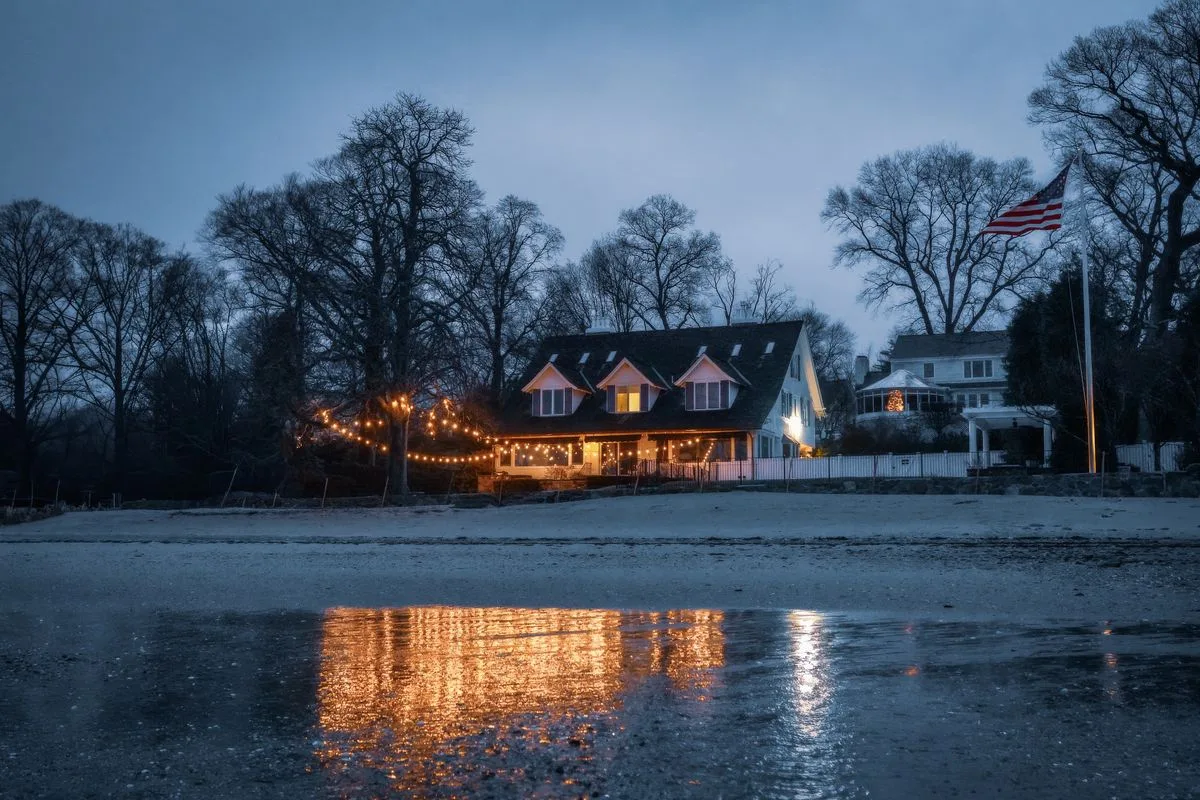
Six hours covers the window the lights are actually watched: sunset lands between 4:30 and 5 p.m. through most of December, and by 11 p.m. the audience is three insomniacs and one raccoon. The 6/18 split also matches the built-in timer button on most battery light strands — 6 hours on, 18 off, repeating — so every device in the setup speaks the same schedule without translation.
The honest framing is arithmetic, not virtue: lights that run “until someone remembers” average closer to 18 hours a day once the overnight burn is counted, and 6 is a third of 18. Same strands, same sockets, one-third the energy — the only change is a $10 device deciding instead of you (see the outlet wattage math for the full per-strand numbers this table builds on).
2. What the schedule actually saves
What does the schedule actually save?
At $0.14/kWh over a 45-day season, here is the whole cost story in one table. “Ten strands” is the realistic front-of-house setup — five windows or a full tree plus porch (the strand wattages come straight from the wattage math).
| Schedule | Hours per season | 10 LED minis (50W) | 10 incandescent minis (250W) | 10 C9 incandescent (1,750W) |
|---|---|---|---|---|
| 6/18 timer | 270 h | $1.89 | $9.45 | $66.15 |
| “Till midnight” (8 h) | 360 h | $2.52 | $12.60 | $88.20 |
| Dusk-to-dawn photocell | ~640 h | $4.48 | $22.40 | $156.80 |
| Always on (24 h) | 1,080 h | $7.56 | $37.80 | $264.60 |
Read the C9 column twice. Incandescent C9 strands are the one setup where the timer isn’t a nicety — 6/18 versus always-on is a $198 swing for the same decoration. LED owners can genuinely afford to be lazy, which is the most December-friendly sentence in economics.
3. Bulb life is bought by the hour
Do timers make bulbs last longer?
| Bulb type | Rated hours | Seasons at 6/18 (270 h) | Seasons always-on (1,080 h) |
|---|---|---|---|
| Incandescent mini (low end) | 1,500 h | ~6 seasons | ~1.4 seasons |
| Incandescent mini (high end) | 3,000 h | ~11 seasons | ~2.8 seasons |
| C9 incandescent | 1,500-3,000 h | 5-11 seasons | 1-3 seasons |
| LED strand | 25,000 h | 90+ seasons | 23+ seasons |
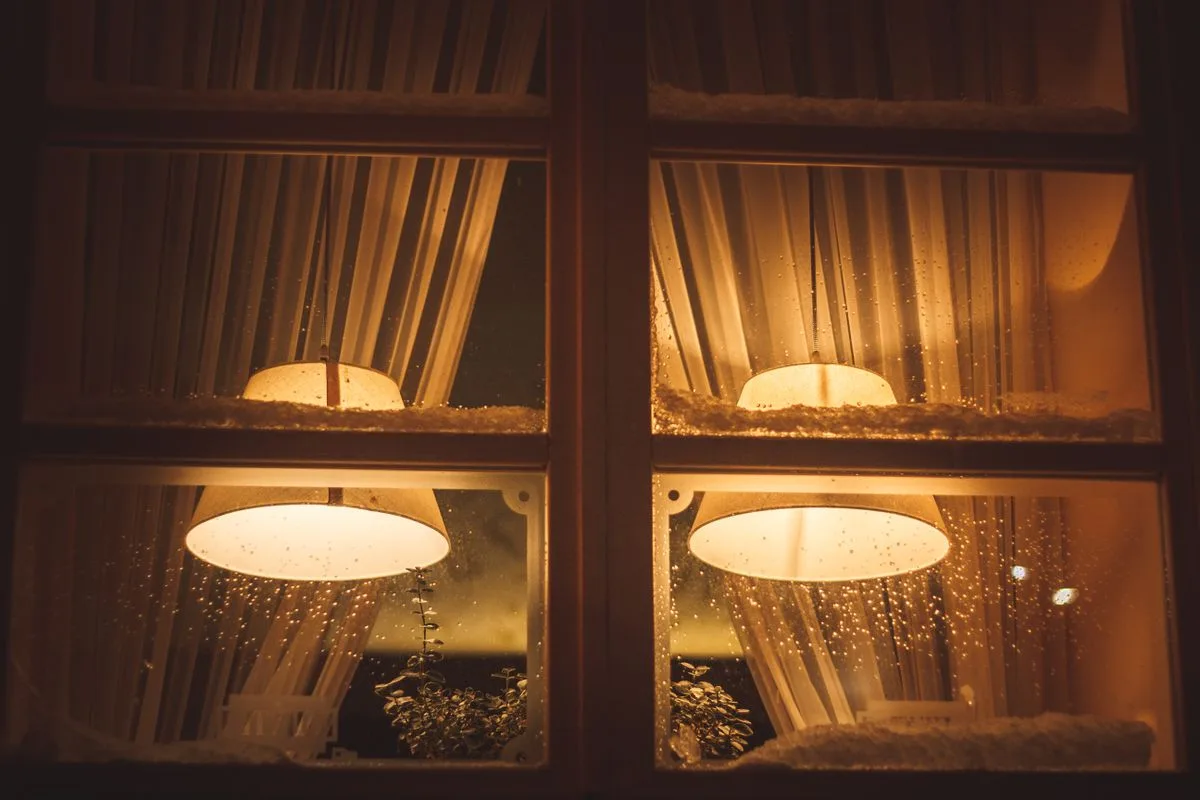
Filaments and LEDs age by hours energized, and the timer is a fountain of youth measured in seasons. Incandescent mini strands are typically rated 1,500 to 3,000 hours: at 270 hours per season that’s 5 to 11 Decembers per strand, while the always-on schedule burns the same rating in under three seasons. C9 incandescent bulbs carry similar ratings and fail one bulb at a time, usually the one you can’t reach.
LED strands are rated 25,000 hours and up — at 270 hours a season, the schedule is irrelevant to their lifespan because your grandchildren will recycle them first. The timer still earns its keep on the LED setup, just through the electricity column instead. One device, two savings streams; the bulb-life stream only matters if you buy incandescent, and the energy stream matters either way.
4. The on-time question (sunset drifts, timers don’t know)
What time should Christmas lights turn on?

Set the on-time by sunset, not by habit. Timeanddate’s sunrise & sunset tables list your exact city’s curve; the drift below uses 40°N as the example. Sunset drifts earlier through late November, bottoms out around the solstice, then walks back — a mechanical timer set on December 1 is 20 minutes wrong by January, which nobody notices and nobody cares. The dates that matter are the ends: a 5 p.m. on-time in late November starts the show about 25 minutes after dark (fine), and by mid-January it’s nearly 40 (still fine, because the audience has gone inside).
| Date (40°N, approx.) | Sunset | 5 pm–11 pm schedule starts | Verdict |
|---|---|---|---|
| Nov 24 | 4:38 pm | 22 min after dark | Fine |
| Dec 1 | 4:33 pm | 27 min after dark | Fine |
| Dec 15 | 4:30 pm | 30 min after dark | Fine — solstice zone |
| Dec 21 | 4:31 pm | 29 min after dark | Fine |
| Jan 5 | 4:44 pm | 16 min after dark | Fine, improving |
The practical answer for a fixed timer is 5:00 to 11:00 pm, set once, never touched. The practical answer for people who enjoy precision is a smart plug with astronomical scheduling or a photocell — both covered below, both of which track sunset so you don’t have to.
5. Mechanical timers (cheap, loyal, slightly confused)
How do I set a mechanical outlet timer?
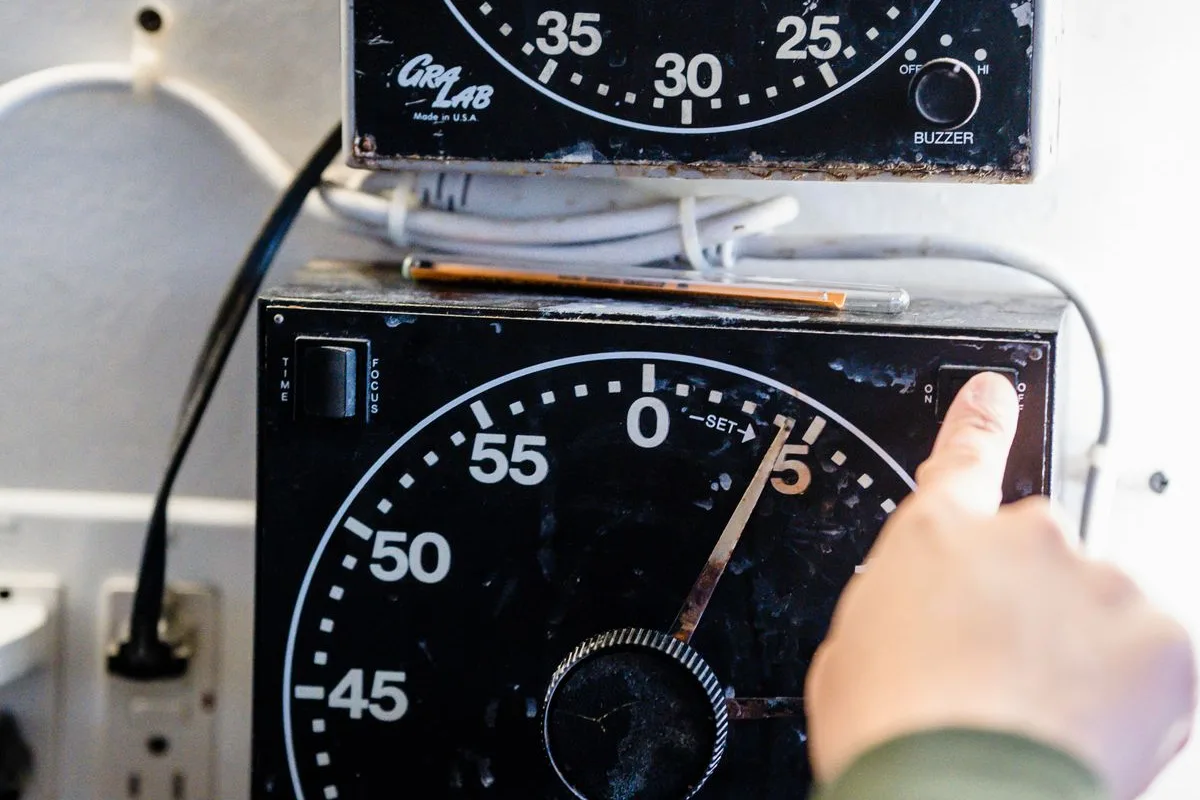
The mechanical timer is the $8 workhorse: rotate the dial to the current time, push down the 15-minute tabs for 5–11 pm (that’s 24 tabs, or one sacrificial thumbnail), flip the override switch to the clock icon, plug the lights into it, done. It keeps time like a $8 device keeps time — a few minutes a month of drift, which the sunset table above says you can ignore.
Its two failure modes are both time-related: daylight saving time and power outages. A timer that was right in October is an hour wrong in November, and a blink on the grid leaves the dial showing a fiction. The fix is the same for both — re-seat the dial twice a season, or read the next idea and spend the $12 upgrade. And note the load rating printed on the housing before trusting it with the C9 fleet (idea 11 has the amps).
As an Amazon Associate, we earn from qualifying purchases.

- The pin-and-dial ritual from idea 5 in a weatherproof build: 15-minute pins, 48 on/off settings a day, flip the override to the clock icon and walk away
- Rated 15A / 1,875W resistive with a rainproof cover — the version of idea 5’s $8 workhorse that survives December rain; mount it vertically two feet up, as the listing itself insists
- ETL certified, two grounded outlets feed a whole zone; no batteries, no app, no Wi-Fi — and after an outage it shows the wrong time loudly, where you can see it
Price and availability shown on Amazon; listing may change.

As an Amazon Associate, Herpickery earns from qualifying purchases.
6. Smart plugs (the schedule that survives)
Are smart plugs better for Christmas lights?
| Timer type | Typical price | How on-time is set | Outage / DST behavior |
|---|---|---|---|
| Mechanical pin dial | $5-12 | Fixed clock time, 15-min pins | Drifts a few min/month; re-seat after DST |
| Digital 7-day | $12-25 | Per-day programs, 1-min steps | Battery backup holds clock; DST button |
| Smart plug | $10-25 | App, optional astronomical sunset | Re-syncs when Wi-Fi returns |
| Photocell socket | $10-20 | On at dark, off at dawn (~14 h) | Immune; no clock to lose |

Yes, for three reasons that all rhyme with “December”: the schedule survives outages (the app re-syncs when Wi-Fi returns), the on-time can track sunset with astronomical scheduling, and the override is your phone from bed — the neighbors’ kids walked past, the lights are now on, nobody put on boots. The indoor mini plugs run $10 to $20; the outdoor bubble-lid versions were covered in the outlet guide alongside the amperage question.
The honest knock on smart plugs: they depend on Wi-Fi and a phone, and their failure mode is silent — a plug that dropped off the network just stops switching, and you find out by noticing the house is dark at 5:30. Mechanical timers fail loudly (they’re visibly wrong); smart plugs fail quietly. Anyone who already runs a smart home won’t notice the dependency; anyone who doesn’t should weigh whether December is the month to start.
7. Photocells (the set-and-forget option)
What about dusk-to-dawn photocells?
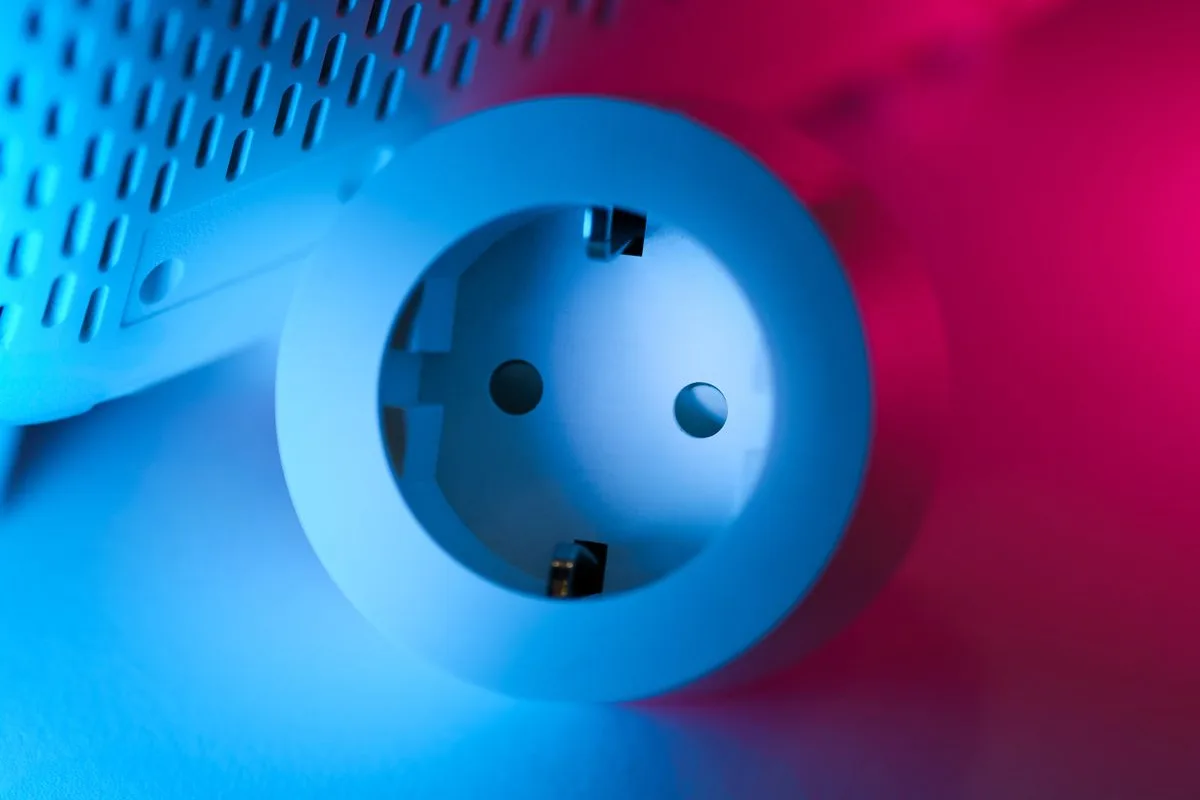
A photocell socket switches on at darkness and off at dawn, costs about the same as a mechanical timer, and never needs to be told what time it is. It is the correct choice for exactly one use case: something you want burning all night for security or for the neighbor who leaves for work at 5 a.m. and deserves a lit porch.
The trade-off is hours: dusk-to-dawn runs roughly 14 hours a December night, which the cost table above prices at about 2.4× the 6/18 schedule. On LED minis that’s the difference between $1.89 and $4.48 a season — noise. On C9 incandescent it’s $66 versus $157 — the photocell pays for itself in vice versa. Rule: photocell for all-night LED accents, 6/18 timer for everything with a filament.
As an Amazon Associate, we earn from qualifying purchases.

- Idea 6’s ‘$12 upgrade’ at street price: the four-pack lands near $11 a plug, one per zone from the stagger trick in idea 9
- Schedules live in the Kasa app and survive outages — the plug re-syncs when Wi-Fi returns; rated 15A / 1,800W, UL certified
- Alexa and Google voice control is the override from bed; 2.4GHz Wi-Fi only, so check the router band before December, not during it
Price and availability shown on Amazon; listing may change.
8. Battery strands with built-in timers
Do battery lights have timers too?
Almost all of them now, and it’s the same 6/18 rhythm in a button on the battery box: press once, the strand runs 6 hours, sleeps 18, repeats — with a memory chip that keeps your mode through the off-cycle. This is why the window lighting guide leans battery: upstairs windows and far doors get the same disciplined schedule as the plugged-in downstairs, with no cord and no second timer to buy.
One spec to check when buying: whether the timer restarts automatically after a battery swap. Cheap strands drop the schedule when power is interrupted, and a strand that needs its button pressed every few weeks is a strand that spends January dark. The better boxes (and every strand recommended on this site) re-arm the timer themselves.
The battery-box timer spec, three lines to check before buying:
| Spec | What it does | Why it matters |
|---|---|---|
| 6/18 button mode | One press runs the strand 6 hours, sleeps 18, repeats | The same disciplined schedule as the plugged-in downstairs, no second timer |
| Memory chip through the off-cycle | Keeps your mode during the 18-hour sleep | The schedule survives night after night unattended |
| Auto re-arm after a battery swap | Timer restarts itself after power is interrupted | Strands that need the button re-pressed every few weeks spend January dark |
9. How many timers one house needs
How many timers does one house need?
Fewer than you’d think: one timer per zone, and zones follow outlets, not decorations. Everything plugged into the porch outlet is zone one (one timer or smart plug), the living-room tree and its extension runs are zone two, the windows are zone three — probably zero timers, because they’re battery strands already on their own rhythm. Two to three devices run a whole house.
The security trick costs nothing: stagger the zones by 10 or 15 minutes so the house doesn’t go fully dark at one instant. A house that fades zone by zone reads “family winding down for the night”; a house that drops to black at 11:00:00 reads “timer,” and timers are public knowledge. If you travel for the holidays, add the window strands’ earlier shutoff to the stagger and the house keeps a believable heartbeat.
10. The recovery drill (lights at noon, dark at 5)
Why did my lights run at noon?
Three culprits, in order of likelihood: the timer got knocked into manual override (mechanical: the little switch; smart: someone’s phone), a power blink scrambled the dial, or daylight saving time shifted everything an hour. The drill takes two minutes: check the override switch first, re-seat the dial to the real time, flip the breaker or unplug-replug the smart plug to force a re-sync, then verify one full on/off cycle before walking away.
Lights running at noon are annoying. Lights failing to come on at dusk are the real cost — that’s the night the display silently didn’t happen. The belt-and-suspenders fix: put the most visible zone (the roofline or the tree in the front window) on the most reliable device you own, and accept that the garage interior lights can be on the cheap timer.
The noon-lights recovery drill, culprit by culprit:
| Culprit (in order of likelihood) | The fix |
|---|---|
| Timer knocked into manual override | Mechanical: flip the little switch back; smart: check the app someone’s phone used |
| Power blink scrambled the dial | Re-seat the dial to the real time |
| Daylight saving shifted everything an hour | Reset the on-time; expect this twice a season |
| Verify before walking away | Flip the breaker or unplug-replug the smart plug to force a re-sync, then watch one full on/off cycle |
As an Amazon Associate, we earn from qualifying purchases.

- Up to 8 on/off programs down to one minute, per-day scheduling and a DST button — the drift-and-shift fixes from ideas 5 and 10, automated
- Battery backup keeps the clock through the grid blink that scrambles a mechanical dial; Random vacation mode randomizes on/off to fake a lived-in house
- Honest load line: 15A / 1,875W resistive but 10A / 1,250W tungsten — fine for any LED fleet; a C9 incandescent wall is a tungsten load, mind idea 11’s amps
Price and availability shown on Amazon; listing may change.
11. Timer load ratings (the amp line on the bottom)
Can one timer handle all my lights?
| Setup (10 strands) | Total watts | 10A / 1,200W timer | 15A / 1,875W timer |
|---|---|---|---|
| LED minis | 50 W | Fits | Fits |
| Incandescent minis | 250 W | Fits | Fits |
| C9 incandescent | 1,750 W | No – over cap | Fits, 125 W spare |
| Mixed LED + one C9 | ~225 W | Fits | Fits |
One timer per zone is also the load rule. The rating on the housing — usually 10 or 15 amps, so 1,200 or 1,875 watts — caps everything plugged through it, and the zone concept keeps that cap aligned with the circuit math. LED everything clears any timer made this century; ten C9 incandescent strands (1,750 watts) fit a 15A/1,875W timer with 125 watts to spare and do not fit a 1,200-watt one at all.
Check the print, not the price: the $8 timer and the $20 smart plug can carry the same 15 amps, and the $6 one might carry 10. The full load-chain arithmetic — wall, strip, timer, plug fuse — lives in the wattage guide; the one-line version is that the timer is now the weakest link in the chain, so pick it like it matters.
12. The 60-second schedule check
The 60-second schedule check
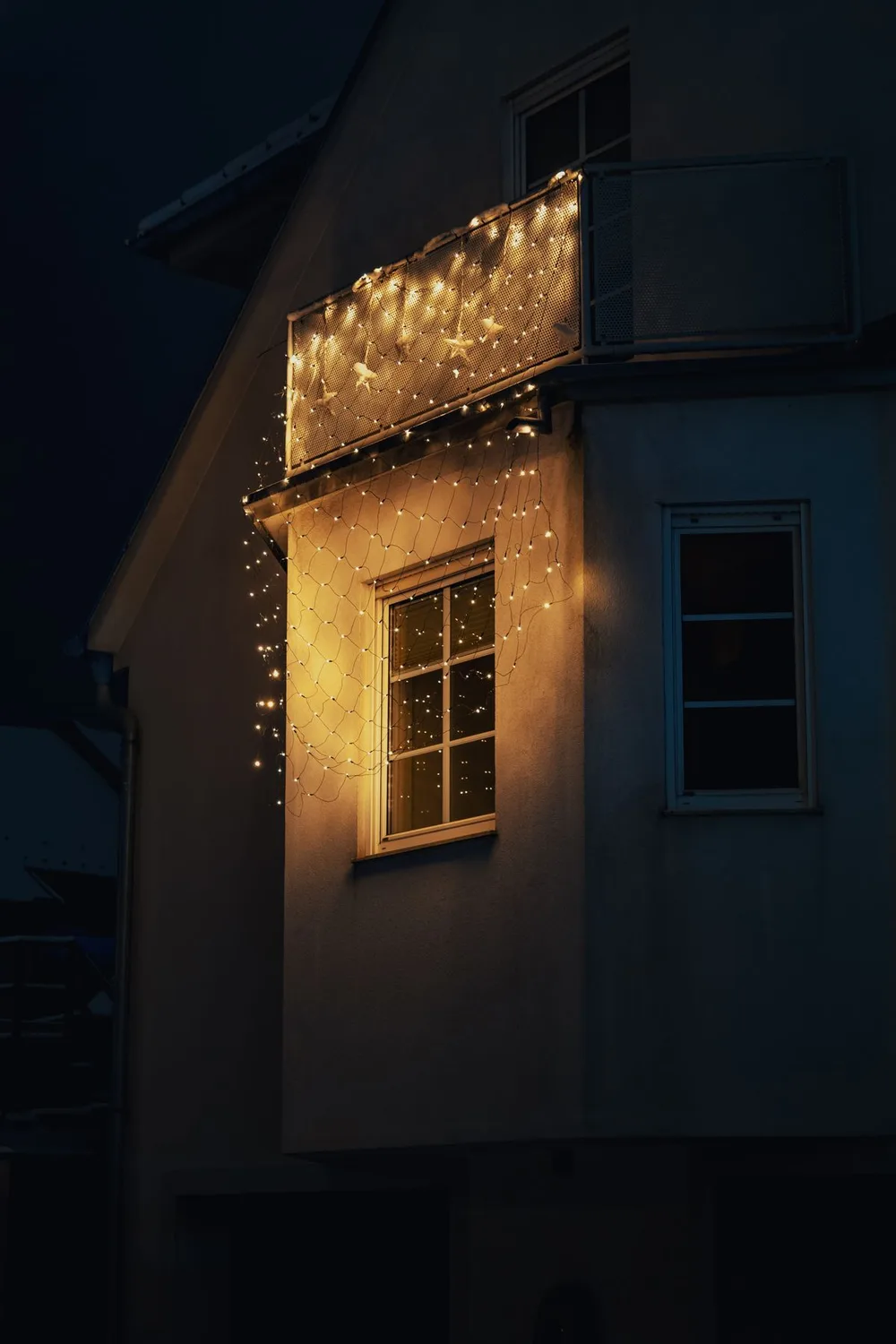
Set it once in November, then verify with one lap: every zone’s timer at 5–11 pm or its app equivalent, override switches in “clock” position, battery strands’ timers armed, the amp rating on each device covering its zone’s watts, and one observed dusk-to-bed cycle to confirm the whole system. After that, the setup’s entire December workload is: none. The lights will run more reliably than they did in any year you were the timer — ask the January bill how it knows.
Timer Setup: The 6-Point Checklist
- ☐ 6 on / 18 off schedule (5–11 pm) set on every zone; staggered by 10–15 min
- ☐ Amp rating on each timer covers its zone (1,875W for C9 incandescent fleets)
- ☐ Override switches in clock mode; battery strands’ timers armed and auto-restarting
- ☐ Smart plugs re-sync verified after any outage; mechanical dials re-seated post-DST
- ☐ One full observed cycle: on near dusk, off at 11, nothing running at noon
- ☐ Zones match outlets, not decorations; no zone exceeds the circuit math
Related Reading
- Christmas Lights Cost Calculator: the dollars behind the hours
- How Many Light Strings on One Outlet? The Wattage Math
- Window and Door Lights Without Nails or Damage
- Stair Garland Math: How Much Garland for a Banister
- How Many Ornaments and Lights Does a Christmas Tree Need?
- Christmas Entryway Decor Ideas
- Christmas Tree Footprint Math: Floor Space, Skirt Size and the Gifts Underneath
Last updated: November 24, 2026. The plug hasn’t been touched since December first, and it keeps them.
[…] money on automation instead — a dusk-to-dawn sensor or a 6-hour timer (the same on/off rhythm the timer math guide recommends for everything else) means the display runs itself all season, and nobody crawls around […]
[…] — not for safety but for arithmetic and sanity: the 6-hour evening schedule from the timer math guide cuts the season’s cost by roughly two-thirds versus lights that burn till someone remembers, […]