
The short version
For a cookie swap, the standard assignment is 3 dozen cookies per guest — everyone brings the same amount and leaves with the same amount mixed, so 12 bakers means a 432-cookie table and 36 cookies out of your own oven. For a holiday party dessert table, plan 3-6 cookies per guest. Enter your headcount below and the calculator turns it into a bake count, an oven schedule, and a packaging list.
What’s in this guide
- 1. How many cookies should each guest bring to a cookie swap?
- 2. How many cookies does one batch actually make?
- 3. The oven schedule: how long your bake really takes
- 4. Packaging math: boxes, bags and the take-home table
- 5. Which cookies travel well to a swap (and which wreck the box)
- 6. Allergy cards and labeling: the two minutes that save the party
1. How many cookies should each guest bring to a cookie swap?
The 3-dozen rule is the cookie exchange standard, and it exists for a boring mathematical reason: if every guest brings the same amount, everyone leaves with exactly what they brought, just redistributed. Twelve bakers each carrying 36 cookies build a 432-cookie table; each baker goes home with 36 assorted cookies they did not have to bake. Scale the assignment to your group — 2 dozen works for casual office swaps, 3 dozen is the neighborhood standard, and 6 dozen is for serious swappers who want variety all December.
| Group size | Per guest | Table total | What the host does |
|---|---|---|---|
| 4-6 friends | 6 dozen | 288-432 cookies | Supply boxes, cocoa, and the take-home table |
| 8-12 (typical) | 3 dozen | 288-432 cookies | Send the assignment two weeks out |
| Office or large group | 2 dozen | Scale with headcount | Cap attendance so the math stays fair |
| Kids’ version | 1-2 dozen | Small batches | Let adults handle hot sheets |
Send the rules in the invitation, not the day before: per-guest dozen count, a “no store-bought” line if you want one, and the ask that every cookie arrive individually portioned or boxed by the dozen. When guests know the count two weeks out, each person can plan two relaxed evening batches instead of one panicked Wednesday-night marathon.
One fairness note that experienced hosts swear by: ask for uniform cookies within each dozen. If Alice brings twelve tiny sandwich cookies and Ben brings twelve giant bakery-style disks, the take-home math feels rigged even though the counts match. A repeatable recipe and a same-size scoop fix this without anyone being told what to bake — which is why the scoop in section 2 matters more than it looks.

As an Amazon Associate, Herpickery earns from qualifying purchases.
2. How many cookies does one batch actually make?
Batch math is scoop math. A standard 1.5-tablespoon scoop drops cookies that spread to about 3 inches and bake 12 to a half-sheet pan; a 2-tablespoon scoop gives you 12 bakery-style cookies; a teaspoon scoop for mini cookies squeezes 24 onto the same pan. A typical home batch of dough — the 3-cup flour recipe on the back of most chocolate chip bags — yields about 24 medium cookies or 36 small ones.
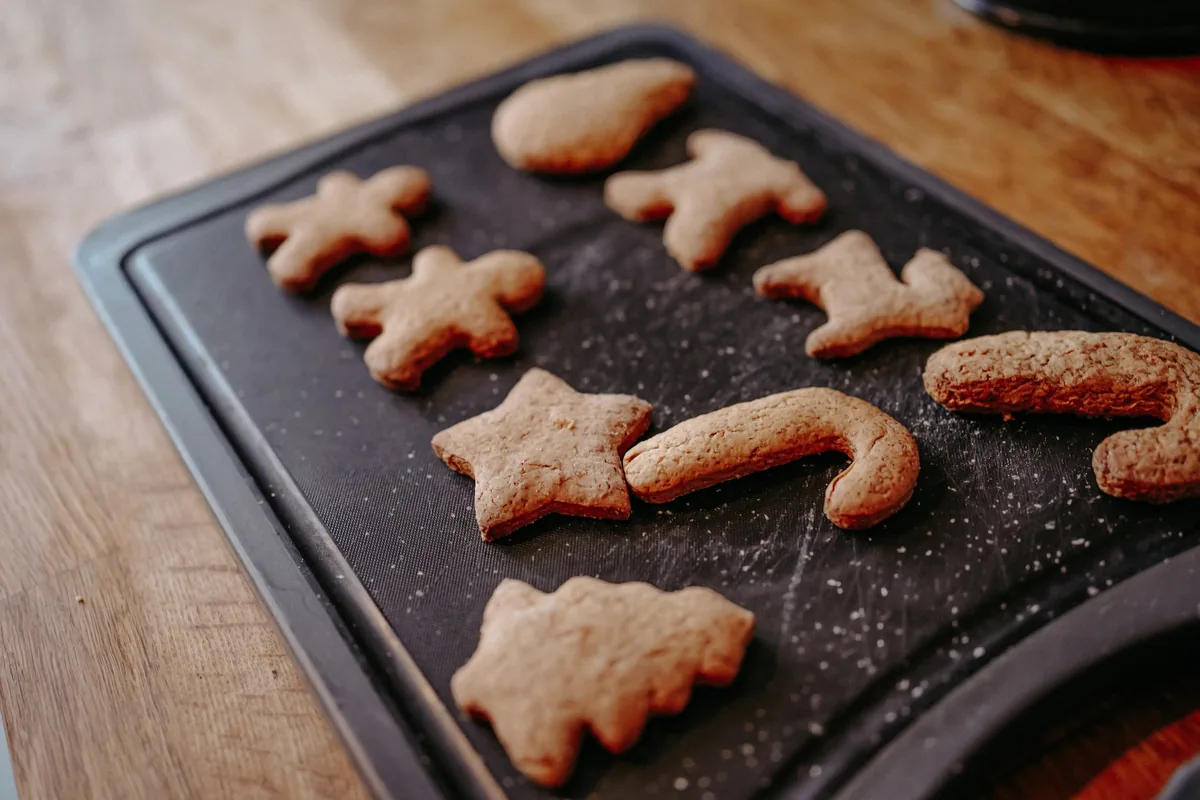
| Scoop size | Cookies per batch of dough | Per half-sheet pan | Bake time at 350°F |
|---|---|---|---|
| 2 tbsp (large) | about 18-20 | 12 | 11-13 minutes |
| 1.5 tbsp (standard) | about 24 | 15 | 9-11 minutes |
| 2 tsp (mini) | about 36-40 | 24 | 7-8 minutes |
Convert your assignment into batches before you shop: a 3-dozen assignment at the standard scoop is 43 cookies, which rounds to two full batches of dough. Bake two of the same recipe rather than one batch of two recipes — swapping a second flavor doubles your dishes, your oven trips, and your chance of a burned round, for cookies the recipients cannot tell apart once boxed.
Chill time is the hidden variable that wrecks batch counts. Dough scooped warm spreads flat and runs into its neighbors, turning a 15-cookie sheet into 13 merged ones. Thirty minutes of chilling after scooping (or scooping directly from refrigerated dough) keeps the count on the math and the edges where they belong. If your kitchen runs warm, scoop the whole batch onto trays first and refrigerate them together, then bake tray by tray.

As an Amazon Associate, Herpickery earns from qualifying purchases.
3. The oven schedule: how long your bake really takes
Oven time is the number people underestimate, because a “12 minute” recipe quietly becomes a 90-minute bake once you multiply by sheets. Each half-sheet holds 12-24 cookies depending on scoop size, most home ovens fit one or two sheets, and every round costs its bake time plus about 5 minutes of rotation, cooling, and reloading. The calculator above does this arithmetic for you; the table below shows what it looks like in real ovens.
| Your bake | Sheets needed | 1 sheet at a time | 2 sheets at a time |
|---|---|---|---|
| 2 dozen (24 cookies) | 2 | about 29 min | about 12 min |
| 3 dozen (36 cookies) | 3 | about 46 min | about 29 min |
| 4 dozen (48 cookies) | 4 | about 63 min | about 29 min |
| 6 dozen (72 cookies) | 6 | about 97 min | about 46 min |
Assumes 12-minute bake time and medium cookies; add your own recipe’s chill time on top. The gap between the two oven columns is why a second half-sheet pan is the highest-value $20 in holiday baking — most ovens hold two sheets side by side, and nobody who owns two ever goes back to one.
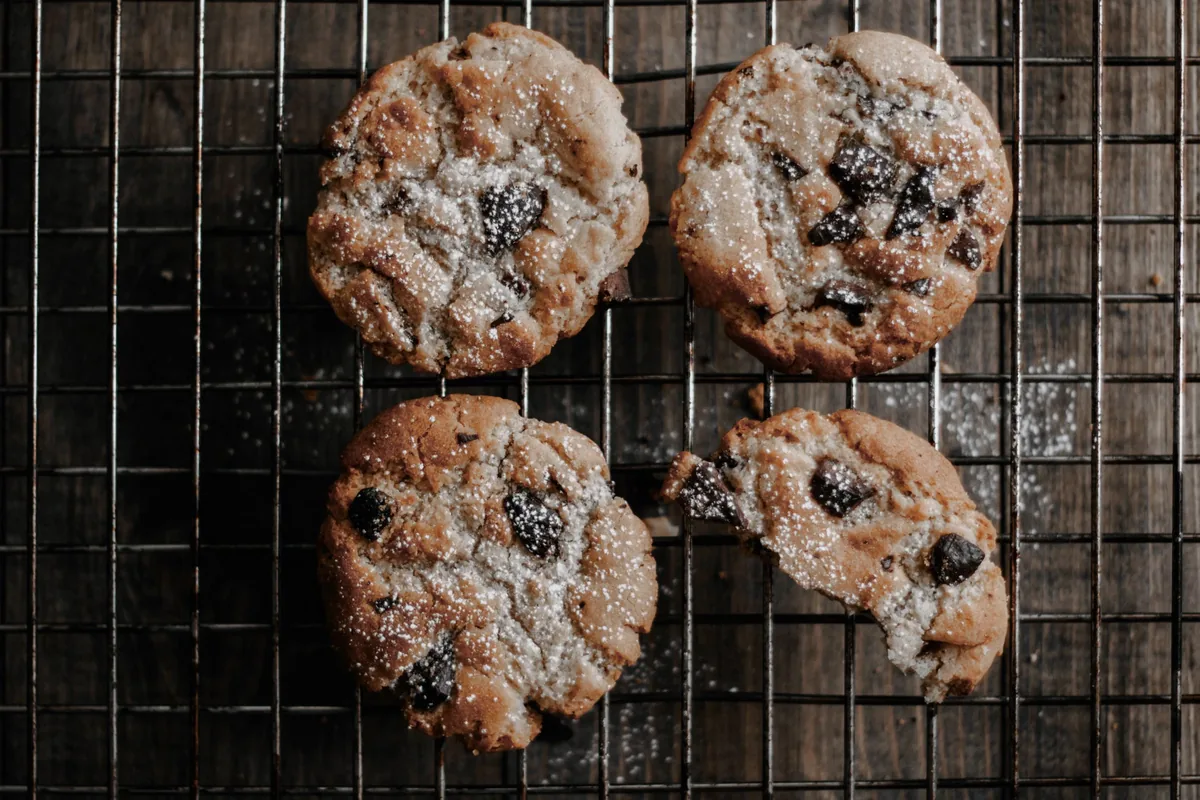
Schedule the bake across two evenings whenever the math says more than an hour of oven time. Cookies that freeze baked (most drop cookies do) make this painless: bake Friday, freeze Saturday morning, box Sunday. Cooling racks matter too — cookies stacked warm in a bowl steam each other soft, and soft cookies fuse in the box overnight. Give each sheet a full ten minutes on a rack before anything touches storage.
If your oven runs a holiday double shift — dinner roast plus cookie sheets — work from a timeline instead of memory. The ham roast time calculator handles the dinner main in its own 325°F window, so the cookie sheets go in after the roast rests rather than fighting it for the middle rack.
4. Packaging math: boxes, bags and the take-home table
The take-home moment is the whole point of a swap, and it runs on packaging math. Standard kraft bakery boxes hold about one dozen medium cookies or two dozen minis, so the host’s shopping rule is one box per dozen each guest carries home — for a 12-guest, 3-dozen swap, that is 36 boxes, or 18 if guests share larger boxes. Order a few spares; somebody’s lid always folds wrong.

Stage the take-home table so the line moves: guests set their own contributions down, walk the table with an empty box, and take one cookie (or a small pile) from each dozen they pass. Two dozen boxes for minis, one box per dozen for standards, and a stack of 4-inch treat bags for anyone who wants a mixed sampler rather than full boxes. A marker and blank label cards at the table let guests write cookie names as they pack — flavor names get lost within minutes of the first box closing.
Portion control beats abundance at the table. When each dozen is pre-split into baggies of two or three, 12 guests circulate in ten minutes; when everything sits loose on platters, the first three guests excavate the chocolate chip pile and the last three go home with shortbread only. Pre-portioning also protects guests with allergies, because they can read the label before anything touches their box.

As an Amazon Associate, Herpickery earns from qualifying purchases.
5. Which cookies travel well to a swap (and which wreck the box)
A cookie that is perfect warm from your oven can arrive at the swap as crumbs. The difference is structure: sturdy, low-moisture cookies survive stacking; delicate, gooey, or iced ones do not. Choose your bake from the left column of this table and your reputation survives the car ride.
| Travels well | Ships and stacks | Leave at home | Why they fail |
|---|---|---|---|
| Gingerbread, shortbread | Excellent — rigid and dry | Meringues | Shatter at a glance |
| Chocolate chip, oatmeal | Great with full cooling | Whoopie pies | Filling smears into lids |
| Spritz, thumbprints (jam set) | Great — firm structure | Soft-filled sandwich cookies | Stick together in stacks |
| Biscotti, rugelach | Excellent — dense | Anything still warm | Steam softens the whole box |
| Sugar cookies, royal icing | Good once icing is fully dry | Powdered-sugar dusted | Sugar turns to glue on neighbors |
Two packing rules fix most travel casualties. First, cool completely before boxing — not mostly, completely; trapped heat is what turns crisp cookies chewy by morning. Second, layer with parchment between tiers and keep the tallest, hardest cookies on the bottom, decorating-grade cookies flat on top. If a recipe is precious and fragile, it belongs at a gathering where it is eaten the same night, not in a swap box riding in a cold car.
Flavor choice is also a variety question: twelve guests all bringing chocolate chip mint is a real outcome, so the invitation should ask everyone to claim their recipe in a shared list. The claim list also stops the classic duplicate — two bakers bringing the same family recipe because they both saw it on the same video last week. When someone claims late, the list steers them to an unbaked category like “no-chocolate slot still open.”
6. Allergy cards and labeling: the two minutes that save the party
Every cookie needs a card with its name and its allergens, written before the swap starts. This is a two-minute task per baker and the difference between a guest who fills a box confidently and a guest who quietly takes nothing because every table cookie might contain nuts. The host should put labeling on the invitation checklist next to the dozen count.
- Name the cookie — “molasses crinkles” beats “the brown round ones” within an hour.
- List the big nine allergens if present: milk, eggs, wheat, soy, peanuts, tree nuts, sesame, fish, shellfish.
- Flag gluten-free and vegan honestly — “made in a kitchen that also uses wheat” is the accurate line.
- Mark anything boozy — rum balls and bourbon balls are adult-only table items that need their own zone.
- Include your name — guests trade recipe requests as often as cookies, and it is the polite start of the ask.
The same discipline extends to storage after the party. Swap cookies keep about a week in an airtight tin at room temperature, two to three weeks frozen, and the freezer branch of the turkey leftovers calculator uses the same 0°F quality math for anything baked you want to hold past the weekend. Sort the take-home box: soft cookies in one layer, crisp ones wherever they fit, and anything iced separated by parchment so December’s second week still tastes like the party.
Finally, send the recipe round-up within a few days while memories are fresh. A shared doc with every baker’s card text — name, allergens, one-line description — is the cheapest possible next-year planning tool, and it turns this year’s guest list into next year’s invite list without a single new spreadsheet.
FAQs
How many cookies should each guest bring to a cookie exchange?
The standard is 3 dozen per guest. Everyone brings the same amount and leaves with the same amount mixed, so the table totals stay fair regardless of group size. Casual office swaps often drop to 2 dozen; dedicated swappers go up to 6 dozen.
How many cookies do I need for a party of 20?
Plan 3-6 cookies per guest, so 20 guests need about 60-120 cookies, or 5-10 dozen. Lean toward the higher number if the cookies are the main dessert, the lower one if a full dessert table stands behind them.
How far ahead can you bake cookies for a swap?
Most sturdy drop cookies, shortbread, and gingerbread bake well 1-2 weeks ahead and freeze beautifully at 0°F — thaw in the sealed container so condensation forms on the wrapper, not the cookie. Delicate or iced cookies are best baked the day before.
How do you package cookies for a cookie exchange?
One dozen per bakery box is the rule of thumb, pre-split into bags of two or three for the table walk. Cool cookies completely, layer with parchment, and label every container with the cookie name and allergens before the party starts.
What is a good number of guests for a cookie swap?
8-12 bakers is the sweet spot: enough variety that everyone boxes two dozen different cookies home, small enough that the table math and packaging stay manageable. Larger groups work fine with a 2-dozen assignment and pre-portioned baggies.
Related guides
[…] the New Year’s Eve table setting plan alongside this, and if cookies are on the menu too, the cookie exchange calculator does the same math for the bake. 🥂Holiday Party Drinks Calculator How many […]
[…] for the swap too? The new Cookie Exchange Calculator turns your guest count into an exact bake assignment, oven schedule, and packaging […]
[…] gifts need boxes too. The Cookie Exchange Calculator tells you exactly how many cookies to bake and how many bakery boxes the take-home table […]